

























































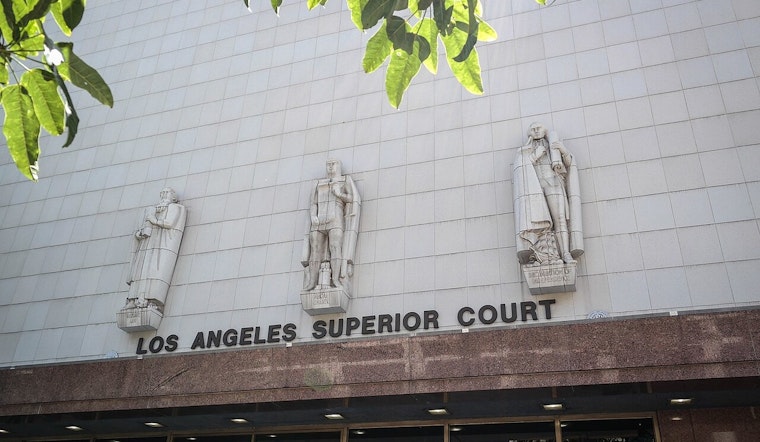
In a move that could lighten some of the heaviest dockets in the country, the Los Angeles Superior Court has kicked off a limited pilot with legal tech platform Learned Hand, giving a small group of judicial officers AI help with sorting records, summarizing filings, and drafting orders. Announced March 18, 2026, the project is pitched as a way to claw back hours from routine prep work in the nation’s largest trial court while keeping human judges firmly in charge.
Court leaders are at pains to stress that the new tools are strictly support staff, not replacement judges. The AI is framed as a research and drafting assistant, not a decision maker.
According to a joint announcement distributed via Business Wire, the pilot gives participating judicial officers access to a specialized digital “workbench.” Within that workspace, the system offers case information, summarization, research, analysis, and help drafting orders and other documents.
The companies say the software automatically hyperlinks its output to underlying material in the case file, so judges and staff can quickly check where each point came from. The platform also runs multiple verification passes on its work to balance speed with accuracy. Court officials describe the effort as a limited evaluation, not a fast track to a full courthouse rollout.
Presiding Judge Sergio C. Tapia II sounded cautiously optimistic in the announcement. He said the tool “may enhance the way judicial officers review and engage with case files and information,” but emphasized that “it will not replace, or in any way compromise, the sanctity, independence, and impartiality of judicial decision-making.”
Learned Hand founder Shlomo Klapper struck a similar note, telling the court that the company’s role is to “assist with the preparation, but as always, judges make the final decisions,” according to Business Wire.
Learned Hand describes itself as a platform built specifically for courts and judges, featuring motion-specific workflows and integrated citation checks that aim to cut down on manual cite-checking. The company has already been piloted in other courts, including a contract with the Michigan Supreme Court, as part of broader experiments with judicial AI. For more on those projects, see Learned Hand and coverage in the National Law Review.
This latest partnership lands in the middle of a wider fight over how, and how much, AI should touch courtroom work. Judges and legal observers have already raised alarms about AI-generated evidence, hallucinated legal citations, and deepfakes slipping into filings and exhibits, complicating basic fact-finding.
NBC Los Angeles has reported on judges’ concerns about synthetic material appearing in real-world cases. Legal scholars, writing in venues such as Judicature, have urged courts to move carefully with tightly designed pilots and strong verification requirements rather than rushing in.
Legal safeguards and rules
California’s Judicial Council has already laid down ground rules for generative AI in the courts. Rule 10.430 of the California Rules of Court requires any court that allows generative AI to adopt written policies that address accuracy, confidentiality, and disclosure. A companion standard, Standard 10.80, governs how judicial officers may use AI in adjudicative tasks.
The official materials spell out, among other things, that confidential or sealed information cannot be entered into public AI systems and that any AI-generated material must be checked for accuracy. The rule text and model policy are available through the Judicial Branch’s page on California Courts.
The Los Angeles court’s announcement states that its own internal AI policies line up with those statewide rules and standards. The Learned Hand pilot is set to be evaluated for accuracy, transparency, and usefulness before anyone considers a wider rollout. For now, access is limited to a select group of judicial officers and staff, who will use the tools on real case files and local procedures while the court studies how the system performs.
How far and how fast the technology spreads will likely depend on what pilots like this show, and on how courts handle verification, training, and the disclosure requirements in state guidance. Supporters argue that carefully supervised, court-run experiments could help chip away at crushing backlogs. Skeptics counter that even well-intentioned tools need strict guardrails if courts want to protect fairness and maintain public trust.





