

























































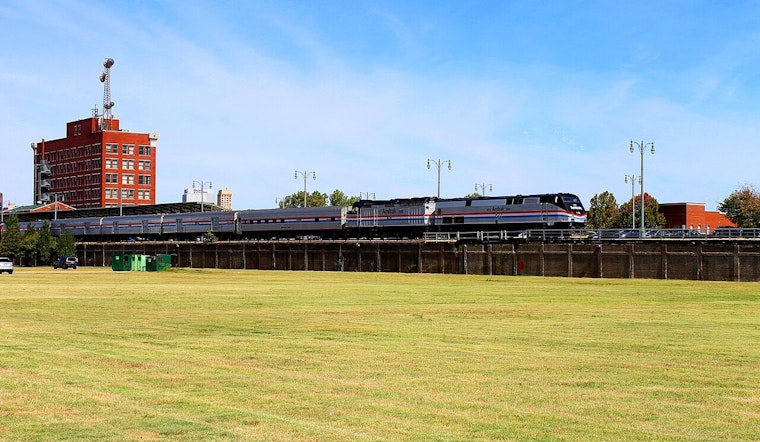
Federal investigators say a momentary slip at a warning signal led to a low-speed but jarring collision between an Amtrak passenger train and a freight train in South New Memphis on Feb. 22. In a factual report released March 18, the National Transportation Safety Board (NTSB) said the Amtrak train moved past a restricting signal and into the same block where an Illinois Central freight crew was switching. The two trains made contact, leaving two of the roughly 129 people on board and two railroad employees with non-critical injuries, according to the report.
What the NTSB found
According to Action News 5, which cites the NTSB factual report, investigators concluded that "shortly before the collision, the Amtrak train advanced past a restricting signal into the block where the IC train was switching." The report states that the freight train, owned by the Illinois Central Railroad Company, was moving in reverse when contact occurred. Investigators highlighted the restricted-speed rule that requires crews to be able to stop within one-half their range of vision and not exceed 20 mph.
Conflicting early counts
Early information out of the scene did not exactly line up. As Trains.com reported, Amtrak initially said about 128 people were on board and that three passengers had been injured. Memphis police, meanwhile, told reporters that two people were taken to the hospital with non-critical injuries. The NTSB’s later operational account settled on two passengers and two employees as injured. Emergency responders arrived at about 11:41 a.m. near West Shelby Drive and Sewanee Road, according to WSMV.
Signal rules and speeds
The NTSB report lays out the signal picture in detail. A restricting signal permits a train to move at "restricted speed," meaning the crew must be able to stop within half their range of vision and must not exceed 20 mph. The factual account notes that the freight train was backing at about 10 mph when it contacted Amtrak's consist, and that the Amtrak train had moved past the restricting signal into the switching block. Those technical points come from the NTSB summary cited in local coverage by Action News 5.
Investigation and next steps
The NTSB still has the case under active investigation and is continuing to comb through event recorder data, signal system logs, and crew communications as it assembles its final report. Investigators were dispatched to the crash site the day of the collision, and federal officials say more findings will be released once the review is complete, Trains.com noted.
Local impact
Service on Amtrak’s City of New Orleans route eventually resumed, but the incident underscored how a single misstep at a signal can quickly ripple through a corridor shared by passenger and freight trains. Memphis officials and local riders will be watching to see whether the NTSB’s final recommendations call for changes to crew procedures, signal protocols or both.





