

























































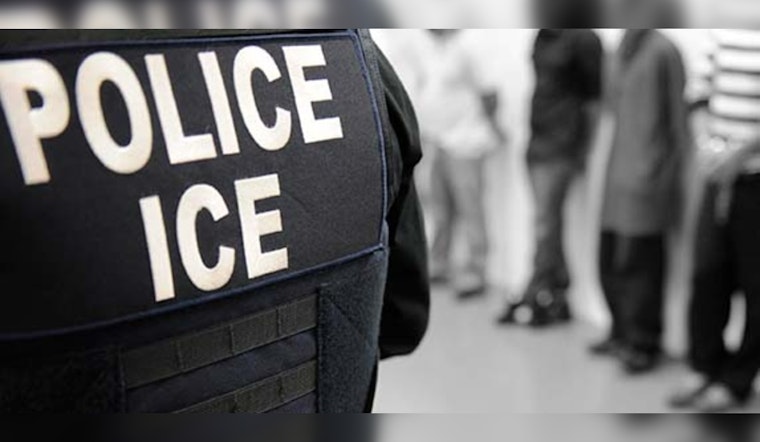
Montgomery County’s simmering fight over immigration enforcement has burst into public view, with councilmembers openly split on a pair of bills that target how ICE can operate on local turf. Backers are hustling to move the so-called "Unmask ICE Act" toward a work session, while skeptics on the dais warn the county may be trying to flex powers it does not actually have. The Unmask ICE Act would bar law-enforcement officers from wearing masks or other facial coverings while on duty in the county, except for limited medical and operational situations. A companion measure, the County Values Act, would require judicial warrants for ICE officers to enter nonpublic areas and would bar immigration enforcement in county-owned parking facilities and vacant lots. With routine legislation needing six yes votes to pass, supporters are staring down both legal and procedural hurdles in a county where roughly one-third of residents were born abroad.
At a Jan. 20 press conference, sponsors Will Jawando and Kristin Mink cast the bills as basic protections for residents and a way to pull the veil off federal operations. In a press release from the Montgomery County Council, Jawando argued that recent enforcement actions have relied on tactics that fuel fear, adding that "safety requires trust, and trust requires transparency." Mink said the County Values Act is meant to make it harder for ICE to move around on county property and to ensure staff know what to do when agents show up at county sites.
The Unmask ICE Act, formally introduced as Bill 5-26, would prohibit face coverings by federal, state and local law-enforcement personnel working in Montgomery County, with narrow carveouts for public-health reasons and specific tactical situations. The County Values Act was filed as Bill 3-26. As reported by WTOP, advocates say the bills respond to incidents of agents operating in neighborhoods and parking lots, while still carving out space for undercover work and medical needs. Supporters have lined up community groups and cosponsors, and opponents are warning about enforcement headaches and unintended side effects.
The sharpest pushback is coming from inside the Council itself. According to The Banner, Council President Natali Fani-González has said the measures "will help but won’t fix everything," pointing to the county’s limited leverage over federal operations. District 3 councilmember Sidney Katz, who chairs the Public Safety Committee, has urged colleagues to slow down and watch what happens first in Annapolis. District 7’s Dawn Luedtke has told reporters she agrees with the overall goal but questions whether the county has the authority, resources or legal grounding to meaningfully rein in federal agents.
Legal and Procedural Hurdles
Legal advisers are already flashing warning lights that any direct attempt to restrict federal officers could trigger constitutional blowback. An advisory from the Maryland Attorney General’s office, summarized by MDBayNews, cautioned that applying a mask ban to federal agents would likely clash with federal authority and could be struck down under the Supremacy Clause. On top of that, the Council’s own rules require six affirmative roll-call votes to pass routine legislation, a bit of procedural math that everyone at the horseshoe is acutely aware of. Those rules are spelled out on the Council's Rules of Procedure.
Montgomery County’s proposals are part of a growing pattern of local responses to aggressive immigration enforcement, and similar efforts elsewhere have already drawn fire. In neighboring Baltimore County, a move to limit masked federal agents has begun to attract intense scrutiny and potential legal challenges, as mask crackdown on ICE agents coverage has noted, underscoring how quickly these local ordinances can turn into courtroom showdowns. U.S. Census QuickFacts puts Montgomery County’s foreign-born population at about 33.6 percent, a demographic backdrop that supporters say makes immigration enforcement rules an especially urgent local issue.
Jawando and Mink have said they plan to push the Unmask ICE Act into a committee work session and press for floor votes, The Banner reported. Whether they can secure the six votes needed under Council rules, and whether any local limits involving federal officers could survive a constitutional challenge, are questions still hanging over the debate. Community groups say they will keep turning out at hearings and lobbying councilmembers, while legal watchers expect the next phase of the fight to move quickly from the council chamber to the courts.





