

























































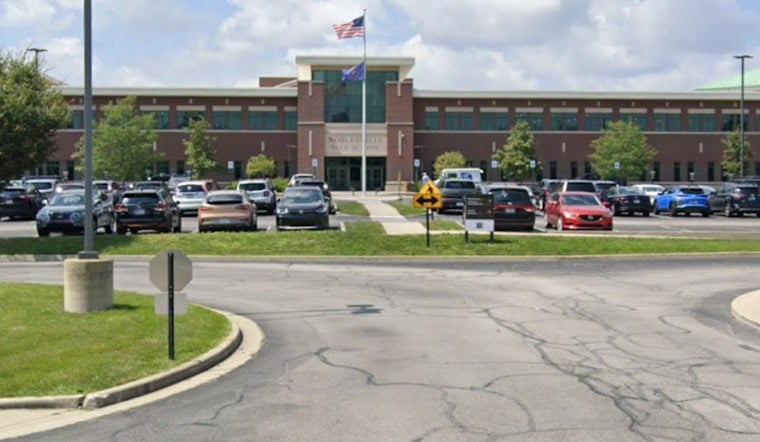
A hallway fight over pro-life flyers at Noblesville High School is now knocking on the doors of the U.S. Supreme Court. A freshman identified in court papers as E.D. is asking the justices to decide whether public schools can block student flyers with political slogans, after administrators in 2021 refused to post her club’s pro-life promotional materials and briefly stripped the group of official recognition. The outcome could help determine when courts let school officials treat student messages as if they are speaking for the school itself.
Attorneys with the Alliance Defending Freedom filed a petition for a writ of certiorari on Jan. 28, 2026, asking the Court to resolve a split among federal appeals courts over how far Hazelwood v. Kuhlmeier reaches. Filed on behalf of E.D., the petition argues that temporary club flyers in common areas should be treated as private student speech, not institutional expression. The petition is available from the U.S. Supreme Court.
Before the case headed toward Washington, the U.S. Court of Appeals for the Seventh Circuit sided with Noblesville officials. In August 2025, the court affirmed the district court and held that the proposed flyers could reasonably be seen as bearing the school’s imprimatur, which meant they could be regulated under Hazelwood. The panel pointed to the fact that the posters would hang on school walls next to official notices and cited school practices like requiring administrators’ initials on approved postings. The Seventh Circuit’s opinion is published on Justia.
Court records and advocacy materials describe what sparked the controversy. The flyers featured photos of demonstrators outside the U.S. Supreme Court holding signs that read “Defund Planned Parenthood” and “I Am the Pro-Life Generation.” School officials told the student she could advertise only the club’s name, meeting time, and location, without the images. The principal later withdrew the club’s recognition, then reinstated it several months afterward. Those details are laid out in materials from the student’s legal team at Alliance Defending Freedom.
Who’s Backing the Student
Conservative legal outfits and pro-life organizations have rallied behind E.D., arguing that the case has stakes far beyond one Indiana hallway. Students for Life of America has promoted the petition and its backstory, while the student’s attorneys have worked to build national advocacy support. A coalition of state attorneys general, led by Kansas, filed an amicus brief urging the Supreme Court to take the case. Kansas officials described their role in a news release. See statements from Students for Life of America and the Kansas Attorney General’s Office.
Legal Stakes
The petition casts the dispute as part of a multi-circuit split over when Hazelwood should kick in. Some federal appeals courts let schools regulate speech that might be mistaken for the school’s own message. Others have confined Hazelwood largely to curricular activities, using a different “forum” analysis for things like hallway postings and student clubs.
Petitioners and several amici argue that the Seventh Circuit’s view hands administrators broad power to shut down controversial viewpoints simply by pointing to where a flyer hangs. Under that logic, they say, almost anything on a school wall could be treated as school speech. Those arguments, and the competing forum-based approach, are unpacked in briefs before the Court and in commentary from legal scholars and amici at the Manhattan Institute.
Where the Case Stands
The case is docketed at the Supreme Court as No. 25-906. After seeking extra time to file, petitioners submitted their certiorari request in late January. As of March 30, 2026, the Court has received multiple briefs and amicus filings on both sides but has not yet said whether it will hear the case. Updates and filings can be tracked through the U.S. Supreme Court.
Free-speech advocates warn that if the justices refuse review, the Seventh Circuit’s reasoning will remain binding in its territory and could sway other courts. “The biggest practical risk is a gradual expansion of what schools claim is attributable to them,” Conor T. Fitzpatrick of the Foundation for Individual Rights and Expression told the Dallas Express. For Noblesville High School and districts like it, the fight over a handful of flyers may decide whether student clubs can freely promote their views in the hallways or are limited to posting bare-bones logistical notices.





