

























































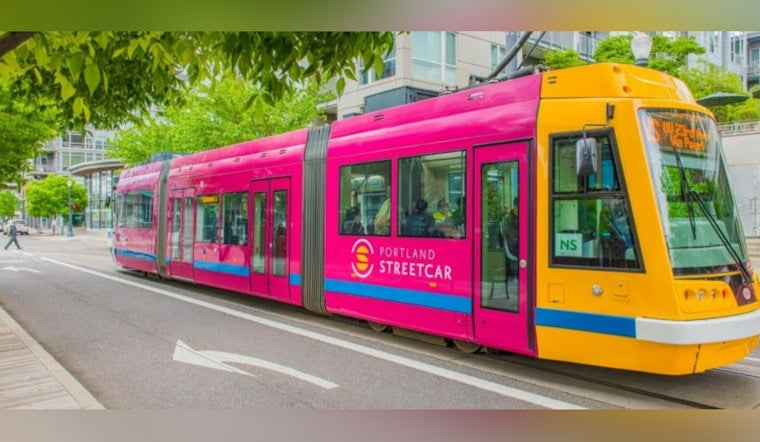
Portland’s next big streetcar move is headed for Northwest, with city leaders betting that a short new line into the Montgomery Park area can jump-start a whole new transit-oriented district on what are now underused industrial lots. Construction is slated to start in 2028, and the city says riders could be rolling by 2030. The extension is planned to operate largely without overhead wires, relying on battery-equipped streetcars that are meant to keep views along NW 23rd Avenue cleaner.
The Montgomery Park Streetcar Extension is in the Project Development phase, and the city has already started lining up design work. Portland Bureau of Transportation closed a design RFP in December 2025 and issued a Notice of Intent to award the design contract to HDR on December 29, 2025, with a formal notice to proceed expected in spring 2026, according to the Portland Bureau of Transportation.
Official plans describe a relatively compact alignment, a 0.65-mile one-way extension north along NW 23rd Avenue to a terminus near NW Wilson and NW Roosevelt. Built as a two-direction couplet, it adds up to roughly 1.3 miles of new track. The project also calls for a rebuild of NW 23rd between NW Vaughn and NW Lovejoy and multimodal upgrades that are designed to preserve travel lanes and most on-street parking. Those dimensions and the project schedule are laid out in Metro documents.
What the new line will look like
PBOT says the extension will run 100 percent off-wire, using hybrid battery technology that lets new streetcars transition between the existing overhead-powered system and battery-only stretches without riders noticing the switch. That approach avoids new poles or wires along NW 23rd Avenue. To make it all work, the city is planning to buy up to 12 off-wire capable streetcars, which would refresh a fleet that officials say is approaching 25 years of service, according to the Portland Bureau of Transportation.
History and place-making
Supporters frame the project as the latest chapter in a long-running story about rail reshaping Portland neighborhoods, from 19th century horse-drawn lines to more than 30 streetcar routes operating by 1920. That history, and the argument that modern streetcars can help steer redevelopment, has been traced in local coverage by KPTV. Earlier coverage dug into the city council debate over the extension and the Montgomery Park Area Plan that provides its policy backbone, according to reporting on the city council debate.
What neighbors are saying
Not everyone is thrilled about the plan. Skeptics question the price tag, projected ridership and whether the anticipated federal grants will actually come through. The Cascade Policy Institute has argued that federal funding may fall short and labeled the expansion “a nostalgia trip that is doomed to fail,” while neighborhood and investigative reporting has noted both lingering traces of historic rail infrastructure and worries about who will benefit most from redevelopment. Those critical and contextual takes can be found in analyses by the Cascade Policy Institute and neighborhood coverage in the Portland Mercury.
Next steps include a year of design and environmental review in 2026, local funding work in 2027 and an application for an FTA Small Starts grant with TriMet as project sponsor. PBOT and its partners say construction could begin in 2028 if the money lines up. The overall project timeline, along with plans for a Local Improvement District and coordinated outreach aimed at reducing disruption for businesses and nearby residents, is detailed in materials from Metro.





