

























































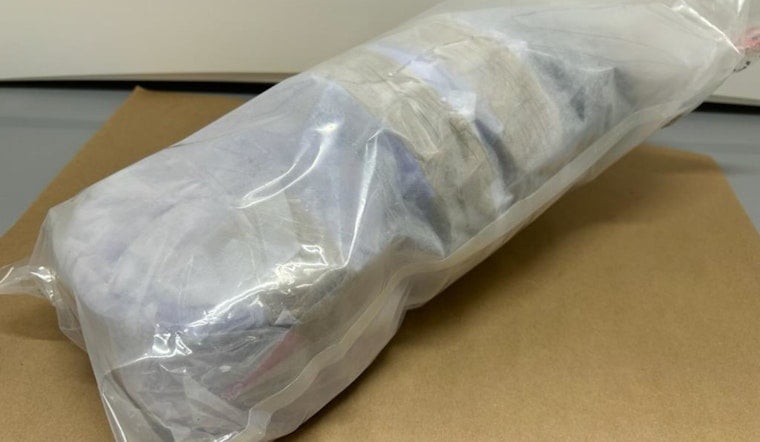
Federal agents say a 22-year-old man is in custody after an undercover buy in Morrow, Clayton County, ended with the seizure of about four kilograms of purple fentanyl. Investigators report the March 4 arrest came after the suspect allegedly pulled the drugs from a backpack in a business parking lot, at which point agents moved in. He is now facing a federal possession-with-intent-to-distribute fentanyl charge in the Northern District of Georgia.
According to a press release from the U.S. Attorney’s Office for the Northern District of Georgia, the defendant is Martin Armando Gonzalez‑Martinez, 22, of Oaxaca, Mexico. "Fentanyl is so extremely dangerous that just a couple milligrams can be lethal," U.S. Attorney Theodore S. Hertzberg said in the release, while the DEA’s Atlanta chief described kilogram-level purple fentanyl as a significant threat to public safety. The office says the investigation is part of Operation Take Back America.
Local coverage reports that Gonzalez‑Martinez was stopped in Morrow on March 4 while allegedly selling drugs from a backpack in a business parking lot, where DEA agents recovered roughly four kilograms of suspected fentanyl. Federal prosecutors allege he was working with a Mexico-based trafficking network that they say operates in the Atlanta area. As reported by FOX 5 Atlanta, Gonzalez‑Martinez appeared before a U.S. magistrate judge this week on a complaint charging him with possession with intent to distribute.
Why Purple Fentanyl Is Especially Dangerous
The DEA’s 2025 National Drug Threat Assessment warns that colored fentanyl batches, including purple varieties, are increasingly cut with other potent substances such as xylazine and, in some samples, carfentanil. Carfentanil is about 100 times more potent than fentanyl, and xylazine is a veterinary sedative that can cause severe tissue damage and does not respond to naloxone, according to the agency. For a national overview, see the DEA.
Public-health agencies and toxicology research note that these multi-drug mixtures make overdose response significantly trickier. The NYC Health Department has documented medetomidine and carfentanil in local drug samples and warns that people may remain sedated even after receiving naloxone. The advisory recommends rescue breathing and use of drug-checking services when available. A recent study in the Journal of Analytical Toxicology similarly describes the rise of “benzo-dope” mixtures containing benzodiazepines that can leave people heavily sedated even after opioid reversal.
Local Enforcement and What Comes Next
According to the U.S. Attorney’s Office for the Northern District of Georgia, Assistant U.S. Attorney Matthew R. LaGrone is prosecuting the case, and the DEA led the investigation with assistance from the Georgia State Patrol. Prosecutors emphasize that the complaint sets out only allegations and that Gonzalez‑Martinez is presumed innocent unless and until he is proven guilty at trial. The office says the case is part of the Department of Justice’s Operation Take Back America initiative.
Harm Reduction
Health officials continue to stress basic harm-reduction steps: carry naloxone if you can, be prepared to use it, call 911, and provide rescue breathing if someone’s breathing has slowed or stopped. The DEA and local health advisories say naloxone can reverse opioid effects but may not fully wake someone up if sedatives like xylazine or benzodiazepines are also in the mix, which is why ongoing monitoring and emergency care remain critical. Drug-checking services, where available, can help people identify what was actually in the supply when overdoses seem unusual.
Gonzalez‑Martinez’s case remains active in federal court, and additional filings are expected as the investigation continues. We will update as federal dockets and law-enforcement releases provide new details.





