

























































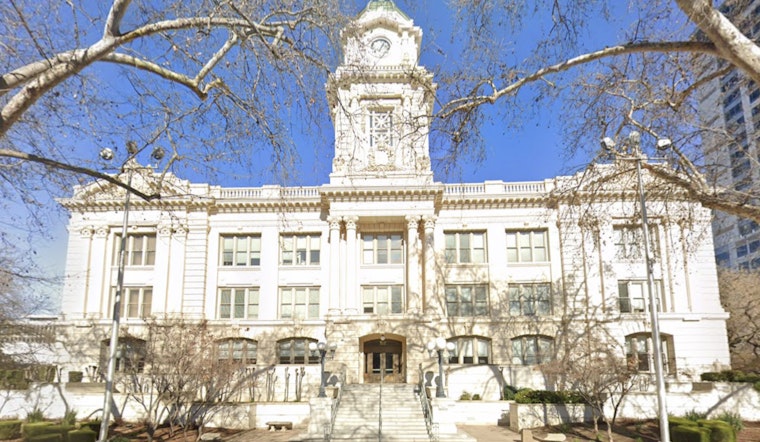
Sacramento shoppers could soon be paying a bit more at the register so the city can patch its streets and speed up its buses.
A citizen-led campaign has filed a ballot measure with the City Clerk asking voters to sign off on a half‑cent city sales tax to fund road repairs, pedestrian and bicycle safety upgrades, and expanded transit service. Backers say the tax would bring in roughly $70–$75 million a year, with the money split between street work and public transit. To get that question in front of voters this November, the group now has to collect enough signatures to qualify the measure for the ballot.
The full legal text filed with the Clerk would add a 0.5% transactions-and-use tax and create a dedicated Safe Streets and Affordable Transit Fund with locked-in spending rules, according to the City of Sacramento. The filing ties the tax to a rolling five-year spending program, requires yearly audits and a citizen oversight committee, and prohibits using the money to increase automobile capacity. The Clerk’s copy of the document carries a received stamp dated February 20, 2026.
The campaign, which calls itself Safer Sac Streets, brands the proposal as “Half for Safer Streets, Half for Safer, Faster Transit” and pegs the annual revenue closer to $75 million. The group says the measure would protect reduced fares for seniors, veterans and students, according to Safer Sac Streets. Because it is structured as a citizens’ initiative, organizers say it would need only a simple majority of city voters to pass. They also argue that a stable local revenue source would help Sacramento pull in larger state and federal matching funds for projects.
The Sacramento Bee reports that backers must gather roughly 30,000 voter signatures to qualify the measure and that supporters estimate the tax could raise as much as $70 million a year. The Bee notes the filing lands amid a roughly $66 million city budget shortfall and a recent jump in traffic deaths. At least 32 people were killed on city streets in 2025, with pedestrians and cyclists making up the largest share of those fatalities, according to the paper. The Bee also recounted multiple deadly crashes at Club Center Drive and Banfield Drive in Natomas that helped spur safety improvements at that intersection.
How the money would be spent
The measure’s spending plan slices the revenue into specific buckets: 48% for city street repair and active transportation improvements, 48% for transit operations and service expansion, 3% for transit-oriented housing infrastructure and 1% for independent audits and oversight. Within the 48% transit share, the text directs 33% to boosting transit frequency and affordability, 6.5% to state-of-good-repair work, and smaller portions to security and regional rail matching funds. These percentages and rules for a five-year rolling program and annual audits are written into the legal language submitted to the Clerk, according to the City of Sacramento.
Why the push now
Supporters frame the measure as a response to a local safety crisis and long-running funding gaps for both transit and streets. The Safer Sac Streets campaign argues that local money will “bring more state and federal dollars” by strengthening Sacramento’s ability to match outside grants, and the city is updating its Vision Zero Action Plan as officials focus on cutting deaths and severe injuries among people walking and biking, according to city planning documents. Advocates say that having predictable, ongoing local revenue would let the city grow transit service and speed up quick-build safety projects on its most dangerous corridors.
Ballot mechanics and next steps
The road to the ballot starts with signatures. The Sacramento Bee reports that organizers must collect about 30,000 valid voter signatures for the initiative to make the November ballot. If they hit that mark and the petitions are certified, the campaign and the legal text indicate that the measure would be decided by a simple majority of city voters. Backers say they are planning a citywide outreach and petition drive this spring to meet the Clerk’s filing and verification timelines.
As signature gathering ramps up, expect debates among city leaders, transit advocates and neighborhood groups over priorities and tradeoffs. The campaign contends that the tax is the quickest way to pump steady funding into projects while the Department of Public Works rolls out interim safety fixes already highlighted by local reporting, including a recent roundup of more than 100 quick-build projects. Voters can expect to see clipboards and petitions around town this spring, followed by the first official word from the City Clerk if supporters turn in enough signatures to move the measure one step closer to Election Day.





