

























































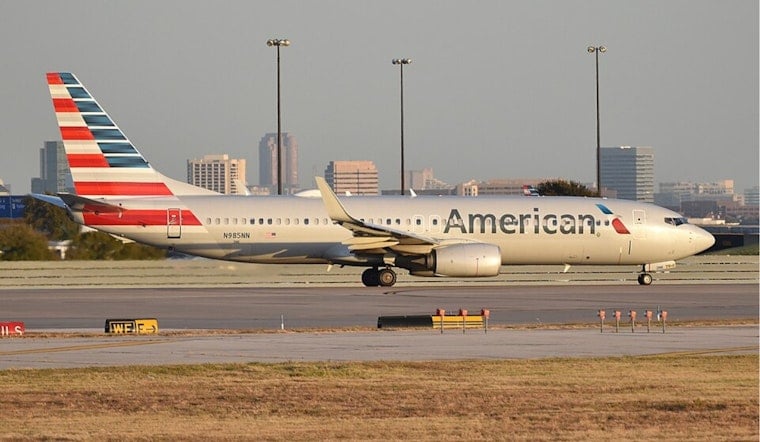
Seconds before touchdown at San Antonio International Airport, an American Airlines regional jet wound up on a collision course with a police helicopter on Feb. 27, forcing the chopper to break hard left to get out of the way. No one was hurt, but the close shave has landed on a growing list of helicopter and airplane run-ins that federal regulators say expose the limits of old-school "see-and-avoid" flying in crowded airspace.
As reported by The Dallas Morning News, American Airlines Flight 1657 had already been cleared to land when a police helicopter cut across the airport’s final approach path. The outlet reports that the helicopter and aircraft were on converging courses when the helicopter made a left-hand turn to avoid the American Airlines flight. There were no injuries, and the airline did not immediately respond to requests for comment, the report adds.
FAA Orders End To 'Visual Separation'
The near miss arrived just ahead of a major policy shift. Yesterday, the Federal Aviation Administration issued a general notice that suspends controllers' use of visual separation between helicopters and fixed-wing aircraft in Class B and Class C airspace and in Terminal Radar Service Areas. Instead, controllers are instructed to use radar to keep traffic separated by defined lateral or vertical distances.
"Visual separation must cease between helicopter or powered-lift aircraft crossing the arrival or departure paths of these aircraft," the notice states. According to the FAA, the decision follows a year-long safety review that found controllers and pilots were leaning too heavily on see-and-avoid techniques in busy terminal areas where cockpits and towers simply cannot spot everything in time.
A Year After The Potomac Tragedy
The change also arrives in the shadow of a far worse outcome. The National Transportation Safety Board recently released its final report on the Jan. 29, 2025 collision over the Potomac River and concluded that helicopter route design, combined with the FAA's reliance on visual separation, helped set the stage for that deadly crash.
Investigators found that a helicopter route ran too close to a runway approach path and issued a slate of recommendations aimed at untangling helicopter and airplane flows. Those findings were folded into the FAA's nationwide review of terminal airspace procedures, according to the NTSB.
What This Means Locally
The FAA is warning operators that the new rules will be felt on the ground, especially by helicopter crews used to slipping through familiar corridors with quick verbal clearances. Many may now have to take slightly longer routes or accept brief holds while controllers build in radar separation with airliners and other fixed-wing traffic.
The agency's announcement specifically cited the San Antonio encounter, along with a similar incident at Hollywood Burbank, as examples of the problem it is trying to fix. Local police and medical helicopter units, the FAA said in its newsroom release, will likely need tighter day-to-day coordination with tower and terminal radar facilities to keep emergency missions moving without unnecessary delays.
Policy Fight Continues
Behind the scenes, a broader fight over cockpit technology is stuck in neutral. Congressional efforts to mandate expanded alerting and location systems have stalled amid concerns over cost and security, even as investigators and safety advocates call for more hardware in the sky.
The ROTOR Act, a Senate-backed bill that would have required operators to equip fleets with enhanced ADS-B-In capability by 2031, failed to secure the necessary two-thirds vote in the House in late February, according to reporting by The Associated Press. Families of the Potomac victims and safety advocates say the FAA's procedural pivot away from visual separation is a needed move, but they note that equipment mandates, military carveouts and the price tag for operators are all still in play and will influence how fully the agency can follow the NTSB's recommendations nationwide.





