

























































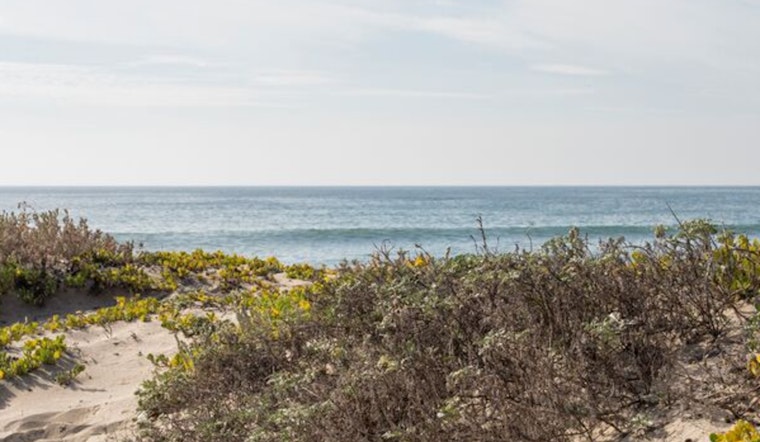
Santa Monica is turning a big stretch of its broad, flat shoreline into a living dune system, betting that low, planted sand mounds can do what concrete walls cannot: hold the beach together as seas rise and storms roll in. Phase III of the city’s beach-dune restoration will add nearly 30 acres of native dune habitat, extending a chain of low dune polygons from the Santa Monica Pier south toward the Venice border. The new dunes are designed to slow erosion, capture windblown sand, and expand habitat for shorebirds and native plants, building on pilot plots installed in 2016 and 2024 and ultimately converting roughly one-fifth of the city’s sandy beach to restored habitat.
City launches Phase III
The latest phase will nearly double the area in active restoration while keeping ocean-facing edges open and routing foot traffic around fenced polygons instead of straight across them. Teams of biologists, contractors, volunteers, and schoolchildren will hand-seed native dune species and string thin posts and natural-fiber rope to outline the plots. Mayor Caroline Torosis has framed the project as a core piece of Santa Monica’s climate-resilience strategy, according to the City of Santa Monica.
How the dunes are designed
Permitting documents describe a mosaic of foredune and backdune polygons planted with native coastal species and seeded by hand in fall and winter to take advantage of seasonal rainfall. A California Coastal Commission staff report recommended approval for roughly 38.5 acres of new foredune and backdune habitat, including about 31.45 acres north of the Pier and 7.10 acres south, which together would convert nearly 19% of Santa Monica’s beach to native dune habitat. Over several years, those planted polygons are expected to build into hummocks about one to three feet high, while their layout is carefully oriented to steer clear of volleyball courts, lifeguard towers, and main access routes, according to the California Coastal Commission.
Funding and stewardship
Roughly $3.5 million has been allocated through the Santa Monica Bay Coastal Habitat Restoration Program, managed by the State Coastal Conservancy, to establish, maintain, and monitor the new dunes. The Bay Foundation will lead installation and long-term stewardship in partnership with city staff and academic researchers, making the case that “living shorelines” can help preserve beach width and buffer storm surge more flexibly than hard armoring. Early results from the pilot plots, including denser native plant cover and more frequent shorebird use, are part of the logic for scaling up the project, as detailed by The Bay Foundation.
What beachgoers can expect
Officials say the makeover should not turn the shoreline into an obstacle course. Public access is set to be preserved, with open ocean-facing edges, marked corridors to guide pedestrians and cyclists around the dunes, and small blue signs pointing visitors past restoration zones instead of straight through them. Volunteer planting and monitoring days are already on the books and open to the public, with sign-up information shared by local outlets and organizers. City staff and project partners say they will continue to place polygons away from high-use areas and keep an eye on how the sites change as vegetation takes hold, according to the Santa Monica Daily Press.
Why this matters
Local officials and coastal planners frame the expanding dunes as a textbook “nature-based” adaptation strategy: as vegetation traps windblown sand, the beach surface slowly builds up, creating a flexible buffer against tides and storm surge rather than a fixed wall. State and local analyses warn that sea level at California’s shores could climb by roughly three feet by 2100, a shift that would sharply shrink usable beach width without intervention. The Coastal Commission staff report and city materials identify living dunes as one low-impact tool to help shield coastal infrastructure, recreation areas, and wildlife as the shoreline changes. For residents and visitors who want to get involved, organizers keep project maps, FAQs, and volunteer event listings available online.



