

























































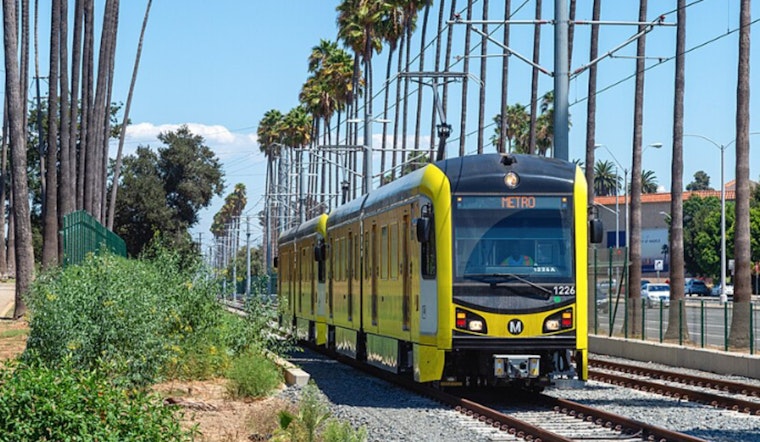
After years of debate and more than a few public meetings, Los Angeles County’s Metro board has officially signed off on extending the K Line from Redondo Beach into Torrance. The board picked an elevated route that runs along Hawthorne Boulevard and signed off on the project’s final environmental review, clearing the way for detailed design work and early construction. Metro says the roughly 4.5-mile extension will add two new stations, could break ground as early as 2027, and is currently slated to open in late 2036.
Board selects Hawthorne Boulevard route
According to LA Metro, the board certified the Final Environmental Impact Report and approved the Hawthorne Option on January 22, 2026. That choice shifts service off parts of the existing Metro right of way, sends trains across an elevated guideway above the I-405, and then into the median of Hawthorne Boulevard. The project would run about 4.5 miles from the Redondo Beach (Marine) Station to the Torrance Transit Center, operate as the southern continuation of the K Line, and add two stations along the way. Metro’s project page also projects roughly 4.9 million annual trips and about 1.7 million new riders once the extension is up and running.
A quicker, one-seat ride to LAX
Metro’s news arm reports that the new alignment will give riders from Torrance a single-seat trip to the LAX/Metro Transit Center in about 19 minutes, shaving precious time off a commute that now often involves multiple transfers. The Source notes that construction could start as early as 2027 if early-works packages and funding land on schedule, although Metro is already warning that the timeline will keep evolving as design and financing are locked in.
Torrance officials push back
The City of Torrance is not exactly celebrating. In a press release, city officials said they were "deeply disappointed" by the board’s decision and argued that the Hawthorne alignment could put more than $28 million in annual sales-tax revenue at risk, per the City of Torrance. Local leaders say they are worried about potential impacts on businesses along Hawthorne Boulevard and insist they will keep fighting for the Metro right-of-way alternative they had backed throughout the planning process.
Funding and next steps
Metro acknowledges there is still a sizable funding gap and says it will sharpen engineering plans, chase grants, and identify early-works packages to help keep costs and schedules in check. As reported by CBS Los Angeles, Metro officials told the board they currently have roughly half of the approximately $3.4 billion price tag for the Hawthorne option and will need additional state and local money to close the rest. Metro’s project page says staff will return to the board at 30 percent design with updated cost and delivery plans and will coordinate permitting with corridor cities and Caltrans.
What comes next for riders and neighborhoods
With the board vote in the books, the near-term focus shifts to the less glamorous but crucial work of design refinement, property negotiations, permits, and funding deals before any major construction moves forward. First reported by Secret Los Angeles, the decision virtually guarantees another round of neighborhood debates as planners push toward construction readiness and the South Bay gears up for years of design work and early project activity.





