

























































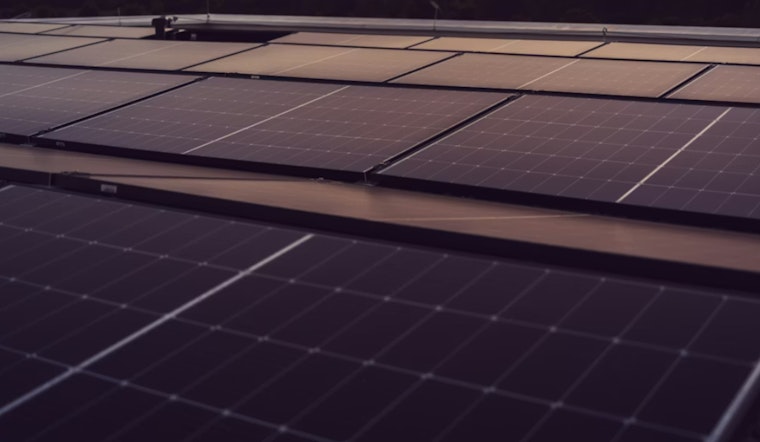
Salt River Project is teaming up with Invenergy on a big new solar-and-storage build in Pinal County, a project pitched as one of the tools to keep the fast-growing Phoenix area from overloading the grid when the sun goes down.
The SunDog Energy Center would combine about 200 megawatts of solar panels with 200 megawatts of four-hour battery storage, with the companies pegging the local investment at more than $209 million. SRP officials say that extra capacity is aimed squarely at evening peak demand as population growth and a wave of data centers keep nudging Valley electricity use higher.
As reported by KTAR, SRP has reached an agreement with Invenergy to take output from the SunDog Energy Center in unincorporated Pinal County. In comments to KTAR, SRP executive Bobby Olsen cast the deal as part of an “all-of-the-above” strategy to cover rising customer demand, while Invenergy’s Ted Romaine said the solar-plus-storage design is meant to harden the grid. KTAR published its story on March 17, 2026, and was the first outlet to detail the SRP–Invenergy arrangement.
According to Invenergy, SunDog is planned as a 200-megawatt solar energy center in Pinal County, with more than $209 million in local tax revenues, land costs and lease payments tied to the project. The company pitches SunDog as part of a broader boom in Arizona solar-and-storage development and says the build will support hundreds of construction jobs at peak. Invenergy also positions the project to connect near SRP’s Pinal Central substation so the power can move more easily onto the Valley grid.
Per SRP, the utility serves about 1.1 million customers in greater Phoenix and has been speeding up plans for both solar and batteries to cover rising summer peaks. SRP leaders say pairing storage with solar lets them shift plentiful midday power into the evening hours, cutting reliance on fossil-fueled peaker plants. Company materials and industry analysts point to a cluster of projects in Pinal County as a practical way to add dispatchable capacity close to where demand is surging.
What SunDog Would Add
Project filings and public materials describe SunDog as 200 megawatts of solar matched with 200 megawatts of four-hour battery storage, for roughly 800 megawatt-hours of dispatchable energy that can move daytime generation into evening peaks. Invenergy estimates the solar output could power about 55,000 American homes, while KTAR puts the local impact at roughly 45,000 Valley homes. Developers also lean on a familiar selling point: local tax payments, lease revenues and construction payrolls tied to building and operating the site.
Permits, Timeline and Local Impact
Pinal County records show county supervisors signed off on rezoning and a PAD overlay for the SunDog site in June 2024, clearing a key entitlement hurdle. The ordinance and supporting filings spell out the property’s legal description and a 230-kilovolt gen-tie corridor to Pinal Central, where the facility would plug into the regional grid. Local officials and project backers say SunDog would create hundreds of construction jobs at peak and generate ongoing local payments, though additional public hearings and permits still stand between the project and full construction.
Why Utilities Are Chasing Storage
Across the Valley, utilities have been racing to lock in battery projects as extreme heat, rapid in-migration and a growing data center footprint push peak demand higher almost every summer. SRP has sketched out a slate of mixed solar-and-storage centers that would add hundreds of megawatts of firm capacity over the next several years, and the SunDog deal lands on the heels of other storage contracts and pilots meant to shore up reliability. For planners, it is another modular, dispatchable resource situated near the Valley’s load centers rather than far-flung generation.
Next steps for SunDog include final interconnection approvals, construction financing and SRP’s internal contracting processes; developers say those milestones will ultimately set a firm building schedule. For Valley residents watching the mercury climb every summer, the project represents more local jobs and a fresh chunk of renewable capacity aimed at keeping the lights – and the air conditioning – on during the hottest months.




