

























































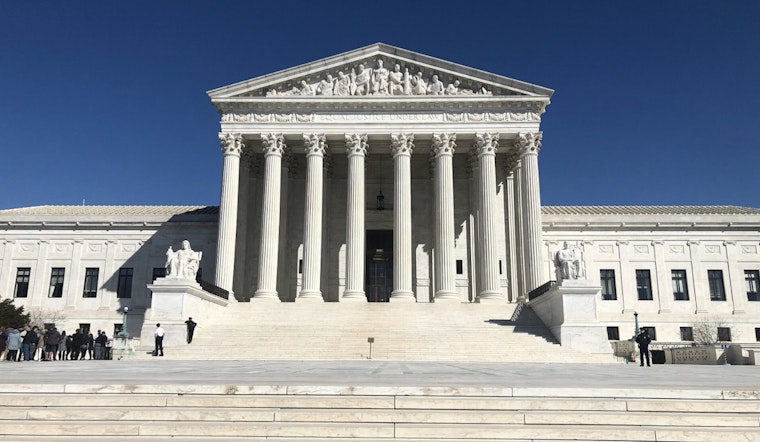
The U.S. Supreme Court on Monday quietly stepped aside from a challenge to New York’s Even Year Election Law, leaving in place a sweeping calendar shakeup that will push most town and county races outside New York City into even‑numbered years. The upshot for voters: many local offices that would have appeared in odd‑year contests will now show up on 2026 ballots, and some incumbents will serve shortened transition terms while the schedule realigns.
The case was turned away in a set of routine orders, which means the justices will not take it up, according to Spectrum News. The law itself cleared the state Legislature in 2023 and was signed by Gov. Kathy Hochul, with supporters pitching the change as a turnout booster and a way to simplify how local elections are run.
What the state courts decided
New York’s top judges had already given the law a green light last fall. In a unanimous Oct. 16, 2025 opinion, the Court of Appeals held that the Even Year Election Law is constitutional and spelled out how the transition will work, including which offices are covered and which are not. The court explained that some terms starting in 2025 will be cut short so those seats can move onto even‑year ballots, and that offices created by the state constitution are excluded from the change, such as county clerks, sheriffs, district attorneys and local judges, according to the New York Court of Appeals' opinion Court of Appeals. Hoodline earlier broke down that ruling for readers watching the shift unfold.
Opponents warn of lost local control
The plaintiffs who went to court argued that the statute is not a neutral general law and that it undercuts municipalities’ home‑rule powers, saying the new calendar will force local issues to fight for oxygen alongside high‑profile state and federal races, as reported by Times Union. Several charter counties have also objected that the law strips local governments of their ability to set their own election dates and may end up changing who wins local office.
Supporters point to turnout and savings
Backers counter that clustering elections in even years will pull more people into the process and save money on stand‑alone local contests. They point to research that shows turnout is higher in presidential cycles, often by roughly 18 percentage points, and say there is no reason to leave local races languishing in low‑interest years. Sponsors also modeled the timing rules on Colorado’s system, a comparison they leaned on while selling the bill, according to reporting by Spectrum News.
What happens next
With the Supreme Court refusing to hear the case, the new election calendar stays in place for 2026 while related federal challenges continue to work through lower courts, per reporting from Times Union. The plaintiffs still have procedural options, but this particular bid for high‑court review is over, and the earlier state rulings remain the law of the land for now.
On the ground, that means county boards of elections and municipal clerks will keep prepping ballots and schedules for November 2026. The Court of Appeals opinion lays out the transition rules those officials must follow when trimming or extending specific terms so they line up with even‑year cycles, according to the New York Court of Appeals' decision Court of Appeals. Local candidates and voters will want to keep an eye on official election‑board notices in the coming weeks for filing deadlines and any jurisdiction‑specific adjustments.





