

























































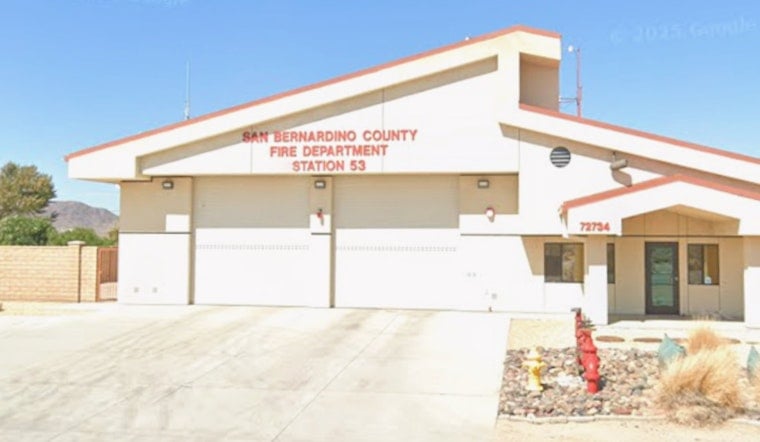
On March 19, 2026, San Bernardino County Fire quietly dropped a short reel with a loud message: if you break down on the long, lonely stretch of Interstate 15 near Baker, there is a good chance the only help coming is from a five-person crew at Station 53. With an early-season heat surge already pushing desert temperatures higher, the department urged travelers to treat the drive like a remote backcountry trip, not a casual freeway cruise.
The reel spells it out. Drivers are told to bring phone chargers, pack one to two gallons of water per person, and keep gas tanks or EV batteries above 50 percent because help can be many miles and many minutes away. Station 53’s small crew covers thousands of square miles and routinely drives long distances to reach wrecks, with the nearest trauma centers often an hour or more away by road.
One crew for a dangerous stretch
As reported by the Los Angeles Times, Station 53 in Baker is staffed by just five people and is the only dedicated EMS provider across roughly 93 miles of I-15. According to the paper, the crew logged nearly 1,000 calls on that corridor and often has to drive 30 to 40 minutes just to reach a crash scene.
Capt. Dan Tellez put it bluntly to the Times: “The freeway is our population.” In other words, their main community is everyone blasting between Southern California and Las Vegas at 70-plus miles an hour.
Why this stretch is so deadly
Crash tallies and independent rankings keep putting the San Bernardino segment of I-15 near the top of California’s most lethal road lists. Weekend traffic surges to Las Vegas, heavy truck volumes, and speed or impairment all mix into a dangerous cocktail of risk.
A state-focused analysis documented nearly 50 deaths on that corridor in 2022, according to SFGate, and national rankings have repeatedly flagged the San Bernardino stretch as a serious problem area. Put together, the data explains why Station 53’s tiny crew sees so many high-severity calls.
Heat and breakdowns make rescues harder
In its report, San Bernardino County Fire noted that the National Weather Service had issued an extreme heat warning for much of the county, with temperatures along I-15 near Baker expected to climb into the mid-90s to low-100s. That kind of heat turns a routine breakdown into a medical emergency in short order.
To drive the point home, the department paired the reel with a short documentary and a desert safety guide. Both hammer the same basics: pack one to two gallons of water per person, carry a phone charger, and keep fuel or EV batteries above 50 percent so you are not gambling on the distance to the next station or charger. The reel and guides are available through the department’s pages and short links, including the mini documentary hosted by San Bernardino County Fire and the desert travel safety guide from San Bernardino County Fire.
Closures, truck fires, and long waits
When something goes wrong on this corridor, it can go wrong for everyone behind it. Caltrans recorded a northbound I-15 closure at Baker after a semi-truck fire that forced county fire crews to manage hazardous cargo and knock down the flames. With nowhere else to go, traffic stacked up for hours in the desert heat.
Local coverage of that incident and others has shown how a single disabled big rig or fiery wreck can set off multi-hour closures and strand drivers far from cell signal or air conditioning. For past examples, see incident reporting from outlets such as FOX5 Las Vegas.
County budgets and the limits of adding resources
For anyone wondering why there is still only one staffed fire station watching over this long stretch, the answer is not simple indifference. San Bernardino County Fire relies heavily on property-tax revenues, while much of the Mojave along I-15 is federally owned. That limits the local tax base and complicates any push to add more staffed posts out in the desert.
County budget summaries for the North Desert service zone lay out how much money is available for staffing and capital projects and make clear the fiscal squeeze on expanding coverage. For now, the department says there are no immediate plans to add more stations along the corridor.
If you are heading through the Mojave on I-15, local responders say to treat it with the respect you would give any remote desert trip: tell someone your route and expected arrival, carry extra water and a phone charger, and avoid traveling during extreme-heat alerts when you can. Before you go, San Bernardino County Fire recommends watching the department’s Facebook reel and reviewing its desert travel safety guide so you know exactly what you are getting into on California’s killer I-15.





