

























































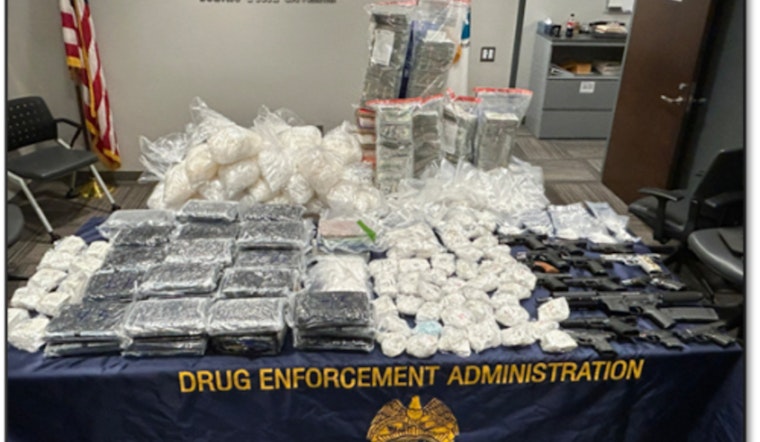
Federal agents fanned out across the Tri-Cities on March 3, 2026, hitting multiple homes tied to an alleged trafficking ring and walking away with a haul that investigators are calling the largest illegal drug seizure in Eastern Washington history. In all, they reported more than 164 pounds of powdered fentanyl, roughly 200 pounds of methamphetamine, about $2 million in cash and 16 firearms. For a single day of search warrants, that is not a typo.
What Authorities Found
According to the U.S. Attorney's Office for the Eastern District of Washington, the coordinated operation was part of an ongoing federal investigation into Amador Sanchez and several alleged co-conspirators. A March 6 press release from the office listed preliminary totals of more than 200 pounds of methamphetamine, over 164 pounds of powdered fentanyl, more than 5 pounds of cocaine, approximately $2,000,000 in U.S. currency and 16 firearms.
Prosecutors stressed that the numbers are still being finalized as agents process evidence, but the early tally already sets a record for the Eastern District of Washington.
Who Was Arrested And What Comes Next
As reported by The Spokesman-Review, agents arrested Sanchez, who was then brought to federal court in Richland for an initial appearance. Local reporting and court documents indicate that Sanchez was on federal supervised release from an earlier trafficking conviction and that he remains in custody while the case moves forward.
A detention and status hearing is set for March 19, when prosecutors are expected to pursue indictments. Federal officials say the investigation is active and warn that additional charges or arrests could follow as they work through what they seized.
Why It Matters Locally
The bust lands at a time when synthetic opioids, particularly fentanyl, are driving overdose deaths across Washington. Data compiled by the University of Washington's Alcohol and Drug Abuse Institute show that other synthetic opioids, largely fentanyl, account for the overwhelming share of opioid-involved deaths in recent years.
That backdrop helps explain why agents and prosecutors are framing the Tri-Cities raids as more than just a big numbers case. In their view, pulling that much fentanyl and methamphetamine out of circulation in one shot amounts to a significant public safety intervention for the region.
Agencies Involved And Next Steps
The U.S. Attorney's Office says the DEA Tri-Cities Resident Office led the investigation, with support from a roster of state and federal partners. Those included U.S. Border Patrol, the Bureau of Alcohol, Tobacco, Firearms and Explosives, the U.S. Marshals Service and Homeland Security Investigations.
Officials are still describing all figures as preliminary and are quick to remind the public that any future indictment would contain only accusations that prosecutors must prove in court. Investigators continue to sort through evidence and are preparing to present the case to a federal grand jury.
Legal Implications
Because Sanchez was reportedly on federal supervised release, any new trafficking charges could carry extra consequences if prosecutors secure convictions. Court records and reporting by The Spokesman-Review note his prior federal sentence and supervised release status.
For now, federal agencies are keeping a tight lid on additional details while the case is pending. Authorities say the investigation remains open and are asking residents with information to contact federal law enforcement through established channels as the inquiry continues.





