

























































UCLA is moving ahead with a new high-rise dorm in Westwood, after the UC Board of Regents signed off on a 19-story student housing tower at 901 Levering Avenue just uphill from campus. The project clocks in at about 310,000 square feet, with 148 apartments and beds for roughly 1,150 students, and it is planned with no on-site parking. University documents say construction could start as soon as 2026 and wrap up around 2030.
Regents adopt environmental findings
At their March meeting, the Regents adopted a Mitigated Negative Declaration and approved the project’s budget, scope, external financing, and design, according to UCLA Capital Programs. The CEQA findings describe a plan to demolish five university-owned apartment buildings that currently hold 42 units and 52 beds, then replace them with a 19-story residence that includes courtyard spaces, study rooms, and bicycle parking. The document also puts a Mitigation Monitoring and Reporting Program in place to track required measures aimed at reducing construction and operational impacts.
Design, scale, and cost
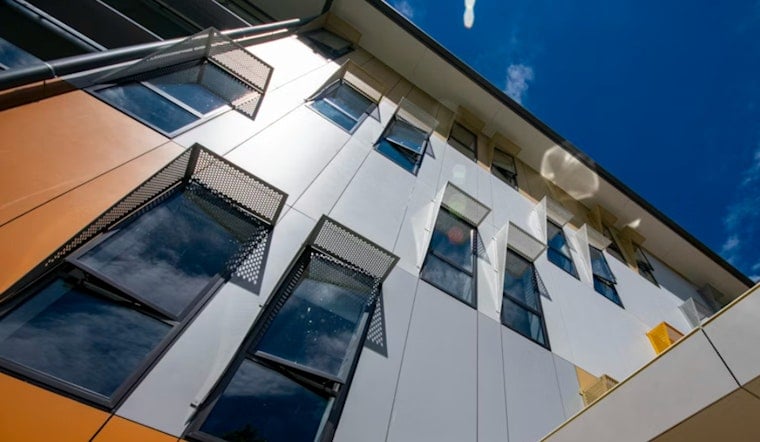
Early renderings show a cross-shaped tower with terrace decks and exterior courtyards, designed by Seattle-based firm Mithun using concrete, fiber-cement panels, metal, and glass. Urbanize LA reports that the environmental study pegs the project cost at about $351 million and the tower height at roughly 238 feet, with 148 units mostly laid out as four-bedroom apartments. Plans call for two service parking spaces accessed from Levering Avenue and no resident or guest parking on the property.
Part of a bigger build-out
UCLA casts the Levering tower as part of a broader campus housing build-out meant to support its guarantee of on-campus options for incoming cohorts. The Los Angeles Times quoted UCLA housing officials saying the project would “replace outdated buildings with a modern, fully electric high-rise” that adds space for more than 1,100 students. As The Real Deal and other project listings note, the Levering proposal joins a recent wave of student housing near campus, including the adjacent Levering Place mid-rise and another Gayley Avenue building sized for roughly 500 students. Private developers have also floated larger, student-focused projects across Westwood, steadily reshaping the neighborhood skyline.
Neighbors and public review
Local groups and the North Westwood Neighborhood Council have been tracking the tower plan closely. In November, the council voted to approve a community impact statement backing the project while asking UCLA to pause construction for a four-week window around the 2028 Olympics, according to the Daily Bruin. UCLA’s public record indicates the draft Initial Study and Mitigated Negative Declaration were circulated for a 30-day review period, and a virtual community meeting was held in November 2025, with written comments received and addressed in the final documents, according to the State CEQA Clearinghouse. Those procedures, along with ongoing questions about height, traffic, and construction activity, are likely to shape neighborhood conversations as design work continues.
Timeline and what’s next
UCLA’s project presentation lays out a tight schedule: schematic design in late 2025, a construction manager at risk award in January 2026, Regents approval in March 2026, demolition and shoring in summer and fall 2026, and vertical construction from late 2026 into early 2030. The presentation also outlines design development milestones and lists performance goals such as targeting at least LEED Gold certification. With the Regents’ approvals now on the books, UCLA is expected to move into contractor selection and detailed design this spring.
Environmental safeguards and legal notes
The project record includes a Mitigated Negative Declaration and a Mitigation Monitoring and Reporting Program that spell out site-specific measures related to geology, vibration, and tribal cultural resources as conditions of approval, according to the State CEQA Clearinghouse listing for the project. MNDs and their mitigation programs are part of the public record and can be challenged in court, so advocacy groups and neighborhood stakeholders are likely to watch for any appeals or lawsuits. For now, UCLA is emphasizing the goal of significantly increasing housing capacity near campus while complying with the environmental protections detailed in the final IS/MND.





