

























































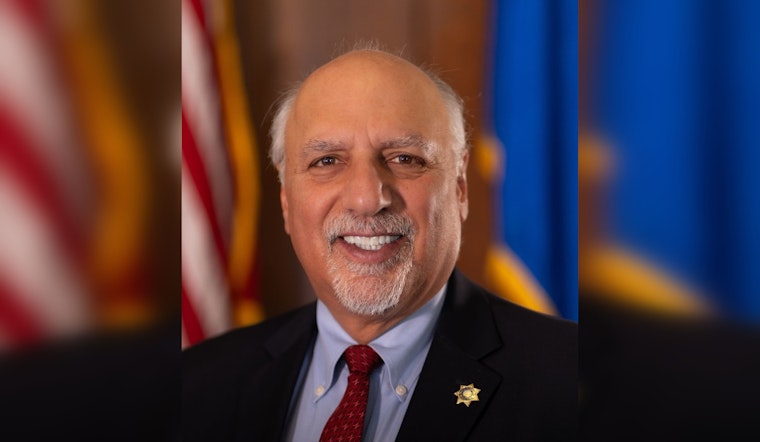
Nevada Lt. Gov. Stavros Anthony’s social media playbook just earned him a $3,000 ethics fine, a mandatory policy rewrite, and fresh training from the state’s ethics watchdogs.
At a March 18 public meeting, the Nevada Commission on Ethics voted 3-2 to impose a civil penalty on Anthony and ordered his office to adopt a written social media policy and complete ethics training. Commissioners said the sanctions stem from Anthony using official state email and government social accounts to promote a task force he created on women’s sports. Anthony’s lawyer pushed back during the hearing, arguing the posts were protected public advocacy rather than any sort of personal gain.
What commissioners heard
At the Las Vegas hearing, commissioners and attorneys spent more than two hours walking through documents and testimony. According to KTNV, the commission’s executive director, Ross E. Armstrong, said Anthony’s government account “reposted and amplified” a private account that was promoting the task force, and that this amplification created an “unwarranted benefit” under state ethics rules. Anthony’s attorney, Gus Flanagas, countered that the posts were an exercise in free speech and urged commissioners not to treat strong advocacy on an issue as a disqualifying personal interest, the station reported.
Panel findings and the record
Public records from the Nevada Commission on Ethics show that an August 20, 2025 review panel found “credible evidence” that Anthony failed to comply with provisions of NRS Chapter 281A and recommended corrective action instead of immediately sending the matter on for further proceedings. The review panel’s determination laid out conditions for a deferral agreement, including officewide training, a prohibition on using official accounts to amplify private or campaign accounts, and written certification that Anthony read the Ethics Manual’s Improper Benefits chapter. Those conditions were among the items the full Commission later weighed, as outlined by the Nevada Commission on Ethics.
Task force and earlier complaints
Anthony created the “Lieutenant Governor's Task Force to Protect Women's Sports” in 2024. Opponents and LGBTQ advocacy groups have said the effort targets transgender athletes, according to reporting by The Nevada Independent. The outlet also detailed an unrelated January 2026 complaint that alleged an account appearing to be his official page promoted a book Anthony wrote, adding to questions about how his office uses state platforms.
Legal implications
Nevada’s Ethics in Government law gives the Commission authority to require training, policy changes, and civil penalties, and to approve deferral agreements that spell out compliance conditions, as described in NRS Chapter 281A. A final opinion by the Commission may be subject to judicial review in district court, meaning the civil penalty and any required corrective actions could be appealed under state law, per the Nevada Revised Statutes and the Commission’s own documents.
What comes next
The Commission will expect the lieutenant governor’s office to certify that it has met the training and policy requirements and may monitor how well those terms are followed. If the conditions are not met, the case could be brought back for additional proceedings. The Commission’s public agenda lists the March 18 action, and the meeting materials and any formal written opinion will serve as the public record for tracking compliance, according to Nevada Commission on Ethics materials.
Anthony, a 29-year veteran of the Las Vegas Metropolitan Police Department who won the lieutenant governor’s office in 2022, now faces potential political fallout as the 2026 election cycle approaches. His office did not immediately offer new comment beyond what was said at the hearing, and any appeal filings or compliance documents will determine whether the matter stays an administrative sanction or makes its way into court.



