

























































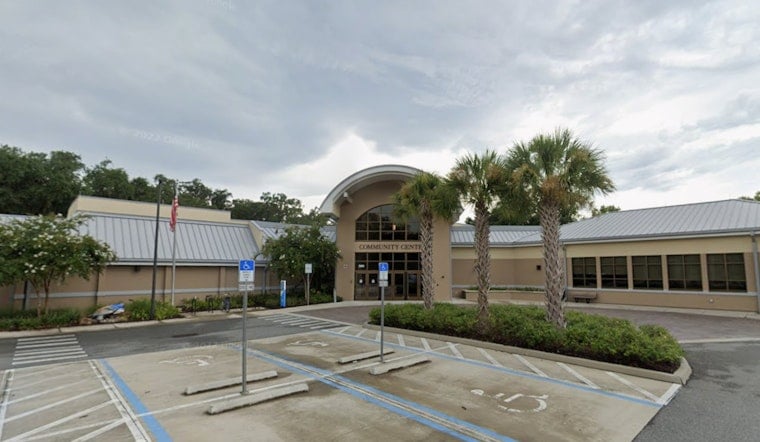
Raydient on Wednesday, April 22, rolled out a sweeping master plan that would add roughly 22,000 homes across nearly 20,000 acres west of U.S. 1, a buildout that city documents and residents say could nearly double Palm Coast’s population over the coming decades. Instead of a formal presentation, the neighborhood meeting at the Palm Coast Community Center relied on maps, display boards and quiet conversations as designers walked people through proposed villages, schools, public safety sites, industrial parcels and a new loop road that would redraw the city’s western edge. Neighbors and some officials walked out still pressing for straight answers about who will pay for the roads, schools and utilities that make the whole vision possible.
What the Application Says
On March 23, 2026, Raydient filed a rezoning application and draft Master Planned Development (MPD) agreement with the city, asking to rezone roughly 20,214 acres and to annex portions of county land into Palm Coast. The draft breaks the property into Village Centers, an Employment Center and a Greenway Overlay that together are intended to reserve about half the land for recreation and natural open space, and it sets density limits and use tables that would guide future phases. The draft development agreement is on file with the city and is also available via FlaglerLive.
Council and Critics Push Back
Vice Mayor Theresa Pontieri and several residents have publicly questioned the scale and timing of the proposal, arguing that the new MPD appears to walk away from earlier developer obligations, including paying for a loop road and a regional sports complex, and could shift major costs onto taxpayers instead. Pontieri blasted the packet as “117 pages of absolute garbage” and said she would not accept the plan as written if it leaves taxpayers footing the bill. The clash over who covers infrastructure, and what happened to earlier commitments, has quickly moved to the center of City Hall policy debates, according to Flagler County Buzz.
What Raydient Showed
At the community meeting, company consultants set up conceptual maps and looping, silent marketing videos and described a layout of four or five villages, each centered on a commercial hub with the highest housing densities in the core. The materials show village center densities of roughly eight to ten units per acre, a mix of housing types with single family homes still making up the bulk, multiple K–8 schools and either a high school or an education campus. They also outline about 3.2 million square feet of industrial space clustered near U.S. 1. Designers pointed to internal roads and a proposed loop connecting Matanzas Woods Parkway to Palm Coast Parkway and the future state route 2209, a feature they present as key to keeping local traffic moving. The project and the meeting were first detailed by FlaglerLive.
Process and Timeline
The draft agreement notes that the MPD rezoning will need a recommendation from the city’s Planning and Land Development Regulation Board before the City Council can vote, and that any approval would be followed by separate negotiations over concurrency agreements that spell out who builds and pays for roads, utilities and public safety facilities. City staff are in the middle of updating the Comprehensive Plan with growth scenarios that anticipate development pushing west, and the MPD would require future land use amendments that match that long range blueprint. For background on the planning framework, see the city’s Comprehensive Plan update from the City of Palm Coast.
Who Is Behind the Project
Raydient Places + Properties, a development arm of Rayonier, is the applicant. The company manages large master planned communities in Northeast Florida, including Wildlight near Yulee. Raydient markets these projects as multi decade buildouts that mix neighborhoods, jobs and substantial open space, and its earlier communities provide a template for the kind of phased, amenity driven growth the firm is pitching in Palm Coast. Raydient Places + Properties
Legal and Financing Questions
The draft agreement includes detailed language on impact fee credits, park land dedications and the transfer of public safety sites. For example, it proposes a Sports Activity Park dedication that would cover park requirements for the first 13,813 residential building permits and offers dollar for dollar impact fee credits for land contributions. Those tools could reduce early cash payments from the developer while still giving the city options to secure land and sites for schools, parks and fire stations, but they leave open tricky questions about timing, long term maintenance and how much financial risk ultimately falls on taxpayers. City staff and Raydient are expected to hash out those financing rules as the MPD moves into formal public hearings.





