

























































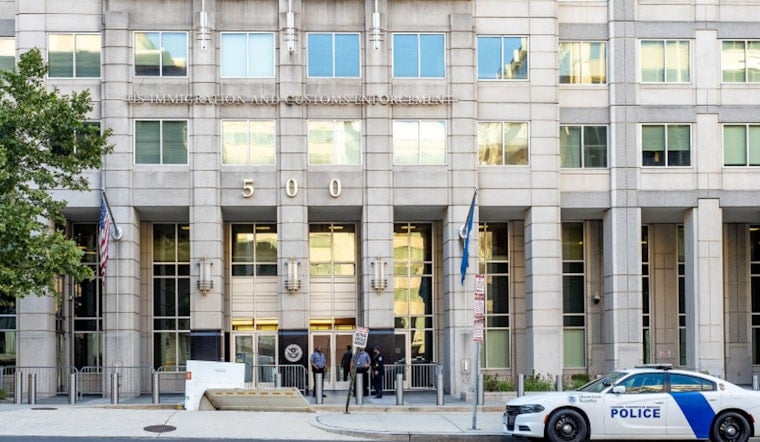
The ACLU of Pennsylvania has taken U.S. Immigration and Customs Enforcement to federal court, accusing the agency of stonewalling a Freedom of Information Act request while quietly using administrative “unmasking” subpoenas to smoke out people who monitor or criticize ICE activity in Montgomery County. The complaint focuses on at least two local cases that civil liberties lawyers say show how these subpoenas can pry loose account details and IP addresses from anonymous posters. The suit asks a federal judge to order a full search for records and a public release of what is found so researchers, advocates and anyone else paying attention can see how often and why the government has turned to this tool.
According to a press release from the ACLU of Pennsylvania, the group filed a FOIA request in February seeking records of unmasking subpoenas issued by ICE from 2024 to the present, then followed up with a complaint in the U.S. District Court for the Eastern District of Pennsylvania after the agency did not respond. The lawsuit asks the court to compel a complete search and production of all responsive documents so the public can scrutinize the Department of Homeland Security’s use of these administrative demands. Local outlets have already walked through the filing and the examples highlighted in the complaint, including reporting by NBC10 Philadelphia and others.
Two Montgomery County Cases at the Center
One subpoena targeted MontCo Community Watch, a bilingual Facebook and Instagram account that posts alerts about ICE activity. Reporting and court documents say DHS issued two administrative summonses to Meta in an effort to obtain user identities and IP addresses tied to the account. In a separate incident, court filings and local coverage describe how a Montgomery County man who had emailed a DHS attorney later received notice that Google had been served with a subpoena for his account data, and that federal agents showed up at his home. These details are laid out in coverage by The Philadelphia Inquirer and in reporting compiled by WESA.
Lawyers Say Subpoenas Can Chill Speech
Civil liberties advocates point out that administrative subpoenas are not the same as court orders. They can be issued by agency officials without a judge’s approval and often come with short deadlines that give recipients little real time to react. Steve Loney, a senior supervising attorney at ACLU-PA, told reporters that the notification emails can “look very pro-forma,” which makes them easy to overlook, and said the tactic can intimidate people who are simply trying to document government activity, as reported by WHYY. The ACLU says its FOIA suit is intended to reveal how broadly ICE has relied on these subpoenas and to put the records in the public domain for researchers and advocates to study.
A Wider National Pattern
National reporting has linked the Montgomery County examples to a larger wave of similar administrative demands. Outlets have reported that DHS sent dozens, and in some accounts hundreds, of subpoenas to platforms including Google, Meta, Reddit and Discord, seeking identifying information for anonymous accounts that criticized ICE. Tech coverage has sketched out that pattern and cited a New York Times investigation into the number of such requests, while civil liberties groups like the ACLU and the Electronic Frontier Foundation have urged tech companies to insist on court involvement before turning over user data, as reflected in statements from regional ACLU affiliates. See coverage by TechCrunch and an ACLU Northern California account of a withdrawn subpoena at ACLU NorCal.
What the ACLU Is Asking the Court To Do
The ACLU’s lawsuit asks a judge to declare that ICE failed to meet its obligations under FOIA, to order a full and complete search for all responsive records, and to require the agency to turn over whatever it finds. The organization says it plans to publish the records and share them with academics and advocates once they are obtained. The filing comes after earlier cases in which DHS withdrew subpoenas once litigation began, a pattern that local reporting has documented, and the new suit is meant to build a clearer judicial record and force broader transparency around the practice. For more on the ACLU-PA filing, see the group’s press release and subsequent reporting by ACLU of Pennsylvania and The Philadelphia Inquirer.
If You Get a Notice
Legal groups say that anyone who receives a notice from a tech company that the government has requested their data should hang on to the notice, check any connected email accounts and contact their local ACLU affiliate or a lawyer familiar with First Amendment and privacy law as quickly as possible, according to local reporting. The ACLU says it brought this FOIA case to shed light on the process so that people who track or criticize government activity can better understand whether the agency is using administrative subpoenas as a surveillance or intimidation tool, rather than as a narrowly tailored step in a specific investigation.





_(53831699221).jpg)