

























































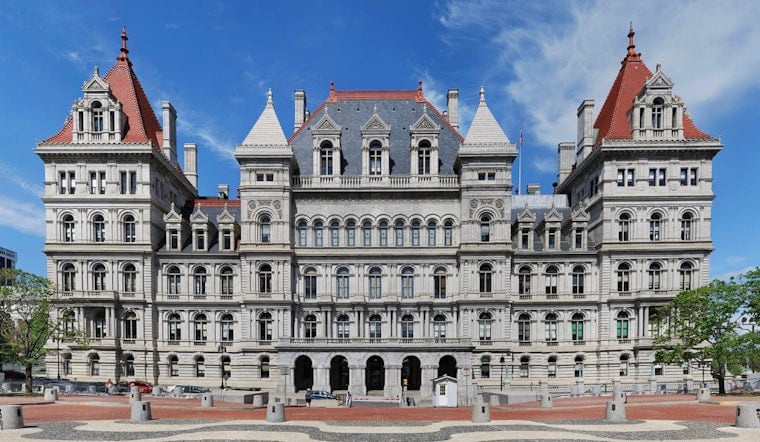
Albany lawmakers are pushing a pair of bills that would let on-duty first responders draw an invisible 15-foot circle around themselves and make staying inside that space, after a verbal warning, a crime. The companion measures, introduced this month in both the state Senate and Assembly, have already triggered rallies and counter-protests at City Hall. Backers say the proposed perimeter would give officers, firefighters and paramedics breathing room at chaotic scenes. Critics warn it could scare off bystanders and journalists who legally record public activity. If it passes, the plan would create a new statutory offense and open the door to misdemeanor charges.
What the bills would do
The legislation would add a new section to the Penal Law that establishes a fifteen-foot safety buffer around on-duty police officers, firefighters, EMTs and other emergency personnel and labels interference as a class B misdemeanor. Under the Senate text, a person who "knowingly approaches or remains within" that zone after a verbal warning, and who intends to impede, threaten, harass or otherwise interfere, could be charged. The bill language also states that members of the public may record or photograph first responders as long as they do so outside the fifteen-foot zone and do not interfere with official duties, according to the New York State Senate.
Who introduced the bills and where they stand
Sen. Jessica Scarcella-Spanton is carrying the Senate version and Assemblymember Kwani O'Pharrow is sponsoring the companion measure in the Assembly. Both bills are currently parked in the Codes committees and remain under review in Albany, according to legislative tracking pages.
Rallies at City Hall
Supporters turned out in the dozens outside City Hall to cheer on the bills while a smaller group of protesters showed up to denounce the idea, as reported by PIX11. Law-enforcement backers pitched the measure as a straightforward safety fix. One speaker told the outlet, "we have no issue, film us all day long. we'll film you right back with our body cameras." The early demonstrations highlight how quickly the proposal has become a flashpoint between public-safety advocates and free-speech groups.
How it compares and what civil-liberties groups say
Supporters point to similar moves in other states. Florida enacted a so-called "halo" law that set a 25-foot buffer for first responders and took effect in 2025. Civil-liberties groups and some lawmakers counter that broad, statewide buffer rules can raise constitutional questions and may chill the public's ability to monitor police, a concern officials and advocates have flagged in recent coverage of related buffer ideas. The fight in Albany is also unfolding alongside separate New York debates over protest buffer zones around schools and houses of worship, which has fed into a broader statewide argument over how to balance safety and free expression.
Legal implications
If enacted, the bills would add a new Penal Law section and classify interference with a covered responder as a class B misdemeanor. Under New York law, a class B misdemeanor can carry a sentence of up to 90 days in jail. The proposal requires that officers give an initial verbal warning before a charge can be filed and exempts people who are seeking emergency help or providing aid. Critics say uncertainty about when a warning is considered given and how "intent" would be proven could make the law a target for litigation. The measures would take effect 90 days after becoming law if passed, and they now head into committee review and likely legal scrutiny as they move through Albany.
What comes next is in the hands of both chambers' Codes committees, which will decide whether to hold hearings or tweak the language. Advocates on both sides say they plan to press lawmakers in the coming weeks, a process that will determine whether the 15-foot idea stays a Capitol talking point or turns into statewide policy.





