

























































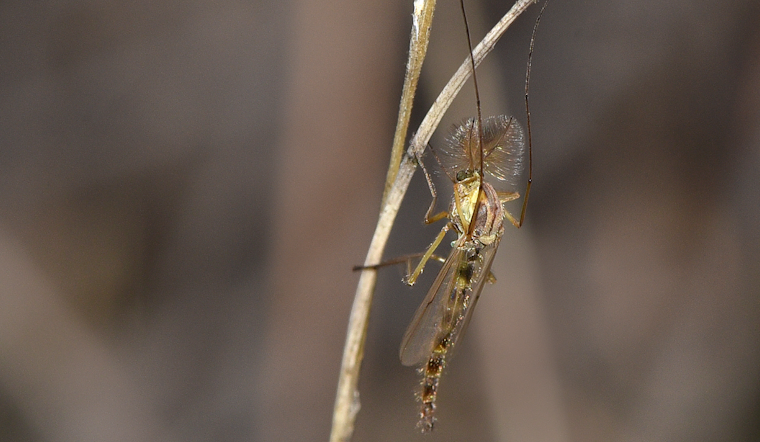
Waterfront lunches along the Back River peninsula are starting to feel less like a summer treat and more like a contact sport, as diners swat through thick clouds of midges to protect their faces and food. Baltimore County says it saw this coming, moved its seasonal midge campaign up on the calendar, boosted funding, and even rolled out an online reporting page. But many residents and business owners say the response still feels like a temporary bandage, not a cure.
What The County Is Doing
County environmental staff say the current strategy combines helicopter-applied Bacillus thuringiensis israelensis (Bti) over shallow sections of the upper river with in-plant treatments at the Back River Wastewater Treatment Plant and ongoing monitoring. According to Baltimore County Government, those tools previously pushed larval counts well below nuisance levels and are considered species-specific and safe for most aquatic life. County officials say spraying crews started earlier than usual this year in an effort to get in front of the swarms.
Why Neighbors Say It Is Not Enough
People living and working on the peninsula argue that the scale of the outreach and spending does not match what they are seeing on the water. “I think it is a weak effort,” Mary Taylor of the Back River Community Action Group told WBAL, warning that the county’s approach may only buy short stretches of relief. Neighbors have also zeroed in on the county’s new reporting page, saying a legal-style disclaimer on the form has raised suspicion about how complaints will actually be used.
Local Businesses Report Losses
For waterfront businesses, the bugs are more than a nuisance; they are cutting into revenue. Restaurants and marinas along Back River have already reported customers canceling outdoor reservations and plates being sent back after midges landed in the food, according to The Baltimore Banner. Marina operators who previously watched summer traffic drop during heavy midge seasons say they are bracing for a repeat and watching this year unfold with unease.
Roots Of The Problem
Entomologists and county monitors point out that midges thrive where river bottoms are loaded with nutrients. In the Back River, that means a stew of fertilizer runoff, stormwater, and treated wastewater discharges that helps fuel dense emergent swarms. The county’s monitoring program and in-plant Bti dosing at Back River are intended to knock down larval densities at the source, according to Baltimore County Government. That ecological backdrop is a big reason community leaders argue that treatment alone will not solve the problem without long-term work to reduce nutrient loads flowing into the river.
Money Vs. Effectiveness
The county’s budget for midge control is another flashpoint. “Right now, we have $1.1 million for just this season. That may give us maybe one, two, three sprays,” Taylor told WBAL, adding that a handful of aerial treatments might only tamp down swarms for a few weeks at a time. Local advocates say what is really needed is a multi-year, multi-pronged plan that includes funding to address runoff and upgrade the wastewater plant, not just pay for another round of flights over the river.
What Comes Next
Residents are pushing for a sustained program that pairs on-the-water treatment with broader watershed fixes and state support. County leaders have already asked the Maryland Department of Agriculture for additional help as the effort ramps up, according to The Baltimore Banner. Past coverage shows the program has relied on both aerial Bti applications and in-plant dosing, with costs shared between county and state partners, and officials say monitoring and treatments will continue through the season. CBS Baltimore has noted that multi-agency cooperation has long been a central piece of the Back River midge response.





