

























































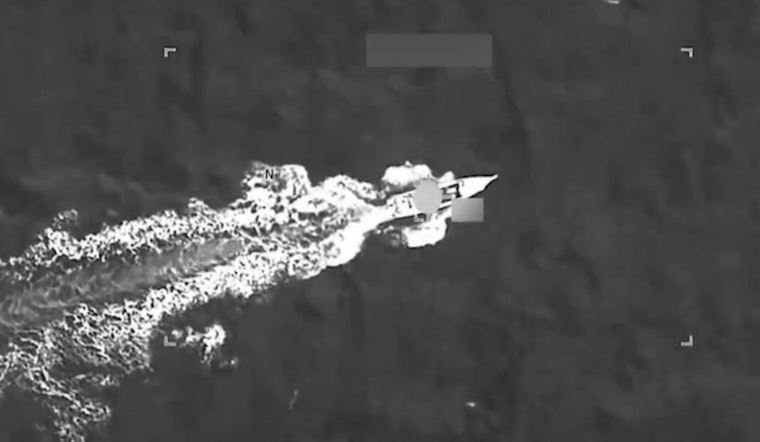
The U.S. military says it blew up a small boat in the Caribbean Sea on Sunday, killing three people in a strike that Miami-based Southern Command quickly pushed out on video. The short overhead clip shows the vessel erupting in flames, another stark entry in a months-long campaign that Washington says is meant to stop drugs before they ever near U.S. shores. The latest strike is already stirring fresh arguments in Washington and across the region over whether the Pentagon should be using lethal firepower on suspected smugglers.
What the military released
U.S. Southern Command said Joint Task Force Southern Spear carried out what it called a "lethal kinetic strike" on the small vessel, acting on the orders of Gen. Francis L. Donovan. Military officials said intelligence showed the boat was "transiting along known narco-trafficking routes." According to U.S. Southern Command, three "male narco-terrorists" were killed in the strike and no U.S. forces were hurt. The command posted the video of the engagement online and said the U.S. Coast Guard was notified so that search-and-rescue procedures could be activated where appropriate.
The broader campaign
Military officials say this strike is one of dozens launched since early September as part of an administration effort targeting vessels used to move illicit narcotics. The public tally of those killed has been climbing. AP reports that at least 181 people have been killed so far and notes that officials typically release only brief, grainy footage while providing little public evidence that the targeted vessels were actually carrying drugs. President Donald Trump has repeatedly defended the operations, saying the United States is in an "armed conflict" with cartels, a label that has become central to the administration's legal rationale for the strikes.
Legal and diplomatic fallout
Human-rights organizations and legal scholars argue that the strikes risk running afoul of both U.S. and international law, since civilians suspected only of criminal activity are generally not considered lawful targets. That concern is laid out in detail by The Guardian. Families of two Trinidadian men killed in an October strike have filed a wrongful-death lawsuit in federal court in Massachusetts, according to Marine Corps Times, setting up a case that could test the administration's legal justification in U.S. courts. Regional governments and rights advocates are also pressing Washington for more transparency about how targets are chosen and how casualties are counted after each operation.
Congress and oversight
On Capitol Hill, lawmakers have been pushing the Pentagon for answers as the body count rises. Members of Congress have been shown strike footage in classified briefings, according to AP, but many details remain behind closed doors. Some legislators want the Justice Department legal opinion that underpins the campaign released to the public, while others argue the military finally has a counternarcotics tool that cartels actually fear. What Congress and the courts decide to do with those competing views will heavily influence whether the strikes continue and how the Pentagon accounts for civilian harm.
What to watch
In the weeks ahead, keep an eye out for further Southern Command statements about new strikes, additional lawsuits from families of people killed at sea, and any fresh moves in Congress to demand documents or hold hearings. For those tracking developments in real time, Just Security is maintaining an updated timeline of reported strikes, casualty figures and related legal action as the fight shifts from the open water into courtrooms and committee rooms.


