

























































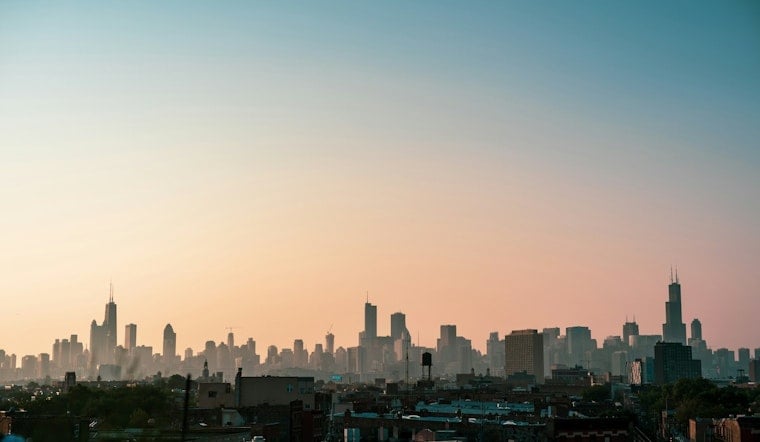
Chicago's air is still failing the sniff test. The American Lung Association says the Chicago-Naperville metro just scored an F for ozone in its latest State of the Air analysis, with 18 unhealthy air days logged in 2025. The report warns that millions of Illinois children are breathing pollution that can stunt lung development and trigger asthma attacks, right as community groups and City Hall wrangle over the Hazel M. Johnson cumulative-impacts ordinance, which is aimed at slowing new pollution in neighborhoods already boxed in by industry and freight.
What the report found
According to American Lung Association, the 27th annual State of the Air report released April 21 ranked the Chicago-Naperville metro 15th worst in the country for ozone and handed the region a flat-out F. The association's release says 2,206,982 Illinois children live in counties that failed at least one air-quality measure, and that 33.5 million U.S. children, about 46 percent, face similarly unhealthy air. Altogether, the report estimates roughly 152 million people, or 44 percent of Americans, live in counties that flunk at least one measure of pollution.
Ozone is a growing problem
While some communities saw small gains in particle, or soot, pollution, the American Lung Association flagged ozone as the troublemaker on the rise both nationally and in greater Chicago. Local coverage underscored that split, pointing out that ozone levels around Chicago climbed even as short-term particle days dropped in parts of the region. As reported by the Chicago Sun-Times, the ozone trend lines are especially worrisome for children and people who work outside.
Wildfire smoke made spikes worse
Some of the ugliest short-term air spikes in 2025 were fueled by wildfire smoke that drifted in from Canada and settled over the Midwest, briefly turning otherwise routine days into something closer to a smokehouse. IQAir's real-time monitoring put Chicago among the most polluted cities in the world on July 31, 2025, a sharp reminder that faraway fires can erase local clean-air progress overnight. When weather patterns pin smoke near the ground, a day that starts out fine can turn hazardous in just a few hours.
Advocates press City Hall for fixes
"Children deserve to breathe air that won't make them sick," Kristina Hamilton, director of advocacy for the American Lung Association in Illinois, said in a statement reported by the American Lung Association. The group is urging Chicago officials to pass the Hazel M. Johnson Cumulative Impacts Ordinance and calling on state lawmakers to support efforts to cut warehouse-related pollution and expand charging infrastructure for zero-emission vehicles. The association also warns that recent EPA rollbacks weaken protections and leave more children exposed to unhealthy air.
Where the Hazel Johnson ordinance stands
The Hazel M. Johnson ordinance, named for the late South Side environmental justice leader, would require cumulative-impact reviews for heavy industrial permits proposed in neighborhoods already carrying a heavy pollution load. The measure was introduced at City Council on April 16, 2025, according to Chicago Councilmatic, and reporting from Chicago Reporter notes that it has strong support from neighborhood groups and environmental justice advocates. Backers say the proposal would give regulators clearer authority to block or reshape projects that would pile extra pollution onto already vulnerable communities.
Bottom line for Chicagoans
The American Lung Association's findings land as a not-so-gentle reminder that clean-air gains are fragile and that decisions in Chicago, Springfield, and Washington determine who breathes easier and who does not. Public health agencies say residents can lower short-term risk by watching air-quality alerts, easing up on outdoor exercise during high-ozone or smoky days, and following medical guidance for conditions like asthma. Community advocates, meanwhile, argue that lasting relief will depend on stronger permitting rules, cleaner freight operations, and more zero-emission infrastructure so new pollution does not stack up on neighborhoods that are already overburdened.


