

























































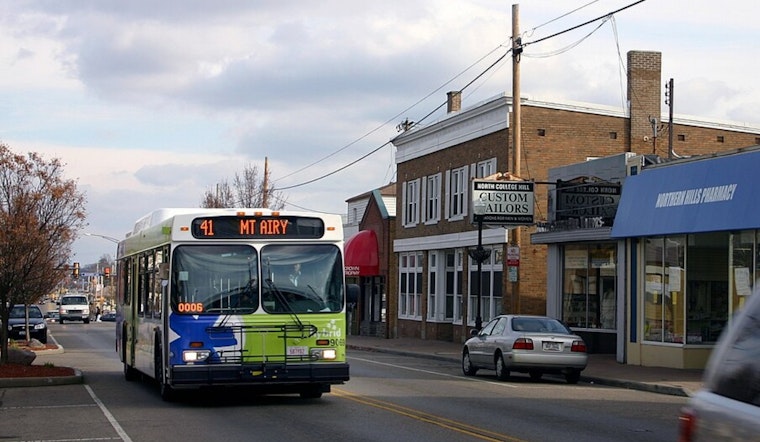
Cincinnati bus riders are about to notice a serious glow-up at their stops. On Thursday, Cincinnati Metro rolled out the first of its newly designed bus stop signs, kicking off a roughly two-year effort to replace about 3,700 signs across Hamilton County. The refreshed markers make direction, destination and route details much easier to read and layer in accessibility upgrades such as QR codes and raised Braille so riders with visual impairments can better navigate the system. Metro says the redesign, created with the University of Cincinnati’s design college, is meant to simplify life for both daily commuters and out-of-town visitors.
What the new signs show
The prototype launch marks the start of a phased swap of on-street signs, with Metro planning to replace about 3,700 markers over the next two years, according to WLWT. The updated sign face clearly calls out which direction buses are traveling, their destinations and which routes serve each stop. Every sign is outfitted with scannable QR codes that link to schedule and arrival information, along with raised Braille for blind and low-vision riders. “These new signs represent a major step forward in how we communicate with our riders,” Metro communications director Brandy Jones told WLWT.
Design work led by UC DAAP
The overhaul grew out of a collaboration with students and faculty from the University of Cincinnati’s College of Design, Architecture, Art and Planning, which treated the project as a full civic wayfinding system rather than a single flat sign, according to University of Cincinnati News. DAAP designers tested 17 typefaces in A/B readability trials before landing on the navigation-focused font Navigo, then tuned spacing and visual hierarchy so riders can quickly pick out route numbers and directions from a distance. Hoodline previously covered the campus collaboration and early prototypes as park-and-ride elements went in ahead of the broader spring rollout, and the university notes that street-level implementation was slated to begin this spring.
Where the signage fits into Metro's plans
The signs are one piece of a larger customer information and wayfinding push that also includes new on-board digital displays and updates to transit facilities. Metro’s board packet outlines resolutions and engineering work tied to wayfinding and sign placement, emphasizing that every installation must satisfy safety, breakaway and siting standards before the systemwide deployment moves forward, per Metro.
What riders should expect
On the street, riders should see less guesswork and more clarity at their stops: bigger, cleaner route numbers, clear direction and destination cues and quick access to live times via QR code scans. Officials told WLWT that the rollout will be phased, so neighborhoods will get their updated signage over time, and that local, federal and community partners are helping power the effort.
Metro frames the project as part of a broader modernization and accessibility push. Riders who want the latest maps, schedules and project updates are encouraged to keep an eye on Metro’s official channels for details on when new signs will land in specific parts of Hamilton County.





