

























































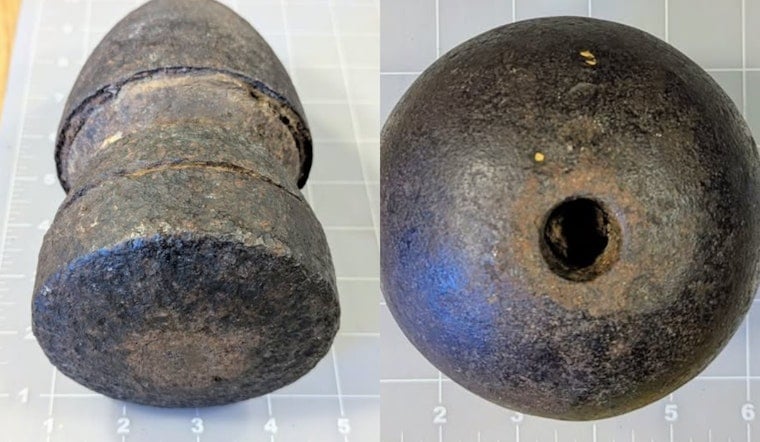
A box of old war relics in an Oxford Township home turned into a legitimate bomb scare on Friday when a resident spotted what looked like a live Civil War-era cannonball and a wooden sabot, then did the smart thing and called authorities.
Bomb technicians from the Butler County Sheriff's Office responded, confirming the find included a roughly 3.75-by-7-inch wooden sabot and a 4.5-inch cannonball with a fuse well that, as the department put it in a Facebook post, "appeared to be live." The items were secured at the scene, removed from the home, and taken away for analysis and proper disposal. In the same post, the sheriff's office urged residents not to touch suspicious objects, to leave the area immediately, and to contact law enforcement, reminding the public that "your safety is always our priority" Butler County Sheriff's Office.
How the bomb unit handled the call
The Butler County Sheriff's Office Bomb Unit, which is equipped with two response trucks, robots and digital X-ray gear, chose to move the suspected live ordnance rather than attempt to dismantle it inside the home. The same squad had already been busy this week, responding to a separate incident on April 21 involving explosive materials in Ross Township, an April 21 removal of explosive materials that also required careful handling.
According to the sheriff's office, bomb technicians receive ongoing training, recertify regularly, and rely on containment vessels, remote robotics and other specialized tools to keep both the public and officers at a safe distance during these kinds of calls Butler County Sheriff's Office.
Why Civil War relics can still be dangerous
Officials say 19th century artillery is not just rusty metal. Shells can still contain black powder or intact fuses, which means they can remain dangerous long after the battles ended. That is why parks and local agencies routinely call in explosive ordnance technicians when suspicious military items turn up.
The National Park Service has documented similar discoveries at Fort Sumter and other historic sites, where old ordnance was removed and destroyed to protect visitors. In another case, archaeologists at Gettysburg uncovered unexploded artillery that had to be dealt with by an explosive ordnance disposal team Live Science.
Local authorities in other parts of the country have taken the same cautious approach. In Habersham County, Georgia, deputies called in specialists after finding a leaking cannonball that still contained explosive material, and it was ultimately destroyed at a range in a controlled detonation. Coverage of that incident underscored why no one takes chances with historic ordnance NowHabersham.
What residents should do
If you stumble across something that looks like a cannonball, shell or any other kind of military ordnance, officials say the rules are simple. Move away, keep others back, and call 911 or your local law enforcement agency rather than trying to investigate or transport the item yourself.
Guidance from both local authorities and federal experts stresses that identification and disposal should be left to trained explosive ordnance teams, who can examine and dispose of the object safely National Park Service.





