

























































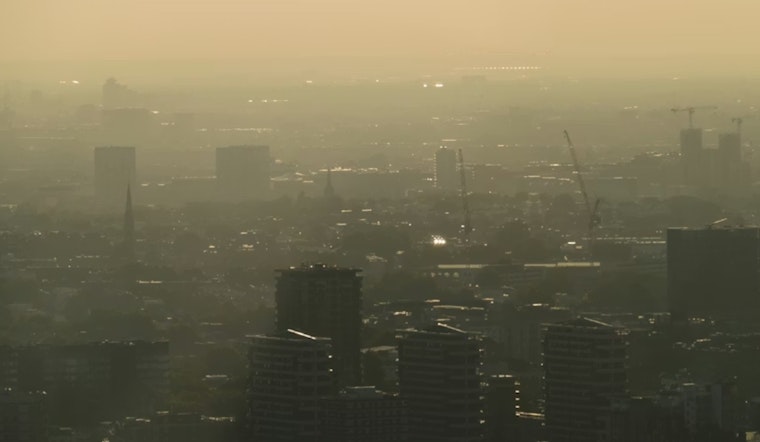
Federal regulators say Cleveland may finally be in line to shed its "serious" ozone rap sheet. The U.S. Environmental Protection Agency is proposing to find that the region now meets the 2015 federal ozone standard after state and federal officials agreed to remove a handful of high readings tied to wildfire smoke from the three year calculation. That adjustment nudges the area's three year design value down to the 70 parts per billion threshold that counts as attainment and could change what pollution controls and planning rules the region has to follow.
How the exclusion happened
Ohio EPA submitted an "exceptional events" demonstration arguing that smoke from several Canadian wildfires drove unusually high ozone readings at local monitors in early June 2023. U.S. EPA Region 5 agreed with that analysis in a January 12, 2026 letter, concluding that the wildfire influence made those readings atypical. That concurrence led the agency to flag the affected days in the national Air Quality System, which in turn allowed EPA to leave them out of the regulatory calculations, according to U.S. EPA Region 5.
What the numbers show
With the wildfire influenced days removed, EPA's proposed rule lists the Cleveland area's 2023–2025 ozone design value at 0.070 parts per million (70 ppb), which is the threshold for attainment under the 2015 standard. The agency's technical tables work out that three year average using roughly 68 ppb for 2023, 72 ppb for 2024 and 70 ppb for 2025. Those same tables show the exclusions trimming the regional average from about 71 ppb to 70 ppb after dropping spikes recorded at monitors such as the East 152nd Street site in June 2023, according to the Federal Register.
What it means locally
Officials stress that the move is a technical fix to how the numbers are crunched, not a declaration that ozone is no longer a problem. A Clean Data Determination would, however, suspend a slate of planning obligations tied to the "serious" nonattainment label, such as certain attainment demonstrations and contingency measures, as long as air quality continues to meet or stay below the standard. The Ohio EPA draft attainment demonstration explains the mechanics and projected impacts of the change, and local reporting says it could spare some smaller and mid size firms from immediate new controls. Cleveland health director David Margolius told Cleveland.com, "the goal is for our air to get better and better with time."
Next steps for rulemaking
EPA has proposed to approve Ohio's Clean Data Determination and opened a public comment docket (Docket ID EPA‑R05‑OAR‑2026‑0562). Any final decision that relies on the revised dataset will be published for public comment and judicial review, and a separate rulemaking would still be required to formally redesignate the area to attainment, according to the Federal Register. For now, the Cleveland area remains designated nonattainment until that later redesignation step. If EPA finalizes the finding, however, the statutory obligations tied to the "serious" classification would be put on hold while air quality continues to meet the standard.
Bottom line
Health advocates point out that ozone pollution still poses risks on warm, sunny days and that excluding wildfire driven spikes from a regulatory calculation does not actually cut emissions from local sources such as traffic and industry. The American Lung Association has documented health harms from ozone exposure, including aggravated asthma and increased hospital visits, and urges continued focus on reducing ozone precursors even as regulators work through these technical fixes.





