

























































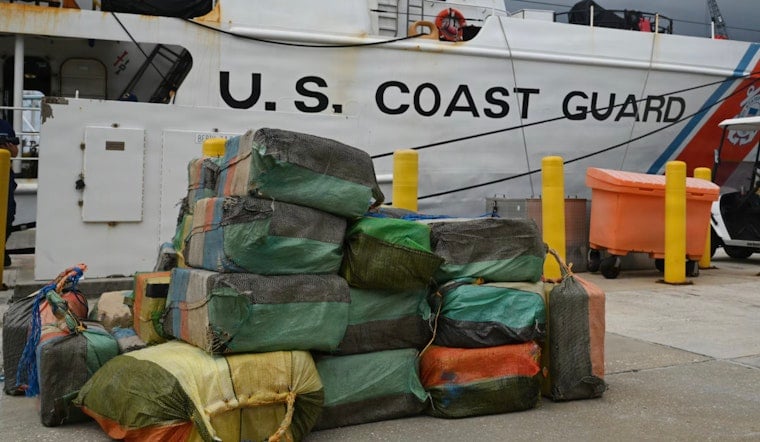
The U.S. Coast Guard hauled a massive cocaine load onto the pier at Base Miami Beach on Thursday, offloading about 2,570 pounds of narcotics with an estimated street value of $19.3 million after three separate interdictions in the Caribbean Sea. Six suspected smugglers were brought ashore and handed over to federal authorities, the latest sign that maritime drug runners are facing an increasingly aggressive response long before they can get near U.S. shores.
How the offload unfolded
According to the U.S. Coast Guard, the load was delivered to Miami Beach by the crew of Coast Guard Cutter Resolute. The drugs themselves were interdicted at sea by the crews of USCGC Tahoma and the USS Billings, which carried an embarked Coast Guard law enforcement detachment for the mission. Cmdr. Ian Starr, Resolute’s commanding officer, said the seizures “reflect the strength of our partnerships and the persistence of our crews.” The Coast Guard credited a helicopter interdiction squadron, Tactical Law Enforcement Team South and Joint Interagency Task Force South with supporting the operation.
Operation Pacific Viper and the bigger picture
Officials place Thursday’s offload inside a much broader campaign. They say the Coast Guard has seized more than 511,000 pounds of cocaine in 2025, with Operation Pacific Viper, launched last August to step up patrols in the Eastern Pacific, accounting for over 215,000 pounds of cocaine and roughly 160 arrests. Those figures point to an unusually high tempo of maritime seizures that, according to authorities, strip transnational criminal organizations of billions in illicit revenue. As NBC6 South Florida notes, the numbers also underline how central interdictions at sea remain to national counter-drug strategy.
Miami Beach keeps showing up
Base Miami Beach has become a familiar backdrop for these big offloads, with crews routinely stacking tightly wrapped bales on the pier after long patrols. Earlier this month, the Coast Guard brought in about 3,825 pounds of cocaine valued at nearly $28.7 million, another multi-cutter and interagency operation that funneled a large shipment into South Florida for evidence processing. CBS Miami reported on that April 16 offload and the role of Operation Pacific Viper in tying together patrols across a wide swath of ocean.
What happens to the suspects
The six people detained in connection with the latest bust were turned over to federal authorities at Base Miami Beach for processing, and the Coast Guard did not immediately release their names or specific charges. Federal prosecutors and partner agencies will now sort through the case file and decide how to move forward, a standard handoff once cutters complete their part at sea, according to Local 10.
Why the offloads matter
Officials argue that cutting off shipments at sea keeps huge quantities of narcotics from ever reaching U.S. cities while choking off the cash flow that fuels cartel operations and associated violence. Maritime interdiction remains a frontline tactic as traffickers constantly shift routes and methods. About 80 percent of U.S. bound drug interdictions take place on the water, CBS Miami reports, which explains why scenes like Thursday’s high-stakes offload keep playing out on the Miami Beach waterfront.





