

























































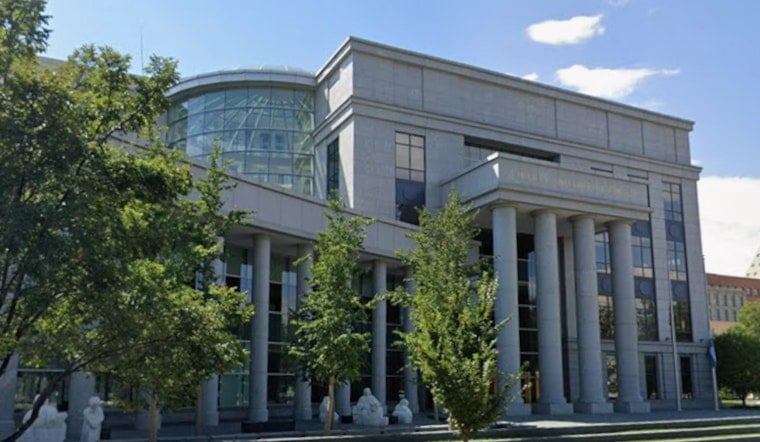
Colorado’s highest court has handed Hertz a major win, ruling Monday that car rental companies that sell supplemental insurance are not “insurers” under state law. The 4-3 decision wipes out a Court of Appeals ruling that had opened a direct bad-faith lane against the rental giant and instead shoves claims back toward the actual insurance company and its administrator, while instructing lower courts to reinstate Hertz’s dismissal.
Writing for the majority, Justice Carlos A. Samour Jr. said the legislature always meant to treat rental outfits differently from insurance companies and rejected the plaintiffs’ push to recast Hertz as an insurer. “Hertz rents cars; it doesn’t insure them,” he wrote in the court’s opinion, concluding that simply giving customers access to a third-party policy does not saddle a rental company with the legal duties of an insurer, according to the Colorado Judicial Branch.
The case grew out of a February 2020 hit-and-run, where two passengers say they were left staring at more than $700,000 in medical bills after riding in a Hertz rental whose driver had bought supplemental uninsured/underinsured motorist coverage. According to the Denver Gazette, that coverage sat under a Chubb policy listing Hertz as the insured and the driver and passengers as additional insureds, with Chubb’s third-party administrator ESIS doing the claims investigation and paying out benefits.
The dispute dragged the justices back into a long-running conversation that dates to the 1990s. The opinion revisits the court’s earlier Passamano decision and the legislative fixes that followed, which the majority reads as a clear signal that the General Assembly wanted to keep motor-vehicle rental businesses in a separate lane from traditional insurers. For background on that older framework, see the Passamano case on Justia.
The bench was sharply divided. Justice William W. Hood III, joined by Justices Gabriel and Blanco, argued in dissent that a rental company can start to look a lot like an insurer when it sells coverage, helps adjust the claims, and shoulders some of the financial risk. In his view, the plaintiffs should have been allowed to keep pressing their claims to develop more facts. The dissent urged judges to look at whether revenue from policy sales, hands-on claims work, and risk sharing combine to effectively transform a rental firm into an insurer in practice, even if not in name, according to the Colorado Judicial Branch.
Regulators and industry groups were watching from the sidelines with real concern. The Colorado Division of Insurance warned that treating rental companies as insurers could actually create a regulatory gap rather than closing one, while trade associations for truck and car rental businesses cautioned that the wrong outcome might have driven up prices or shrunk the pool of available rentals for everyday customers, according to the Denver Gazette.
What This Means For Claimants And Renters
The ruling does not leave injured passengers stranded, but it does narrow their route. The plaintiffs can still pursue claims against the insurer that actually issued the policy, Chubb, and against ESIS as the third-party administrator, and the Supreme Court pointed out that those avenues remain open based on the record and filings in the case. For more on the case’s posture and how the justices wrestled with it during argument, see coverage in Colorado Politics.
Legal Implications
On the statute front, the decision fine-tunes how Colorado’s bad-faith framework operates. State law on unreasonable delay or denial of benefits, including C.R.S. § 10-3-1115 and § 10-3-1116, creates separate causes of action and potential enhanced remedies for people covered under an insurance policy, according to the Colorado Revised Statutes compiled by Justia.
The opinion also trims back the reach of the court’s earlier Cary decision, which had allowed tort duties to be imposed on third-party administrators in rare cases where control, expertise, and a financial stake lined up. After this ruling, courts are likely to treat Cary as a narrow path for finding de facto insurers rather than a broad rule that ropes in businesses that merely sell or facilitate third-party coverage on the side. The Cary precedent is available on Justia.
Industry watchers expect the ruling to draw attention beyond Colorado, since it speaks to how states should treat fronting arrangements and complex risk allocation structures. The earlier Court of Appeals ruling that appeared to expand liability for rental companies had already caught the eye of legal trade publications, and the Supreme Court’s reversal is likely to influence how rental firms nationwide draft, price, and market their supplemental coverage products going forward, according to Law360.
The case is Hertz Corporation v. Babayev et al., Supreme Court No. 24SC183. For Colorado renters who buy supplemental coverage, the takeaway is straightforward but important: review the policy language carefully and talk to a lawyer about claims against the named insurer or the claims administrator. The fact that a rental company sold you the coverage does not, under this ruling, make that company an insurer under Colorado law.




