

























































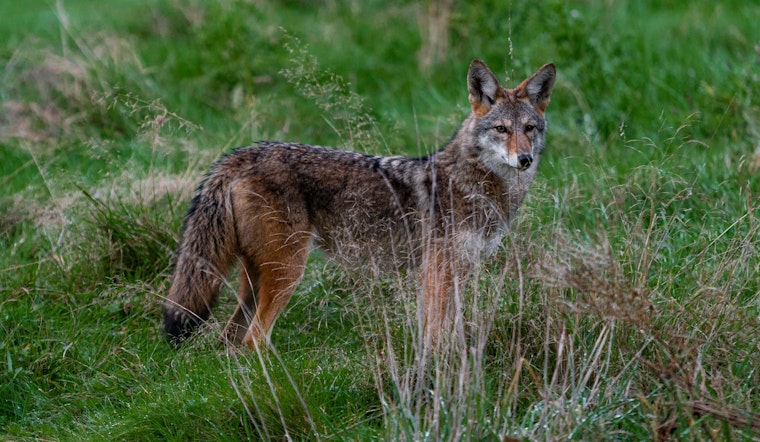
Coyotes are making themselves a little too comfortable in West Seattle, with three separate reader reports this week describing the animals roaming neighborhoods, cutting across lawns, and even raiding a backyard chicken coop. One was photographed at the West Seattle Golf Course, another was spotted trotting in and out of a yard between 12th and 16th Avenues near Othello and Webster, and a third reportedly took three backyard chickens in a neighborhood south of the peninsula. Neighbors told West Seattle Blog they have seen coyotes at all hours, and one family's kids reportedly stumbled on a coyote before school, which is not exactly the calm start to the morning most parents are aiming for.
According to West Seattle Blog, a texter sent in the photo from the golf course, while another reader reported that a coyote had been moving through a yard in the block between 12th and 16th near Othello and Webster for several days. The same post includes video from a person identified as Aaron, who says a coyote repeatedly visited his yard and made off with three chickens. The outlet notes it has been publishing coyote reports for more than 15 years as a local-awareness resource, so this latest string of sightings fits a long-running pattern of neighbors helping each other keep tabs on urban wildlife.
The Washington Department of Fish and Wildlife advises residents not to feed coyotes, to keep cats indoors and dogs leashed, and to "haze" any animals that come too close by making noise or otherwise appearing large. The agency's living-with-coyotes guidance also suggests steering clear of early-morning and late-evening walks in areas where coyotes are known to be active. WDFW says residents should report attacks on supervised pets or aggressive animals to its enforcement line at 360-902-2936 or through its online reporting form, noting that these steps help prevent coyotes from becoming too comfortable around people and human-provided food.
Citywide tracking and community reporting
Researchers and local journalists say what is happening in West Seattle matches a broader trend across the city. KNKX Public Radio has reported an uptick in daytime coyote encounters and cited state officials who point to habituation around human food sources as a likely driver. Community-science tools such as Woodland Park Zoo's Carnivore Spotter allow residents to log their own sightings and help researchers map where coyotes are most active, turning nervous backyard moments into useful data.
What neighbors can do
For now, experts suggest focusing on the basics. Practical steps include securing chicken coops with hardware cloth, bringing cats indoors, removing pet food and unsecured garbage, and keeping dogs close on walks. If you encounter a coyote, WDFW recommends standing tall, making noise, and backing away slowly while keeping your eyes on the animal. Do not run, since that can trigger a chase response. If a coyote attacks a supervised pet or behaves aggressively, residents are advised to report the incident to WDFW enforcement at 360-902-2936 and alert neighborhood sites so nearby households can be warned.
The West Seattle Blog roundup is the latest detailed neighborhood look at these encounters, and those community reports, together with entries on Carnivore Spotter, help build a more complete picture of how and where coyotes are moving. We will update if wildlife authorities issue new guidance or if more follow-up reports come in from the affected neighborhoods.




