

























































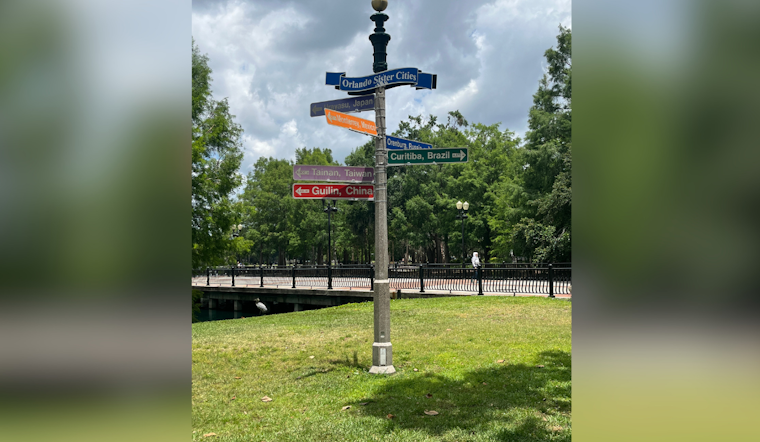
A deep-pocketed advocacy outfit that quietly helped bankroll a recent Florida bill is now tied to a broader push that would force cities to cut off sister city relationships with countries, including China. For Orlando, that could mean the end of its four-decade partnership with Guilin. Lawmakers signed off on the measure in March, and if it becomes law, the new rules are written to kick in on July 1.
Who’s behind the push?
Much of the campaign traces back to State Armor, a national advocacy group led by Michael Lucci that says its mission is to help states defend against foreign influence. State Armor has been busy promoting policy changes and outreach in statehouses around the country, and reporting has linked the group’s 2024 fundraising and lobbying activity to outside financial backers. According to the Orlando Sentinel, that funding stream and the lobbying pattern helped trigger scrutiny as HB 905 moved through Tallahassee.
What the bill would do
House Bill 905, a Foreign Influence measure sponsored by Rep. Jenna Persons-Mulicka, cleared both chambers in March and seeks to define “foreign countries of concern” while blocking certain official relationships with them. As laid out by the Florida Senate, the bill would end some sister city and linkage institute affiliations, layer on new registration and contracting limits, and carry an effective date of July 1, 2026, if it is enacted. Backers pitch it as a national security step. Critics counter that it swings so wide it scoops up community exchanges and higher education partnerships that were never about espionage.
Local partnerships at risk
On Orlando’s international affairs page, Guilin, China, is listed as a formal sister city, a relationship that dates back to 1986. Local volunteers and schools point to years of student exchanges, arts collaborations, and trade outreach that have grown out of that tie. The sister city model itself is part of a people-to-people network coordinated by Sister Cities International, which supports volunteer committees and nonprofit chapters that run cultural programs and exchanges. City officials say that severing formal ties would not just be a symbolic break; it could upend projects built slowly over many years on shoestring budgets and volunteer labor.
Business lobbying reshaped the bill
Industry pressure helped rewrite key parts of the proposal as it moved through committees. Reporting describes a coalition that included tech and communications firms pressing to strip out some of the toughest procurement and technology limits that appeared in early drafts. Companies named in coverage, including Lenovo, Lexmark, Hewlett-Packard, Comcast, and Alibaba, pushed lawmakers to narrow or remove language that would have curbed certain contracts or purchases. The fight created an unusual split, with public interest advocates pushing for tighter rules and corporate players warning that an overbroad crackdown could snarl supply chains and routine government contracting.
What it means for schools and exchanges
HB 905 would also remove the Florida-China linkage institute from the list of state linkage programs and roll back a limited in-state tuition exemption tied to some exchange arrangements, changes reflected in legislative analyses and statute. The linkage institutes are written into state law as tools to promote research, student and faculty exchanges, and trade ties, and advocates warn that repealing those authorities could chill academic partnerships that have taken years to assemble. Reporting on the bill’s education and surrogacy provisions sparked early concern among university officials and adoption advocates about unintended fallout for campuses and families, as noted in coverage by WUSF and the statutory background in Florida law.
Legal questions
Lawyers and civil liberties groups say parts of the measure could end up in court on due process, equal protection, or administrative law grounds if it is enacted, and critics in the Legislature argued that the bill stretches past clearly defined national security needs. The addition of adoption and surrogacy language, along with broad campus reporting mandates, drew bipartisan pushback as the bill headed for final votes, according to reporting by CBS Miami. Observers expect lawsuits or administrative challenges if Florida ultimately adopts the tougher enforcement posture that the measure envisions.
HB 905 was ordered engrossed and enrolled on March 13, 2026. If Gov. Ron DeSantis signs it, or simply lets it take effect without a signature, the statutory changes are scheduled to kick in on July 1, 2026. City officials, sister city volunteers, and academics around Florida say they are watching the governor’s next move closely and sketching out backup plans for exchanges and programs that could suddenly find themselves on the chopping block.





_May_2023.JPG)