

























































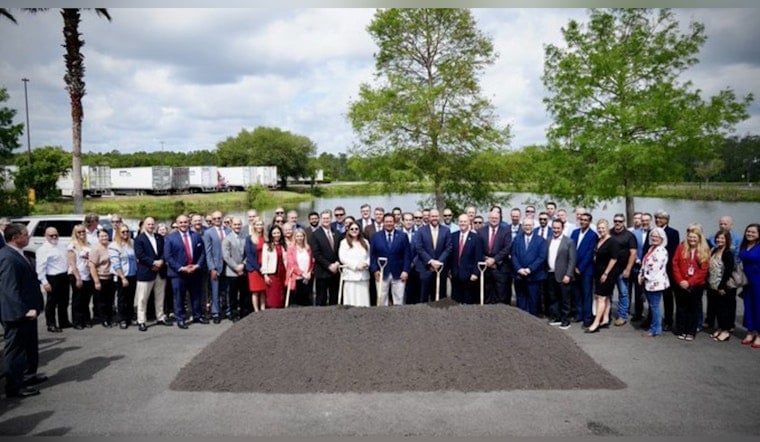
Gov. Ron DeSantis grabbed a ceremonial shovel in Volusia County on Thursday, kicking off reconstruction of the I-95 and U.S. 1 interchange in Ormond Beach and touting the start as a year ahead of schedule. The project will rebuild the Exit 273 interchange into a diverging-diamond configuration and widen roughly one mile of U.S. 1, which officials are packaging as one of the marquee efforts under the governor’s Moving Florida Forward infrastructure program.
Today in Volusia County, I was proud to announce the groundbreaking of the reconstructed I-95 and U.S. 1 interchange a year ahead of schedule. Florida has led the nation in economic growth in recent years, and we have prioritized expanding and improving our infrastructure. https://x.com/i/status/2049881607075438789
— Ron DeSantis (@GovRonDeSantis) April 30, 2026
A Florida Department of Transportation project sheet describes the work as a $294 million reconstruction that will convert Exit 273 to a diverging-diamond layout, widen U.S. 1 and add shared-use paths. According to FDOT, the rebuild also includes bicycle and pedestrian upgrades plus an updated roadside design intended to improve safety and traffic flow.
The timing marks a clear change from earlier expectations. A 2023 FDOT construction announcement that was reposted by the River to Sea Transportation Planning Organization had construction starting in late 2027, a timeline that lines up with the governor’s “a year ahead” talking point. As noted by River to Sea TPO, FDOT at that point was projecting a late 2027 start.
DeSantis said in a post on X that the team is using a “modified phased design build” approach, and that this delivery method is projected to save more than $70 million. According to Gov. Ron DeSantis' post, those savings could be redirected to other state transportation improvements.
FDOT has been promoting the Modified Phased Design-Build method as a way to accelerate Moving Florida Forward projects, arguing that it lets the agency select teams earlier and start advanced construction activities in order to shorten schedules. In a 2024 release, FDOT said the approach is meant to reduce risk and speed up work on high-priority corridors.
Local context and concerns
Local officials around Ormond Beach have been calling for a safer, less chaotic interchange for years, and FDOT has held public workshops to walk residents through the diverging-diamond alternative. By 2024, the design phase was already underway, according to reporting from the Ormond Beach Observer. Earlier coverage in the Daytona Beach News-Journal cited a roughly $340 million price tag that state announcements have also referenced for the project’s overall scope. Daytona Beach News-Journal
What drivers should expect
Officials say the project will cycle through final design, procurement and then phased construction, with work expected to stretch over multiple years. Drivers can count on periodic detours, lane shifts and nighttime work as crews juggle construction with heavy interstate and U.S. 1 traffic. Regional planners and FDOT will post schedules, public meeting notices and traffic alerts as the job advances; the River to Sea TPO project page is expected to carry updated timelines and outreach materials.
State and local officials say the accelerated groundbreaking should deliver congestion relief on the busy corridor sooner than once thought, although they acknowledge that handling traffic during construction will be a real test for commuters and nearby businesses. For now, the pitch is straightforward: endure a few years of disruption in exchange for an interchange that is designed to be safer and more reliable for decades to come.





