

























































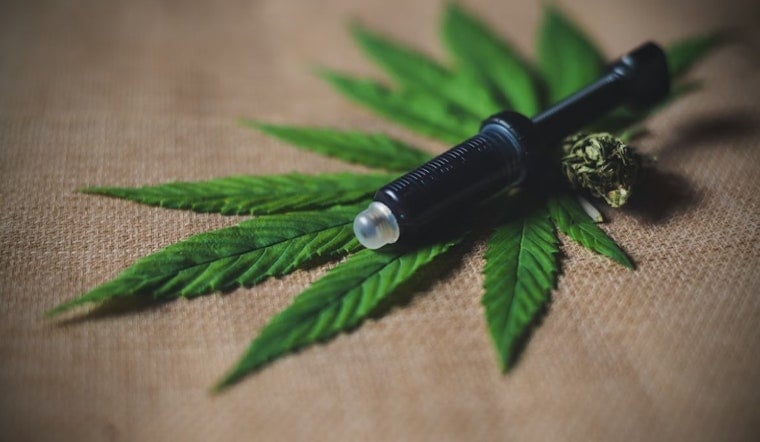
Colorado’s cannabis cops are turning up the heat on chemically altered hemp products and suspect vape cartridges that have slipped into the state’s legal marijuana market. The crackdown trails a high-profile federal law-enforcement action at an Adams County warehouse in late 2025, and a run of product recalls tied to toxic solvents. Regulators and industry insiders say the underground practice, known in the trade as “inversion,” is putting patients at risk, gutting law-abiding competitors, and draining tax dollars that are supposed to fund schools and roads.
Federal warehouse sweep put hemp processor on the radar
In November 2025, agents with the Drug Enforcement Administration and the Environmental Protection Agency carried out what officials described as a “law-enforcement event” at a warehouse in Adams County, according to local coverage. Denver7 located the site near East 76th Avenue and York Street and connected it to Hau Processing, an industrial hemp processor. Local fire officials said a hazmat team waited nearby in case federal partners needed backup, but it ultimately was not deployed.
State warns pot businesses about “inversion” schemes
Colorado’s Marijuana Enforcement Division, or MED, told licensees in a mid-April bulletin that it is seeing hemp-derived products chemically converted into intoxicating THC and slipped into the regulated cannabis system. The pattern, which the agency calls “inversion,” was highlighted by CBS Colorado. MED officials said the practice poses “serious risks to public safety, market integrity and the tax revenue framework.” Businesses that cannot explain inventory discrepancies could face product holds, license suspensions, or even criminal investigations, with the bulletin framed as both a warning shot and an enforcement roadmap.
Why methylene chloride has regulators spooked
Methylene chloride, a solvent restricted by the EPA because of cancer and other health risks, has surfaced in products tied to earlier recalls, according to state inspection reports. Regulators flagged the chemical as a likely by-product of conversion processes that turn hemp into intoxicating THC, reporting by The Denver Gazette.
Back in 2024, state testing detected illegal pesticides and traces of methylene chloride in vape cartridges linked to Ware Hause Cannabis. That discovery triggered a recall and the surrender of a marijuana license. Critics quoted in state and local records say Colorado’s current system for selecting samples for lab testing has left a back door open for contaminated or chemically converted products to make it onto store shelves.
Industry split: hypercompliance versus rock-bottom prices
Licensed manufacturers say they are increasingly seeing distillate with unusually high levels of delta-8 THC, a telltale sign that a product may have been converted from hemp rather than extracted from marijuana plants. In response, some companies are sinking serious money into what they call “hypercompliance” to prove their oils are clean. CBS Colorado reported that Rich Batenburg of The Clear Brands says he cannot compete with suppliers who “skirt the rules,” while compliance directors at other firms say they have refused oils that tested with elevated delta-8 levels.
Those complaints highlight a growing rift in Colorado’s maturing cannabis economy. On one side are operators spending hundreds of thousands of dollars on compliant manufacturing and testing. On the other hand, businesses are leveraging cheaper, converted hemp inputs to undercut prices, according to regulators and industry voices.
New testing rules aim to catch tainted and converted products
State officials say testing requirements will change this summer to add targeted analyses that can spot chemically converted hemp and leftover solvents. The plan is laid out in recent MED bulletins and was detailed in coverage by Colorado Politics. The MED’s public bulletin archive shows a string of recent testing-rule updates plus a shift toward more surveillance testing, intended to catch tainted products earlier in the supply chain.
Regulators say the new lab tools should make it tougher for inverted hemp products to be laundered into the licensed marketplace. They also acknowledge that the rules will have to be backed up with on-the-ground inspections and stronger sampling protocols if they want the system to hold.
Potential legal fallout for rule-breakers
Companies that cannot account for missing inventory or that introduce chemically converted THC into the regulated stream could face product holds, license suspensions, civil penalties or criminal probes, according to the MED. Past enforcement records show operators have surrendered licenses and pulled products from shelves after labs detected banned solvents and non-compliant ingredients, a pattern documented by The Denver Gazette. Federal interest in some cases, including DEA and EPA activity at processing sites, has raised the possibility of criminal exposure for operators who rely on prohibited chemical processes.
For consumers, officials say the safest bet is to buy from long-standing, licensed manufacturers that provide certificates of analysis to back up their labels. Regulators maintain that upgraded testing rules and stepped-up inspections are meant to protect public health, stabilize the market, and claw back tax revenue from bad actors operating in the gray areas of Colorado’s cannabis boom.




