

























































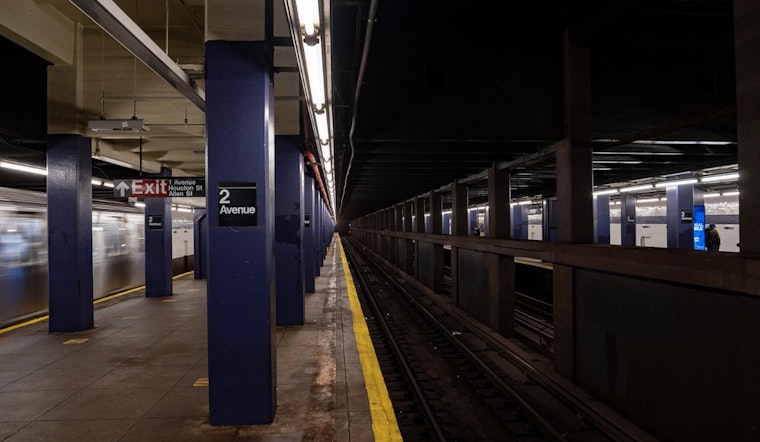
The Metropolitan Transportation Authority has told a federal court it is stuck at the starting line for the next phase of the Second Avenue Subway in East Harlem, all because it cannot get into one stubborn building. According to court filings, the agency says it cannot move ahead until the owner of a five story property on Second Avenue lets inspectors inside for pre construction surveys and shoring work, safety checks that must be finished before tunneling and station construction can continue.
What Phase 2 would deliver
Phase 2 is slated to push the Q line north into East Harlem with three new stations at 106th, 116th and 125th streets, the next major leg in the long running Second Avenue Subway saga. As outlined by the MTA, the extension is expected to shorten commutes, improve ADA accessibility and give riders a direct connection to Metro North at 125th Street.
Court fight over access
In its legal papers, the MTA says it has sued owner Edgardo Kramer to secure access to 2049 Second Ave., a five story building that includes Lupita's restaurant at street level and roughly a dozen apartments above. According to amNewYork, Kramer initially signed off on access in 2023, then later insisted the MTA guarantee payment for any and all repairs uncovered during inspections, a demand the agency labels unreasonable because it would commit public money to an open ended list of potential work.
Not the first access fight
This is not the first time Phase 2 has run into a locked door. The MTA has already sued other East Harlem property owners in 2024 after they refused pre construction surveys that engineers say are crucial for utility relocations and tunneling to move forward. As reported by Crain's New York Business, those earlier cases showed how building level standoffs can ripple into the broader construction schedule and delay contract awards across the Phase 2 program.
Funding pressure makes access urgent
The access dispute is unfolding while the agency is also locked in a separate money fight with Washington. The MTA sued the U.S. Department of Transportation last month, accusing the agency of breaching a $3.4 billion grant deal and asking the Court of Federal Claims to free up nearly $60 million in reimbursements it says have been held back since October. In that case, the agency warned the court that blocking access at sites like 2049 Second Ave. would trigger expensive delays and could force officials to pull funding away from other projects, according to amNewYork.
What happens next
A judge now has to decide whether the MTA's signed agreements and powers under public authorities law give it the legal right to enter private property to complete what it calls essential pre construction work. The agency says crews are standing by to reinforce the area around the building this month if the court orders access. Until that happens, key inspections and any needed shoring remain on hold, and the tight Phase 2 schedule stays under pressure.
Legal implications
The case puts a spotlight on how far transit agencies can go to secure access when private property rights collide with projects backed by federal grants. The outcome could become a playbook for future eminent domain and access battles around the city. Depending on how the court rules, the MTA may gain clearer authority to step into buildings to safeguard tunneling operations, or it may have to keep relying on painstaking negotiations that can leave massive public works waiting on a single locked door.



