

























































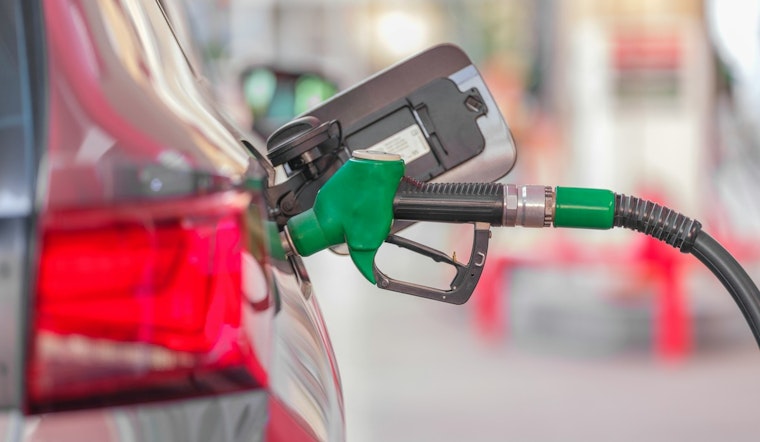
Gas relief is supposedly on the way for Long Beach and Seal Beach drivers, but it will not hit the pumps overnight. U.S. Energy Secretary Chris Wright swung through local oil operations on Wednesday, telling city officials and reporters that gasoline prices should ease in the coming weeks while warning that the turnaround will be slow.
Wright’s tour included a stop at a small neighborhood producer he used as a real-world case study in how tight production and refining capacity can squeeze supply. He also said he plans to meet with Gov. Gavin Newsom in the coming weeks to press for more domestic oil output.
“You’ll likely see some downturning gasoline prices in the next few weeks,” Wright told reporters, pointing out that drivers always feel changes at the pump after a delay, according to ABC7 Los Angeles. He added that recent attacks on energy infrastructure overseas are raising concern and could complicate the short-term outlook.
What Wright saw at Synergy
At Synergy Oil and Gas, executives walked Wright through an operation they say is hemmed in by both regulations and the market. The company has about 35 employees and is producing only around 100 barrels of oil a day, even though executives say their tanks could handle far more, per ABC7 Los Angeles. Wright pointed to Synergy as an example of capacity he believes could be unlocked if state leaders relaxed rules that, in his view, keep refiners from scaling up.
Federal orders, pipeline restarts and new supply
Wright’s Long Beach stop comes on the heels of a major federal move to get more oil flowing again along the Central Coast. Earlier this month, the Department of Energy invoked emergency powers to restart offshore production and pipeline transport.
According to a SEC filing, Sable Offshore told investors that on March 13 the DOE used the Defense Production Act to order a restart of the Santa Ynez Pipeline System, and the company said it resumed transportation the very next day. Local coverage has tracked the company’s restart plans and filings as those flows come back online. (Noozhawk.)
State pushes back in court
California officials are not letting that order slide without a fight. Attorney General Rob Bonta has sued the Department of Energy, asking a federal judge to throw out the directive and block its use as the legal basis for restarting pipeline operations.
The complaint, filed March 23, argues that DOE overstepped its authority and improperly ran over state regulatory requirements and prior court orders. Litigation trackers describe the case as raising Administrative Procedure Act and constitutional claims. (Civil Rights Litigation Clearinghouse; Just Security.)
Why pump relief may lag
Even if diplomatic developments help pull crude prices down, California drivers should not expect instant discounts. The state’s refining network has shrunk in recent years, which means less spare capacity on the West Coast and a longer, more fragile chain between cheaper crude and cheaper gasoline.
Reporting from Reuters via StreetInsider has detailed how major California refineries have wound down or idled operations, moves that chip away at refining capacity and make it harder for lower oil prices to translate quickly into lower prices at the pump. Those trends help explain why Wright kept hammering on the need to free up local refining and transport.
What Long Beach drivers should expect
For now, Wright is selling cautious optimism. If crude prices stay on a downward track, he says, Long Beach-area motorists should see that reflected at the pump, but only after oil is bought, refined and shipped, a process that takes time even in the best of circumstances.
With a federal-state court clash over pipeline restarts still unresolved and several refineries in various stages of winding down, drivers in Long Beach and nearby communities should be ready for gradual, uneven relief rather than a sudden drop in gas prices.





