

























































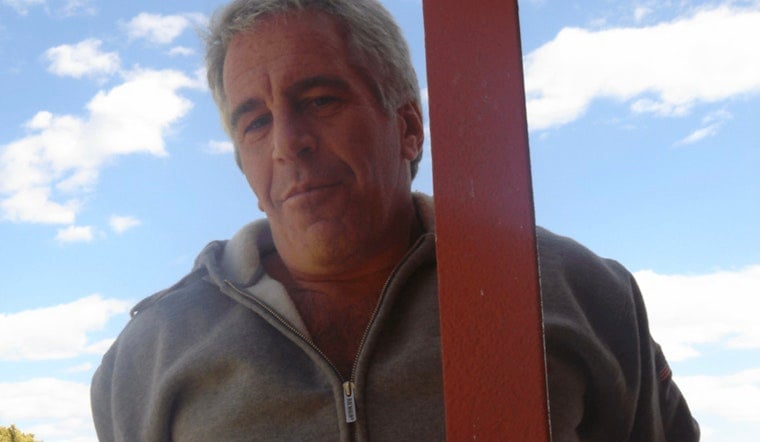
Freshly released government files and related reporting show Jeffrey Epstein working to cozy up to Gulf royalty, pitching himself as a tutor and financial confidant to Saudi Crown Prince Mohammed bin Salman while also securing religious gifts that, according to the records, ended up at his properties. The material adds yet another chapter to the Epstein saga, underscoring how the convicted sex offender managed to keep his grip on elite circles long after his 2008 plea deal.
According to documents from Epstein’s estate and federal investigations reviewed by the Miami Herald, a note dated November 2016 shows Epstein pressing to be made a “financial confidant” to Prince Mohammed and asking for biweekly meetings. The Herald reports that the same files describe pieces of the Kaaba’s covering, the kiswa, being routed through Gulf intermediaries, then forwarded on to Epstein’s properties. In one quoted exchange with a Gulf contact, Epstein replied, “praise allah, there are still people like you.”
Where the records come from
The disclosures are part of the Justice Department’s sprawling public release of Epstein-related records that began in late 2025 and expanded in January 2026, a cache that runs to millions of pages and thousands of images and videos. As The Guardian reported, the sheer volume has forced a fresh look at Epstein’s network and raised questions about how the government chose to redact and publish highly sensitive material.
How the kiswa made its way
Coverage in Middle East Eye, drawing on the same Justice Department trove, tracks the path of the kiswa pieces through a UAE-linked intermediary, Aziza al-Ahmadi. Emails from early 2017 lay out air-freight arrangements, customs forms and a plan to label one of the items as “artwork.” The correspondence describes three pieces in total: one said to be from inside the Kaaba, one from the outer covering and a third unused sample, with the messages indicating the shipment arrived at Epstein’s U.S. address in March 2017.
Crude emails and introductions
The records also capture explicit, off-color exchanges between Epstein and business figures in the Gulf as he worked his contacts. As the Miami Herald recounts, a 2013 email from Sultan bin Sulayem reads, “she wanted some business! while i only wanted some pussyness!,” while other threads show Epstein orchestrating meetings that connected Gulf royals with high-level political and corporate players around the world.
Money, meetings and surveillance tech
The documents outline a tangle of money flows and introductions that reaches into the technology and security sectors. Reporting indicates that Epstein-linked funds provided at least $1 million tied to Carbyne, the Israeli emergency-response startup previously known as Reporty and associated with former prime minister Ehud Barak. The same batch of records shows Epstein helping line up meetings between security-tech entrepreneurs and potential investors, according to Forbes.
What investigators and lawmakers are watching
The release of the files has set off a new round of criticism from lawmakers and survivor advocates, who fault the Justice Department for inconsistent redactions and apparent gaps in the record, even as officials insist they are working to correct mistakes. The Associated Press reports that Congress is pressing the department for fuller disclosure and that the agency has created procedures to respond when specific materials are flagged.
Legal context
Epstein pleaded guilty in 2008 to state prostitution charges and served an 18-month sentence that included work-release privileges. He was found dead in federal custody on August 10, 2019, according to The Guardian. Those earlier legal outcomes, combined with the flood of newly public documents, continue to fuel calls to unravel how his influence operated across borders for so long.


