

























































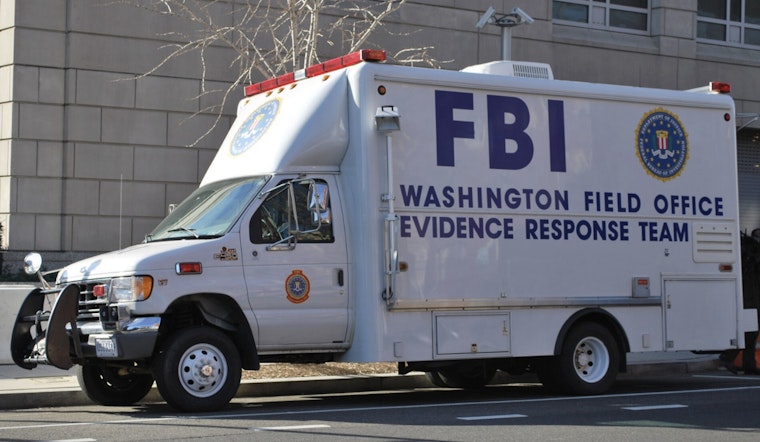
Federal agents in Atlanta say they have yanked the plug on a prolific online phishing kit, seizing its infrastructure and, with help from authorities in Indonesia, detaining an alleged developer. Security researchers report that the kit captured login credentials and session data, letting attackers sidestep multi-factor authentication and attempt more than $20 million in fraud worldwide. The takedown is part of a broader law-enforcement push to dismantle phishing-as-a-service networks that fuel global business email compromise schemes.
As reported by The Georgia Sun, FBI Atlanta and Indonesian law enforcement seized domains and other infrastructure tied to a kit known as W3LL, and Indonesian police detained an individual identified only as G.L. The outlet notes that the operation was linked to more than $20 million in attempted fraud and that the U.S. Attorney’s Office for the Northern District of Georgia assisted in identifying and seizing servers that supported the scheme. Authorities have not yet released a full public statement with charging details.
How The W3LL Kit Operated
Security analysis shows that W3LL relied on adversary-in-the-middle techniques. Its phishing pages sat between victims and legitimate authentication services, quietly relaying credentials to the real site while siphoning off session cookies so attackers could replay logins without needing a second factor. The kit’s panels featured anti-bot checks, license controls and automation that made account takeover and business email compromise attacks more accessible to lower-skill affiliates. Those behaviors, along with detection tips, are detailed in industry research on adversary-in-the-middle phishing kits from Sekoia.
Scale Of The Underground Market
Researchers say the W3LL panel was sold through a closed, referral-only marketplace that bundled phishing pages, compromised assets and related services for handpicked buyers. A Group-IB investigation summarized by The Hacker News found that W3LL’s tools were deployed in campaigns targeting tens of thousands of Microsoft 365 accounts and successfully compromising thousands of them. Subscription licenses, reseller programs and customer support turned the operation into a turnkey fraud shop for criminal customers.
What Law Enforcement Hit
Investigators say the coordinated action took web panels offline, seized related domains and preserved evidence for follow-on cases. The Georgia Sun reports that key internet domains were captured and that Indonesian police detained the person believed to have developed the kit. U.S. prosecutors in Atlanta were reportedly involved in tracing the infrastructure and preparing legal requests to preserve data from foreign hosting providers.
Why Atlanta Is In The Middle Of This
The Northern District of Georgia and the FBI Atlanta Field Office have repeatedly used domain seizures and international partnerships to disrupt account-takeover and business email compromise operations, highlighting the local office’s role in global cybercrime enforcement. A recent press release from the Northern District describing a similar domain seizure and cross-border evidence preservation effort lays out the toolkit prosecutors use to follow illicit infrastructure and victim data across borders. U.S. Attorney’s Office, Northern District of Georgia.
How Organizations Can Protect Themselves
Security experts advise moving beyond SMS-based multi-factor authentication to stronger options such as FIDO2 hardware tokens or passkeys, locking down privileged access with IP allowlists, and treating unexpected HTML attachments or QR links with healthy skepticism. Monitoring for unusual authentication activity and blocking known phishing infrastructure can help catch adversary-in-the-middle activity earlier. These recommendations appear in reporting on W3LL-style kits from Cybersecurity Dive.
Legal Fallout And Next Steps
The alleged developer’s detention in Indonesia raises familiar questions about extradition and cross-border prosecutions, and any U.S. charging decisions are likely to involve Department of Justice computer-crime teams and international legal assistance. Prior cases in the Northern District show prosecutors leaning on domain seizures, preservation orders and cooperation with foreign partners when tackling sprawling, global fraud schemes. U.S. Attorney’s Office, Northern District of Georgia.
The investigation into W3LL’s infrastructure is still underway, and more actions could follow as agents and prosecutors sift through seized data. For now, companies and individuals are being reminded that phishing tools keep evolving, so stronger authentication and tighter monitoring are no longer nice-to-haves but basic survival gear online.





