

























































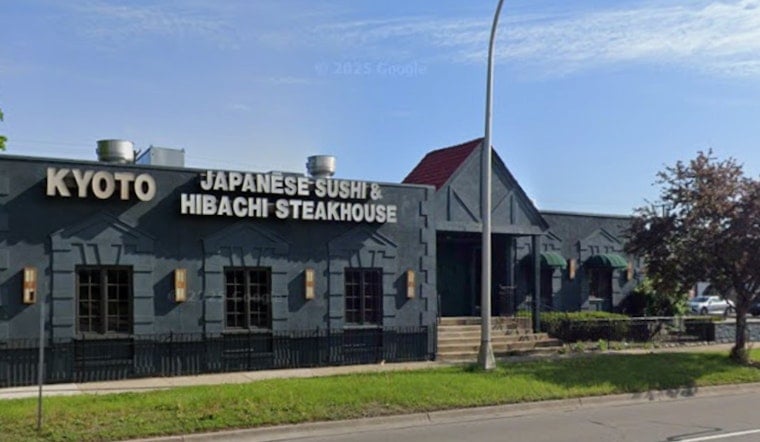
Federal prosecutors say a Metro Detroit restaurateur turned suburban houses into rent-free “dorms” that doubled as hubs for an illegal labor pipeline feeding his trio of Japanese steakhouses.
An indictment unsealed Friday charges Yong Ni, who owns three Kyoto Japanese Steakhouse locations in Shelby Township and Royal Oak, with multiple federal counts tied to what investigators describe as a scheme to harbor and unlawfully employ workers without authorization to work in the United States. Court filings say the homes and a handful of vehicles were used to house workers and shuttle them between the residences and the restaurants.
According to ClickOnDetroit, the indictment lists 10 criminal counts, including harboring and unlawfully employing immigrants and possessing a fraudulent immigrant visa. If Ni is convicted, prosecutors say they could move to forfeit two properties and three vehicles seized during the investigation. Court records did not immediately list an attorney for Ni, and it was not clear when he would first appear in federal court.
The criminal case builds on a civil forfeiture action filed last November in U.S. District Court, which lays out the government’s narrative in far more detail. That earlier federal filing, a civil forfeiture complaint, says FBI agents first encountered Ni during a May 2024 search of a Shelby Township house where about a dozen people were allegedly crammed into subdivided rooms. The complaint also describes surveillance and a May 1, 2025 round of searches at residences connected to the restaurants that ended with the arrest of 12 foreign nationals, according to the court paperwork.
Investigators say they eventually identified at least five people working at the Kyoto restaurants without authorization and that three of them lived in a separate Ni-owned home, which workers and staff referred to as “dorms,” according to Metro Detroit News. Authorities allege some employees presented fraudulent I-551 permanent-resident cards and Social Security numbers during a March 2025 inspection, and surveillance teams reported workers being dropped off at the restaurants around 10:30 a.m. and leaving roughly 12 hours later. Local reporting and the federal complaint list a 2019 Toyota RAV4, a 2020 Chevrolet Express van and a 2021 Honda Odyssey among the vehicles seized during the probe.
What prosecutors allege
Federal court filings, including the civil forfeiture complaint, portray Ni as the point person for housing, transportation, hiring and payroll for workers who allegedly lacked lawful authorization to work. Prosecutors say that the conduct violated federal harboring and employment laws under 8 U.S.C. § 1324 and argue that the cash and vehicles seized were tools of the operation. With the indictment now on the table, the government will have to prove the criminal counts in federal court.
Legal outlook
An indictment is an accusation, not a conviction, and prosecutors will have to convince a jury beyond a reasonable doubt if the case goes to trial. If Ni is found guilty, he could face prison time, fines and the loss of assets tied to the alleged scheme. Local court dockets did not list a first appearance for Ni as of publication, and prosecutors have not publicly detailed the current immigration status of the workers at the center of the case, as ClickOnDetroit reports. In the meantime, the case is expected to move through the usual grind of discovery, witness interviews and pretrial motions, whether it ends in a trial or a negotiated plea.
Why it matters
The indictment highlights how federal authorities often stack criminal charges on top of civil forfeiture to go after alleged labor-exploitation schemes, a strategy that can leave immigration, housing and workplace issues tightly knotted together. For restaurant owners across Metro Detroit, the case is a pointed reminder that employment verification, off-the-books housing and how workers are moved to and from job sites can all invite federal scrutiny when fraud or abuse is alleged.
Worker-advocacy groups frequently warn that cases like this can chill complaints from vulnerable employees who fear immigration consequences even as they report unsafe or exploitative conditions. For now, Ni’s businesses remain identified in court filings simply as Kyoto Japanese Steakhouse, with two locations in Shelby Township and one in Royal Oak. Prosecutors had not released further details about the workers’ status at the time of publication, and the court filings remain the primary public record of the government’s claims. The docket will likely grow in the months ahead, and future filings and court dates will provide the next round of answers.




