

























































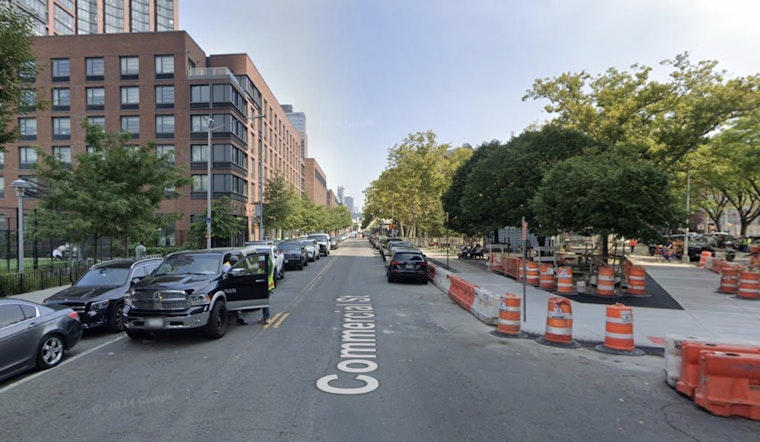
The city is gearing up to install a raised two-way bikeway along Commercial Street in Greenpoint, but a room full of neighbors just gave the permanent design a chilly reception. At a recent Brooklyn Community Board 1 meeting, residents argued that the blueprint does not match how the waterfront is actually used today. The bikeway is tied to a larger sewer and water-main overhaul, arriving just as new housing, a school and a park are set to bring even more people to the strip. Neighbors say the city is clinging to too much space for moving and parked cars instead of fully embracing walking and biking.
Under the plan shown to the board, Commercial Street would shift to one-way motor-vehicle traffic and gain a raised two-way bike lane as part of a roughly $12 million capital project. Construction is currently slated to run from 2028 to 2030, folded into a broader utility rebuild. Many locals welcomed the long-promised greenway link to the Pulaski Bridge, but plenty questioned whether this design is the one they want to live with for decades, as reported by Streetsblog New York City.
Critics zeroed in on the cross-section. The protected two-way bike lane clocks in at about nine feet wide in total, or roughly 4.5 feet in each direction. Meanwhile, the design keeps a 12-foot driving lane plus two eight-foot curbside car storage lanes. Locals argued that this layout practically invites speeding and double-parking. "It’s not far enough, and it’s the only change we’ll probably get - ostensibly forever," said Zach Eisenstat of the advocacy group Calm Commercial, echoing others who warned that a 12-foot travel lane will encourage higher speeds. Those concerns, and the lane measurements, were laid out during the official presentation, according to Streetsblog New York City.
Design, Route And Short-Term Tradeoffs
The routing would fill in a stubborn gap in the Brooklyn Waterfront Greenway. The bikeway is set to run from West Street east to Manhattan Avenue, with a short raised eastbound segment on Box Street and sidewalk extensions at Dupont, Franklin and Box streets. The city’s own Implementation Plan that guides the greenway shows Commercial Street as the preferred "Route A" between the Pulaski Bridge and West Street, largely because of its waterfront proximity and existing connections, per NYC DOT.
Residents also pointed out that the clock is ticking on two major changes that will pour even more people into the corridor: a new school scheduled to open this fall and Box Street Park expected later this year. Both are likely to bring an influx of children and families who will be walking and biking through the area. Local coverage of the Monitor Point and Box Street projects has documented steady community pressure to put walking and cycling first as Greenpoint layers on new housing, according to Greenpointers.
Why Commercial Street Matters Now
The northern leg of the Greenway will tie directly into the Pulaski Bridge link to Queens, a crossing that is already packed. City bike-counter data show very high volumes on the Pulaski and other bridge approaches, which is why advocates argue that a truly generous, fully protected route is needed instead of the narrow version now on the table. Those bike counts are publicly available in the city’s Bicycle Counts dataset from NYC Open Data.
That usage is not a hypothetical concern. Narrow two-way greenways and shared paths have been linked to serious crashes elsewhere along the waterfront. A deadly collision on the Flushing Avenue greenway last October reignited calls for wider and more clearly separated space where pedestrians and cyclists mix. Coverage of the crash and its aftermath highlighted growing fears about high speeds and illegal, high-powered e-bikes operating on cramped paths, as reported by amNY.
What DOT Says
Department of Transportation staff told the community board that the Commercial Street greenway is part of a full capital rebuild, and that they will be reviewing the feedback as they move toward a final design. The agency has previously emphasized that large capital jobs can take years to deliver, and that it often uses quicker in-house street projects to test improvements while long-term infrastructure is being designed. Community materials and earlier DOT remarks on the corridor have been collected in local reporting, according to Greenpointers.
For many residents, the ask is straightforward: if the city is already spending millions to dig up utilities and repave the street, it should also seize the chance to make Commercial Street safe and spacious for the people who actually live and move there now. Community Board 1 plans to keep the issue alive as DOT refines its design and as advocates push either for a wider permanent cross-section or for interim safety upgrades long before 2028.





