

























































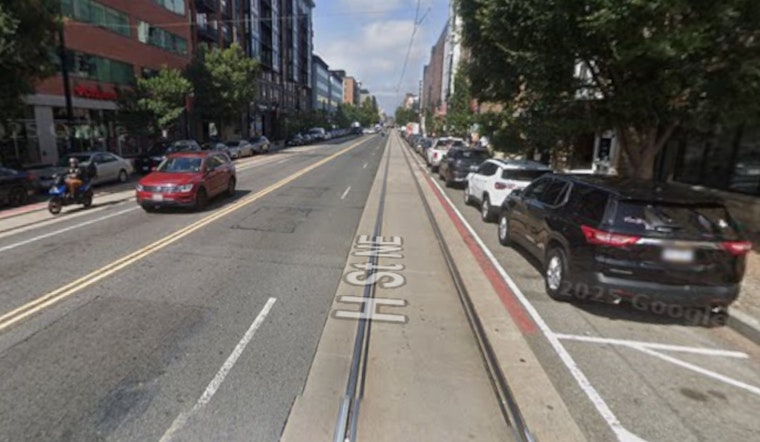
Federal prosecutors say an H Street fentanyl storefront is finally shuttered, and its operator is headed to prison. A 63-year-old man has been sentenced to 63 months in federal custody after authorities said he ran a street-level fentanyl operation out of a shop on the 700 block of H Street NE in Washington, D.C. Officials say the drug sales added up to roughly 80,000 potentially lethal doses, and that a search of his home turned up weapons and other narcotics. The sentence also includes three years of supervised release and a forfeiture order tied to the case.
U.S. Attorney Jeanine Pirro announced the punishment Wednesday, identifying the defendant as Pierre Black. According to prosecutors, Black sold fentanyl to undercover officers on six occasions, totaling about 177 grams and more than $13,000 in payments. "Pierre Black operated a street-level fentanyl distribution scheme out of a storefront in the District," Pirro said, with prosecutors calculating that the quantity seized was large enough to equal roughly 80,000 potentially lethal doses, according to Daily Voice.
How Prosecutors Counted "80,000 Doses"
The eye-popping dose estimate is rooted in a commonly cited benchmark. The Drug Enforcement Administration notes that about two milligrams of fentanyl can be a potentially fatal dose. Using that yardstick, a few hundred grams of high‑purity powder can translate into tens of thousands of theoretical lethal doses, which is why relatively modest-looking seizures often get framed in stark public-safety terms. Guidance from the DEA explains how officials convert grams of powder into dose estimates.
Medetomidine Complicates Overdoses
Prosecutors say mixtures containing medetomidine were also found in Black’s kitchen. Medetomidine is a veterinary sedative that public-health officials have been spotting more often in illicit fentanyl supplies. The Centers for Disease Control and Prevention recently issued a health advisory noting medetomidine’s rising presence in opioid samples and warning that its sedative effects can deepen and prolong respiratory depression in ways that naloxone alone may not reverse, while earlier reporting linked medetomidine to overdose clusters in several cities. For more on the advisory and the clinical findings, see the CDC notice and the related MMWR analysis.
When officers arrested Black on Sept. 5, 2025, they reported finding a loaded 9mm handgun secured in a bedroom safe, along with additional quantities of fentanyl and heroin at his residence. Prosecutors also noted that Black has eight prior convictions, four of them tied to drug distribution, and asked the court for a federal sentence. The judgment includes a $13,310 forfeiture and three years of supervised release after incarceration, as outlined by prosecutors and summarized by Daily Voice.
The case slots into a broader wave of aggressive federal prosecutions aimed at dismantling fentanyl supply chains in the D.C. region and beyond. The U.S. Attorney’s Office has recently pursued lengthy prison terms in several regional fentanyl cases, including a more than 13-year federal sentence announced earlier this year in a large-scale fentanyl, heroin, and PCP trafficking case, according to a U.S. Attorney's Office release. Neighbors and public-health workers say Black’s sentencing is a blunt reminder of how dangerous the illicit supply has become, particularly as new adulterants like medetomidine spread. Authorities are urging anyone with information about local drug activity to contact the Metropolitan Police Department or the U.S. Attorney’s Office.





