

























































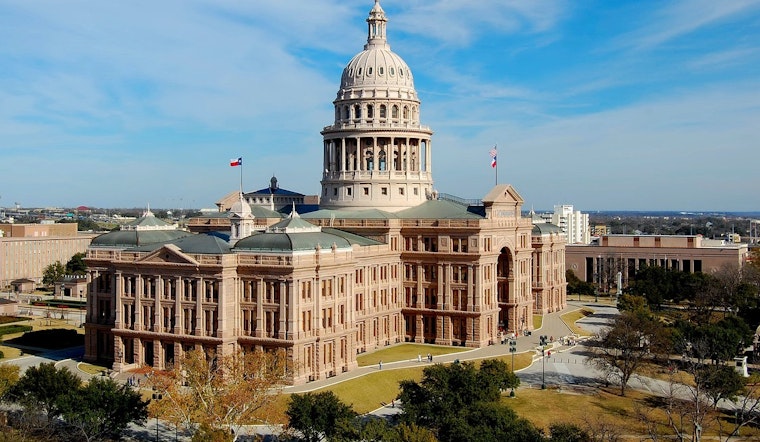
Harris County officials are turning a homegrown early childhood experiment into a full-court press at the Texas Capitol, aiming squarely at the 2027 legislative session. Precinct 2 Commissioner Adrian Garcia and Precinct 4 Commissioner Lesley Briones plan to present a unified package of proposals to Commissioners Court on April 16, then haul that game plan to Austin. Their push links county-funded pilots, supports for child care providers and outreach to the business community, all centered on expanding affordable, certified child care across the region.
Coalition will write the playbook
The Harris County Coalition on Early Childhood Education and Care, launched in January to bring together public agencies, nonprofits, universities and business groups, has been tapped to draft the detailed policy recommendations county leaders want to carry to lawmakers. According to HCDE, the coalition’s regional stakeholders will help shape proposals on how to pay for child care, how to raise quality and what kind of technical assistance smaller providers need to survive.
What officials want from Austin
Garcia and Briones are expected to pitch a countywide Business Accelerator Program that would walk small child care providers through bookkeeping, insurance, licensing and other nuts-and-bolts operations, while also offering incentives to help more centers earn Texas Rising Star certification. As reported by Community Impact, the county also plans to coordinate closely with regional business groups in order to make a stronger economic case for state-level action.
The math behind the urgency
County leaders point to a growing gap between who qualifies for help and who actually gets it. Roughly 166,000 Harris County children under age 5 meet the income rules for subsidized pre-K, yet about 30,000 eligible kids are stuck on waitlists for scholarship slots. “You just can’t announce something that has no study, no plan to it,” Garcia told Community Impact, underscoring why commissioners want a coordinated strategy instead of piecemeal fixes. The Texas Workforce Commission sets subsidy eligibility at up to 85% of the state median income, which works out to about $87,000 for a family of four, a bar that county officials say leaves many working families just over the line, according to the Texas Workforce Commission.
Money running out and a short fuse
So far, Harris County has leaned heavily on one-time federal dollars to prop up its early childhood work. The county’s FY2026 adopted budget lists roughly $133 million in American Rescue Plan funds committed to Early Childhood Initiatives. Those ARPA dollars are scheduled to sunset at the end of 2026, a deadline that county briefings say is speeding up the hunt for state policy changes and more stable funding streams. See the Harris County FY2026 budget and local budget FAQs for more detail on how those short-term funds are structured.
State moves are opening a window
County officials argue the timing is not accidental. Gov. Greg Abbott launched a Task Force on Early Childhood Education and Care on January 20, 2026, and in 2025 the Legislature created a Quad-Agency Child Care Initiative that ties together the Texas Workforce Commission, the Texas Education Agency, Health and Human Services and DFPS. Those moves, county staff say, create clearer avenues for regulatory tweaks and cross-agency rule changes that could cut red tape for providers. Details on the governor’s task force are posted by the Office of the Governor, while the Quad-Agency initiative is outlined at the Texas Workforce Commission.
Costs keep pressure on lawmakers
Behind the policy jargon is a simple problem: child care is expensive, and most Texas families cannot swing it without help. The Economic Policy Institute’s state fact sheets put average annual infant care costs in Texas at about $10,706 in 2025 and around $9,664 for a 4-year-old, and estimate that only about 26.5% of Texas families can afford infant care under the U.S. Department of Health and Human Services benchmark. Those numbers help explain why county officials say local pilots, even when generously funded, are no match for statewide affordability pressures without changes in state funding and rules. The full breakdown is available from the Economic Policy Institute.
Legal levers and local incentives
At home, Harris County has already pulled one major policy lever made possible by last year’s Prop 2. Commissioners Court approved a 100% property tax exemption for child care facilities that participate in Texas Rising Star and serve subsidized children. County officials say that relief is designed to help providers shoulder operating costs while nudging more of them toward higher quality standards. Harris County’s Prop 2 materials and related court filings spell out how the exemption works and which providers can qualify.
What to watch next
Commissioners Court is scheduled to take up the early childhood legislative package at its April 16 meeting and could vote to lock in the county’s 2027 wish list before staff and coalition partners fan out to Austin. Residents who want to track the debate or show up in person can find meeting materials and backup documents on the county’s Commissioners Court agenda.





