

























































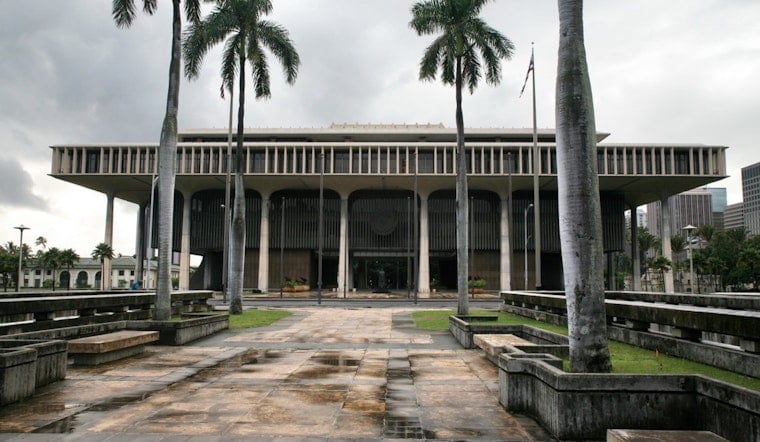
Hawaiʻi lawmakers put the state Department of Agriculture and Biosecurity on the hot seat Thursday, grilling officials over an internal port inspection practice that let some “lightly infested” shipments slip into local harbors. Critics say that quiet workaround may have undercut state law for years. The tense briefing came as the agency confirmed new coconut rhinoceros beetle detections and as Molokaʻi ranchers dealt with a bovine tuberculosis outbreak tied to a recent cattle move, underscoring a deepening clash between promoting agriculture and policing it for pests.
Members of the Senate committees on commerce and consumer protection and on agriculture and environment pressed department staff about a long‑standing, discretionary practice that shaped how inspectors decided whether to treat, destroy or release infested cargo at the docks. Once officials acknowledged the unwritten policy, lawmakers demanded training manuals and operations documents, zeroing in on how long the approach had been in play and why it was never formalized. As reported by the Honolulu Star‑Advertiser, the attorney general’s office told legislators that state law requires the department to flatly refuse pest‑infested items.
Inspectors, 'light infestations' and the bigger picture
According to Civil Beat, plant‑quarantine managers have for years allowed inspectors some leeway when low‑risk pests showed up, arguing that limited staff and a lack of on‑site treatment facilities made zero‑tolerance enforcement unrealistic. Plant Quarantine Branch Manager Jonathan Ho told the outlet that his team inspects only a slice of incoming agricultural lots and has historically allowed “light” infestations when the pest is already established on that island.
The same report noted that about 15 percent of inbound agricultural shipments receive inspection and that only around 0.03 percent of lots were rejected or destroyed in fiscal 2024. Lawmakers, pointing to recent high‑risk incursions, called those numbers far too low for a state that markets itself as vigilant on invasive species.
Bovine tuberculosis on Molokaʻi and the 'untested cow'
Sen. Lynn DeCoite added another flashpoint. She told colleagues the department signed off on a permit to move a starving cow from East Molokaʻi to West Molokaʻi without first testing the animal, a transfer that has since been linked to a bovine tuberculosis outbreak affecting multiple ranchers. Legislators demanded the data behind that decision and a clear timeline for how an untested cow was allowed to move across the island.
As reported by the Honolulu Star‑Advertiser, senators said they still had not received full documentation and ordered the department to produce detailed records and numbers tied to the case.
New beetle finds add urgency
Adding pressure to the port‑inspection debate, the state confirmed two coconut rhinoceros beetle detections on Molokaʻi in early April, with plant‑pest specialists officially verifying specimens on April 10. In response, officials said they have stepped up trapping and surveys around Molokaʻi Airport, combing nearby green‑waste sites and palms for feeding or breeding damage to determine whether full eradication efforts are warranted or if a broader response might be needed.
The department urged residents to report suspicious insects and to use the state’s coconut rhinoceros beetle resources for identification and reporting as the response continues, according to the Hawaii Department of Agriculture & Biosecurity.
Lawmakers push for clearer rules
In the wake of the revelations, lawmakers pointed to pending legislation such as SB 2760 that would tighten enforcement, extend inspection powers to some non‑agricultural goods and give the department sharper tools to block new pest introductions. Agency leaders have suggested amendments and pushed back on several proposals, arguing that staffing shortages and operational limits make strict, across‑the‑board enforcement difficult without additional resources.
As detailed by Civil Beat, senators say the department’s built‑in conflict of interest, charged both with promoting the agriculture industry and policing it, is fueling the current mess and now requires explicit statutory and procedural fixes.
Legal implications
On paper, the department already has broad powers. Existing law allows it to quarantine, inspect, fumigate, disinfect, destroy or exclude items that are infested or likely to spread pests, language lawmakers argue leaves little room for informal releases at the ports. Legislators cited that statute and the pending bills as the foundation for demands that the agency publish a clear list of high‑priority pests and tighten written guidance for front‑line inspectors.
For the statutory language and bill text, legislators pointed residents to materials posted by the Hawaii State Legislature.
Agency leaders told senators they will turn over more data and revisit inspection policies as the Board of Agriculture and Biosecurity heads into upcoming meetings, steps advocates say are overdue in light of recent detections and outbreaks. The department has taken some regulatory action in recent months, including an interim rule last August that restricts movement of palm plants and other potential coconut rhinoceros beetle host material from infested islands. Still, lawmakers and growers argue that stronger statutory authority and clear, written operating rules are needed to keep the next wave of pests from landing in Hawaiʻi. Concerned residents can continue to report suspect insects through the state’s coconut rhinoceros beetle response channels and pest‑hotline resources as surveillance and outreach ramp up.





