

























































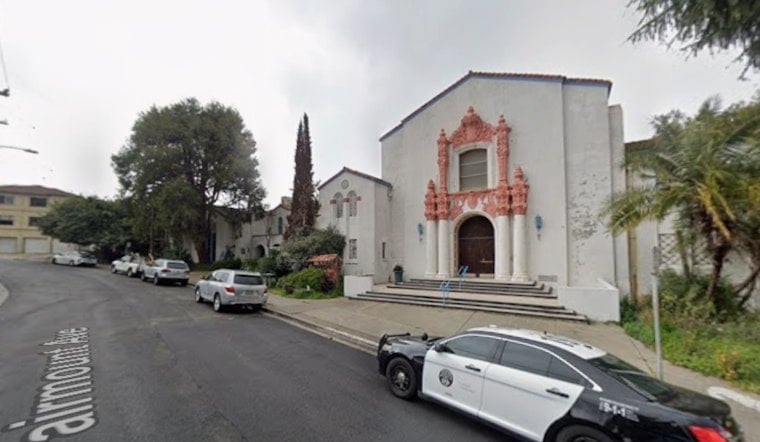
An Oakland landmark known for its soaring bell tower is on track to trade pews for apartments, as new city permits push forward an adaptive reuse plan for the First Christian Church site at 111 Fairmount Avenue. The proposal calls for a six-story, 91-unit affordable apartment building that would keep the church’s historic entry and dome-capped bell tower while replacing the rear wings and the adjacent parking lot with new housing. The Oakland Peace Center and The Unity Council are partnering on the effort, and developers say the units will be leased below market to eligible households. The latest filings continue a planning process that has been unfolding for more than a year.
New permits reviewed by city staff outline 91 apartments in a mix of one- to three-bedroom layouts, along with 40 vehicle parking spaces and 28 bicycle spaces, according to San Francisco YIMBY. The new structure is designed to rise six stories, carefully stopping just below the height of the bell tower, and it would step down along the sloping site. Permit documents also confirm that the development team plans to tap state density bonus provisions to reach the building’s proposed size.
A project listing from The Unity Council describes the roughly 1.35-acre parcel at Fairmount and 29th Avenue and, in earlier materials, a roughly 94-unit program aimed at households earning up to about 60 percent of Area Median Income, with a dedicated set-aside for formerly unhoused residents. According to The Unity Council, the concept includes ground-floor community space, a childcare area, resident services offices and wraparound supports for tenants. The listing also invites neighbors to stay involved through community engagement events as the design moves forward.
Design work for the site is led by SmithGroup. Earlier renderings show articulated facades clad in metal, wood-like cement panels and smooth stucco, all intended to complement the preserved Mission Revival church entry that dates to 1928, as detailed in prior coverage by San Francisco YIMBY. Plans indicate that the retained portion of the existing structure would be shortened but maintained as a colonnaded entry beside a new lobby and a cloistered open space. Massing diagrams split the building into upper and lower volumes so that, from the street, the project reads as two complementary elements stepping down the hillside.
The Oakland Peace Center reports that it has acquired the First Christian Church property and is collaborating with The Unity Council to deliver what it describes as “100% affordable housing” on the site. The organization frames the project as a way to extend the church’s long history of community service into permanent housing and shared neighborhood resources. Its project page also highlights prior community outreach and a survey for nearby residents who want regular updates as design work continues. A detailed construction schedule and total project cost have not yet been released.
Entitlements and State Rules
The development team is relying on California’s State Density Bonus provisions to unlock extra units and obtain development concessions in exchange for deed-restricted affordable housing. Those rules are set out in California Government Code Section 65915. In practice, the density bonus and related concessions can allow a project to exceed local zoning caps and request waivers from standards such as parking requirements and setbacks, while still moving through city review and any required environmental analysis. How Oakland’s planning staff and any involved commissions respond to the permit package will shape the project’s next major milestones.
With the latest permits now in the system, the proposal enters Oakland’s formal review pipeline along with more structured community outreach as schedules allow. The Unity Council’s property page lists a project contact for neighbors and signals that the partners expect to continue engagement while entitlements are processed. For now, the filings mark a concrete shift from idea to implementation on an adaptive reuse plan that keeps a familiar neighborhood landmark in place while adding new permanently affordable homes around it.





