

























































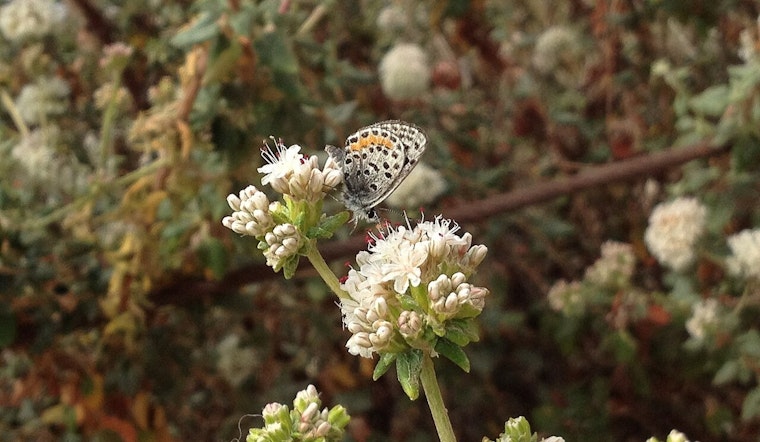
For decades, the fenced-off streets, broken foundations, and empty lots of the old Surfridge neighborhood sat silent just west of the Los Angeles International Airport. This week, that long-quiet stretch hit a visible turning point in its rewilding: crews installed roughly 24,000 native plants and removed about 17.9 acres of invasive vegetation to make more room for the endangered El Segundo blue butterfly.
Airport wraps up major planting push
Los Angeles World Airports has been working for years to restore the LAX dune ecosystem, and officials say the latest work marks a major step in that plan. According to SFGATE, the airport reported on social media that crews planted 24,000 native plants and cleared 17.9 acres of invasive growth, a move the agency says is meant to “create space for the endangered El Segundo Blue Butterfly to thrive again.”
Why the dunes matter
The El Segundo blue is a federally endangered butterfly that depends heavily on seacliff buckwheat growing on coastal dunes, so its future lives and dies with that habitat. The U.S. Fish & Wildlife Service has listed the butterfly as endangered since 1976 and highlights habitat protection, buckwheat restoration, and invasive plant removal as key to its survival. Conservation advocates at the Xerces Society likewise warn that nonnative plants can muscle out seacliff buckwheat, cutting off the food source the butterfly needs.
From seaside neighborhood to protected dunes
Surfridge was once a neighborhood of about 800 homes built on the coastal dunes, a pocket of beachside life that sat next to a rapidly growing airport. In the late 1960s and early 1970s, pressure from LAX expansion, mounting noise complaints and ensuing legal battles pushed the city to buy out and clear most of the properties. The Los Angeles Times has traced how the Jet Age emptied the community and how the remaining streets, lots and foundations gradually shifted from ghost town to protected wildlife habitat.
Funding and the multi-year plan
Planning documents from Los Angeles World Airports describe the work as part of a broader restoration program, supported in part by a $500,000 grant from the California Natural Resources Agency awarded in 2023 to restore roughly 50 acres of the dunes. The same reporting notes that crews removed invasive vegetation from more than 20 acres in 2024 and that earlier stages involved tearing out abandoned streets, sidewalks and foundations to bring back more natural dune conditions. LAWA casts the effort as a long game, with monitoring and additional plantings slated to continue until the project meets ecological success benchmarks.
How to see it and help
The restored area itself remains off-limits to casual visitors, but a short public walkway and a few legal vantage points let neighbors watch the dunes slowly green up. Volunteer planting days have played a role too; past hands-on events at the LAX Dunes are listed by the Santa Monica Bay Foundation. For those who simply want a look at the former ghost town turning back into wild coastline, PBS SoCal points to viewpoints near Vista del Mar and Imperial, along with the short Waterview Trail, as legal spots to see the protected dunes from nearby public routes.





_(17135925448).jpg)