

























































Arbor Day in Minneapolis' Bethune Park was not just about hugs for trees and free seedlings this year. As kids scrambled up ropes and volunteers tucked new saplings into the soil on Friday, city foresters delivered a sobering message: Minnesota's ash trees are under attack. The emerald ash borer is now confirmed in 59 of the state's 87 counties, turning what started as a localized pest problem into a full-on statewide fight. Between family activities, residents got straight talk on removals, quarantines and what they can do to help protect what is left of the canopy.
Statewide spread
According to surveys in the Minnesota Department of Natural Resources' 2025 Forest Health Annual Report, emerald ash borer, or EAB, was recently detected in six additional counties, bringing the total to 59 of Minnesota's 87 counties, the Minnesota DNR reports. The Minnesota Department of Agriculture, which tracks EAB distribution and quarantines, notes the pest was first confirmed in the state in 2009 and that Minnesota has nearly a billion forest and urban ash trees, a concentration that raises the stakes for every removal and quarantine decision. Officials have used emergency quarantines in recent months to restrict the movement of ash wood in hopes of slowing the spread.
At Arbor Day
Organizers at Bethune Park leaned into Arbor Day as a chance to explain those quarantine and removal choices, right alongside the fun stuff. While kids took turns on climbing lines and volunteers staffed planting stations, forestry staff walked residents through what the EAB invasion means for their blocks. Danielle Schumerth, the parks' forestry outreach coordinator, told KARE11 that "an ash tree that is infested with emerald ash borer is a really unsafe tree," and urged communities to plant a wider mix of species to cut future risk. The Arbor Day lineup mixed tree-planting demos, climbing activities and food trucks with short, plain-language forestry briefings.
How Minneapolis is handling it
The Minneapolis Park & Recreation Board has had an EAB Preparedness Plan in place for years and follows a canopy-replacement strategy that removes a small percentage of ash trees at a time, then replaces them with a more diverse set of species, according to the Minneapolis Park & Recreation Board. Boulevard trees are marked before removal, and tags are hung to notify homeowners when crews are scheduled to work. City guidance also notes the parks department does not chemically treat public trees, and that private owners who want treatment must hire licensed contractors.
What residents should do
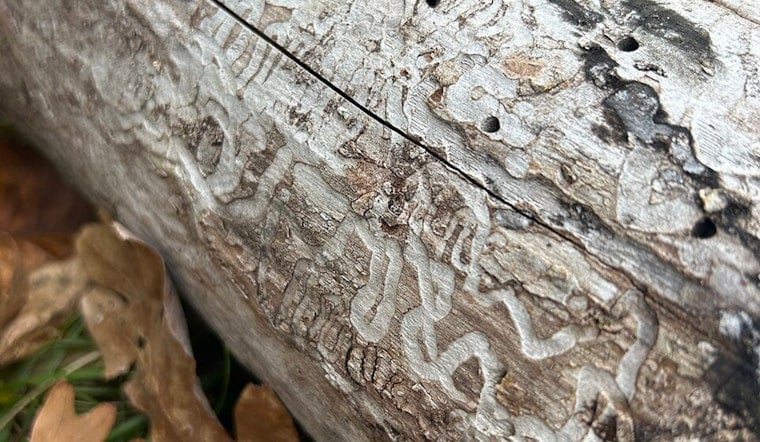
Homeowners are being asked to keep a close eye on their ash trees. Warning signs include thinning crowns, D-shaped exit holes and the telltale S-shaped galleries just beneath the bark, any of which can signal an infestation. The Minnesota Department of Agriculture lists May 1 through Sept. 30 as the EAB flight season and urges Minnesotans not to move firewood and to use its online "Report a Pest" form if they suspect EAB nearby. For anyone weighing whether to treat a tree or remove it, officials recommend consulting a certified arborist along with the state's treatment guides.
Why this matters
The widespread detections documented in state surveys mean neighborhoods and city parks are likely to lose substantial canopy over time if infestations continue unchecked. Tracking by the Minnesota DNR and the Minnesota Department of Agriculture underlines why officials are pushing phased removals and more diverse replanting, aiming to build a more resilient urban forest for the next generation.





