

























































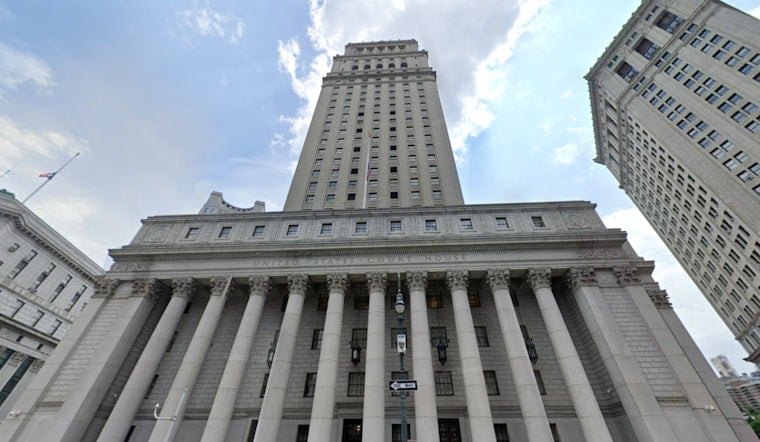
On Tuesday, a federal appeals court in New York handed the administration a major setback in its push to lock up most people it seeks to deport without any chance at bond. A three-judge panel said the government’s new spin on the immigration statute could not be squared with the law’s text or with long-standing practice.
What the court said
The U.S. Court of Appeals for the Second Circuit rejected the administration’s attempt to treat long-settled residents as “applicants for admission” who must be held without bond. The panel warned that reading the law that way would create “the broadest mass-detention-without-bond mandate in our Nation’s history.” As reported by Reuters, Judge Joseph Bianco wrote that the government misapplied a decades-old statute and raised serious constitutional concerns.
The case behind the ruling
The appeal stems from a habeas petition for Ricardo Aparecido Barbosa da Cunha, a Brazilian national who had lived in the United States for more than two decades before immigration agents arrested him. A district judge and then an immigration judge later ordered his release. The American Civil Liberties Union, which represented him, said the ruling confirms that the administration cannot “lock up immigrants like Mr. Barbosa da Cunha without giving them the basic due process of a bond hearing.” As detailed by the ACLU, the group and its local partners argued that the government’s reinterpretation would sweep in people with deep, long-standing ties to U.S. communities.
Where the legal fight started
The dispute traces back to mid-2025, when the Department of Homeland Security and then the Board of Immigration Appeals adopted a new interpretation that treated people who entered without inspection as “applicants for admission” and therefore ineligible for bond. The Board’s precedential opinion, Matter of Yajure Hurtado, along with agency guidance, triggered a wave of litigation as immigration judges and federal courts pushed back. The Board decision is cataloged in the Executive Office for Immigration Review’s volume of BIA opinions (EOIR).
Legal stakes and a split bench
The Second Circuit’s decision deepens an already wide circuit split. Some federal appeals courts have embraced the administration’s reading of the detention statute, while others have rejected it, leaving detainees’ rights to bond hearings heavily dependent on geography. As CBS News reports, the ruling covers Connecticut, New York and Vermont and follows mixed decisions in the Fifth and Eighth Circuits that sided with the government.
What comes next
With appeals courts sharply divided, lawyers on both sides say further appeals are almost certain and could push the issue to the U.S. Supreme Court. Legal analysts told Bloomberg Law that the growing split makes high-court review increasingly likely, and that the Second Circuit’s ruling will shape who gets custody hearings while removal cases are pending.
Practical impact
For detainees inside the Second Circuit, the ruling restores the possibility of individualized bond hearings instead of automatic, potentially indefinite detention, and for advocates it is an immediate win. DHS issued a terse defense of its position, saying it is enforcing the statute as written and that higher courts may ultimately resolve the dispute, a response noted in contemporaneous reporting.
The decision adds another chapter to a fast-moving run of litigation over interior immigration detention policy and leaves lawyers, judges and families facing very different outcomes depending on which circuit hears a case. For now, the Second Circuit’s opinion offers a clear basis for bond and release hearings in New York, Connecticut and Vermont while the national fight plays on.


