

























































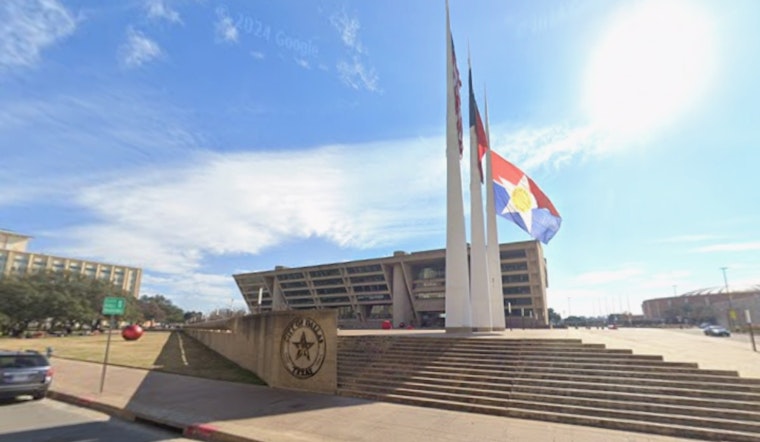
After a late-night vote that stretched past 10 p.m., the Dallas City Council signed off on a longtime Oak Cliff developer’s plan to rezone roughly three acres next to North Boulevard Terrace for multifamily housing. The decision hands neighborhood resident and former city planning commissioner Christian Chernock a crucial win, even as nearby residents warn of more traffic, erosion along Coombs Creek and the displacement of long-term, mostly Spanish-speaking households.
As reported by the Dallas Morning News, the council voted Wednesday night to convert about 3.2 acres from single-family zoning to an MF-2(A) multifamily district. Council member Chad West backed the change, while Council member Cara Mendelsohn opposed it and argued that neighbors’ concerns had not been fully addressed. The vote followed months of public hearings and community meetings, capped by a 12-2 City Plan Commission recommendation to advance the case.
What the city file shows
City documents for case Z-25-000069 state that the property, described as lying between the north terminus of North Boulevard Terrace and Plymouth Road, covers roughly 3.52 acres. Staff recommended approval of an MF-2(A) rezoning, contingent on deed restrictions that Chernock’s team volunteered.
According to the case report, those deed restrictions are designed to tighten the rules compared with a typical MF-2(A) site. They would cut lot coverage to roughly 30 percent, require at least one parking space per unit and shrink the buildable footprint relative to an unencumbered multifamily district. The technical breakdown and planning history are detailed in City of Dallas records.
Neighbors say deed restrictions will not be enough
Residents of North Boulevard Terrace have been fighting versions of this proposal for years and say their resistance is fueled by a longstanding distrust of developer promises and the city hall process. Local activists and homeowners, including neighborhood association president Yesenia Serrano, have repeatedly flagged worries about child safety on busier streets, heavier stormwater flows and rising property taxes that could squeeze out longtime owners.
The conflict is the latest chapter in a broader pattern of rezoning battles and organizing efforts in the area, a history chronicled by the Dallas Observer.
Developer says project will protect the creek and add homes
Chernock told council members that a single multifamily project, paired with the deed restrictions, would better shield Coombs Creek than a series of townhomes or new single-family lots scattered across the tract. He argued that his plan would reduce impervious cover compared with those alternatives.
“I will be responsible for this project for decades after its build,” he said, urging the council to trust the narrower development envelope his team put on the table. Supporters countered that the apartments would add badly needed housing options in a corner of Oak Cliff where demand has outrun supply, a point also noted by the Dallas Morning News.
How state law changed the calculus
In staff reports, planners pointed to the city’s ForwardDallas 2.0 policy framework and to a 2025 state law that narrows what cities can regulate on multifamily height and setbacks. That law effectively allows a maximum height of 45 feet on certain MF-2 sites and curbs the use of the Residential Proximity Slope, a tool cities have used to scale down buildings that sit near single-family homes.
The Legistar file explains that, in this new legal landscape, the city leaned heavily on the volunteered deed restrictions and tighter lot coverage limits to shape what can be built. That combination of updated planning guidance and state law has shifted how officials think about compatibility near creeks and single-family neighborhoods, according to City of Dallas documents.
What happens next
The rezoning vote clears a major procedural hurdle, but it is not a shovel-in-the-ground moment yet. Civil engineering work, building permits and any remaining design-level reviews still have to run their course before construction begins.
The case appeared on Wednesday's city council agenda and had already been deferred at least once, according to the published City of Dallas agenda. Neighbors say they will be watching closely to see whether the deed restrictions are enforced in practice and whether the promised protections for Coombs Creek hold up through the permitting process.





