

























































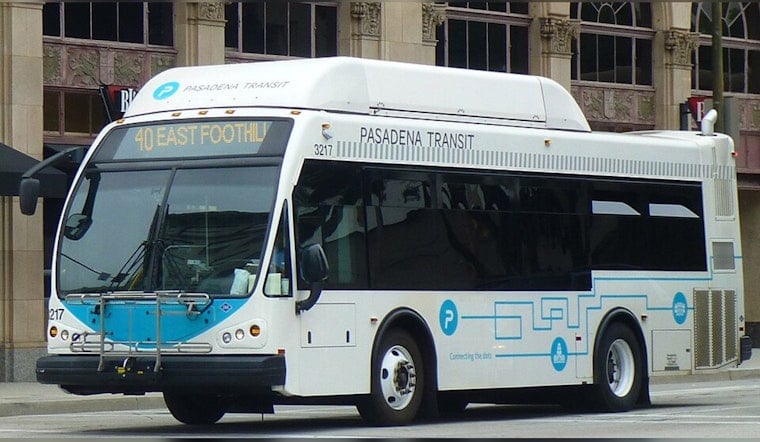
Pasadena transit officials are doubling down on hydrogen buses, arguing that batteries alone cannot handle the city’s longest routes after real-world testing showed a major gap between advertised and actual range. In a staff briefing scheduled for April 28, 2026, city staff reports that Pasadena Transit’s first battery-electric bus is averaging about 80 miles per day in revenue service, while some fixed routes can demand up to 200 miles and 14–16-hour duty cycles. Those demands, staff warn, ripple through fleet sizing, scheduling, and long-term budget planning for the zero-emission transition.
According to Pasadena Now, the staff report concludes that the practical daily range for battery-electric buses often comes in at only about 45 to 50 percent of what manufacturers claim. That finding prompted a revision of the Zero-Emission Bus Rollout Plan, shifting from an early assumption that 1.5 battery buses could replace each renewable natural gas bus to a more conservative working ratio of 2 to 1. The same briefing warns that pivoting now to an all-battery fleet could mean roughly 45 million dollars in additional vehicle purchases and could put more than 38 million dollars in already secured grants at risk. Staff notes that one battery-electric bus has been in service since May 19, 2025, with a second Dial-A-Ride battery bus due shortly, giving Pasadena its first real-world data to guide the rollout.
City procurement records show the City Council approved a contract on August 25, 2025, to purchase 17 fuel-cell electric buses from New Flyer for an amount not to exceed 32,050,255 dollars. Staff says those buses are intended to replace aging renewable natural gas vehicles on a one-for-one basis. The council agenda report identifies 159 S. Kinneloa Avenue as the site of the permanent hydrogen fueling station and notes that vehicle deliveries were expected to begin in spring 2027, followed by an approximately six-month commissioning period. In their briefing, staff argue that fuel-cell buses provide greater operational resilience on long duty cycles and during grid outages, qualities they frame as critical for Pasadena’s fixed routes and for maintaining service during emergencies.
Why Hydrogen May Fit Pasadena's Long Routes
Research from the National Renewable Energy Laboratory and other studies shows that how far an electric bus actually goes in a day depends heavily on hills, stop-and-go traffic, and outside temperature. Lab-tested range, in other words, does not automatically translate to real-life miles in a city like Pasadena. Local reporting and transit agency experience have also highlighted that long, busy routes often require mid-route charging or extra buses to stay on schedule, a pattern staff say Pasadena saw in its early battery-bus operations and that peer agencies have documented as well. That on-the-ground reality is one reason the city’s Rollout Plan keeps battery buses focused on Dial-A-Ride service while prioritizing fuel-cell buses for longer fixed routes that need both range and quick refueling, a strategy outlined in local coverage of Pasadena’s planning process and noted by Streetsblog LA.
Funding, Facilities, and the Fuel Supply
City materials on the transition put the total secured funding at about 120 million dollars toward an estimated 150.7 million dollar project cost, with staff continuing to chase additional state and federal grants to close the gap. Pasadena has issued Requests for Proposals for a new Transit Operations & Maintenance Facility, and for the hydrogen fueling station that will serve the fuel-cell fleet, and staff paperwork describes the TOMF site and related infrastructure as central to getting the new buses on the road. Staff says they are coordinating with the newly formed First Public Hydrogen joint powers authority to help lock in a supply of green hydrogen as station capacity ramps up.
Where Pasadena Fits in the Regional Picture
Hydrogen fuel-cell buses are already in service elsewhere in the region, and private operators are expanding fueling capacity to support them, according to industry announcements and transit partners. Agencies, including Foothill Transit and SunLine, have deployed fuel-cell buses while building out hydrogen stations, and industry data from CALSTART shows both battery and hydrogen zero-emission bus fleets growing across the country. Pasadena’s decision to pursue a mix of technologies fits that broader pattern, with staff trying to match vehicle types to route needs while juggling construction timelines and the fine print on grant funding.
The Municipal Services Committee is set to receive the full staff briefing on April 28, 2026, after which staff plan a comprehensive update to the Zero-Emission Bus Rollout Plan ahead of the next major purchase window. The City Council will have final say on any course changes, and staff says they will return with updated lifecycle cost, service, and environmental analyses before committing additional funds.





