

























































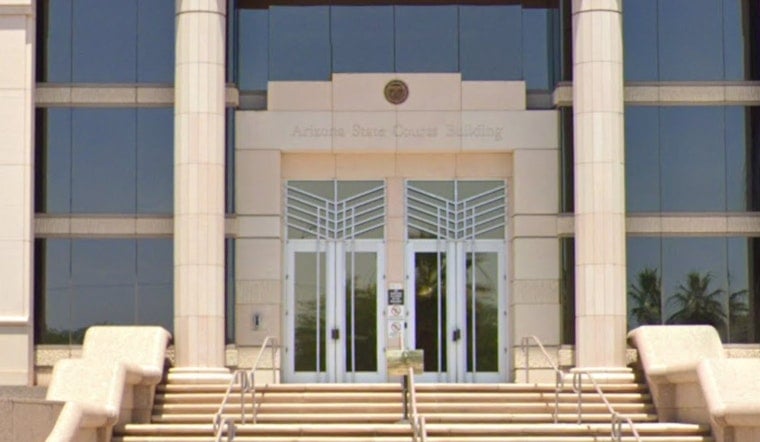
The Arizona Supreme Court has broadened what counts as harassment under state law, holding that statements made to third parties can qualify when they are intended to cause harmful consequences for the target. The ruling came in a high‑conflict dispute between two Phoenix‑area parents after a father complained about the mother to staff at their child’s school, including an email to the principal and comments at a parent‑teacher conference. A trial judge kept an order of protection in place against him, the Court of Appeals threw it out, and now the state’s highest court has stepped in, vacating the appellate ruling and sending the case back down. The decision tightens the gap between “indirect” communications and statutory harassment, with likely ripple effects for schools, employers and co‑parents who vent through intermediaries.
What the lower courts said
The Court of Appeals initially sided with the father. It concluded that his email to the principal and his remarks to a teacher were not “directed at” the mother, and therefore did not satisfy the harassment element required by A.R.S. §13‑2921. The appellate opinion described the two disputed incidents in detail and explained why the panel believed the conduct fell outside the statute.
As outlined in the Court of Appeals opinion posted on Justia, the judges emphasized that the communications were aimed at school staff, not at the mother herself, and therefore lacked the kind of direct targeting they thought the law required. That split between the trial court’s factual findings and the appeals court’s legal reading is what ultimately brought the case to the Arizona Supreme Court.
What the Supreme Court held
The state’s high court rejected a bright‑line rule that third‑party communications can never be harassment. Instead, the justices held that such statements may qualify when they are intended to cause an adverse consequence for the alleged victim. In other words, talking about someone through a principal, teacher, or other intermediary does not automatically shield a speaker from the harassment statute if the goal is to harm the person on the receiving end.
As reported by 12News, the justices vacated the Court of Appeals opinion and remanded the case so the lower court can fill in factual gaps. The Arizona Supreme Court docket for case CV‑25‑0161‑PR confirms the petition for review and the order sending the matter back for further proceedings. The ruling does not automatically transform every third‑party complaint into harassment, but it makes the speaker’s intent and the reasonably foreseeable consequences central questions for judges to evaluate.
How Arizona law defines harassment
Arizona’s criminal harassment statute requires conduct that is “directed at” a specific person, that would cause a reasonable person to be seriously alarmed, annoyed, humiliated or mentally distressed, and that in fact causes that level of distress. Those statutory elements are laid out in A.R.S. §13‑2921, which appears on the Arizona Legislature website. The order of protection procedures that rely on those definitions are set forth in A.R.S. §13‑3602, also published by the Arizona Legislature.
Because protective orders can carry serious collateral consequences, including employment disruption and firearms restrictions, courts are required to tie any relief to the statute’s specific elements rather than to sympathies, hunches or speculation. On paper, at least, the focus is supposed to be on conduct and impact, not which parent is more likable in the hallway.
What this means for parents, schools and employers
The decision puts a sharper spotlight on motive and foreseeable fallout. Communications that travel through a school principal, a co‑worker or a mutual friend can now be treated as harassment if a court finds they were meant to produce harm for the target. That raises practical questions for school administrators and employers who receive complaints about staff or parents, since the way those reports are handled and documented could later show up as evidence in an order‑of‑protection hearing.
As 12News notes, the ruling is expected to change how judges parse indirect communications in family and domestic‑violence cases. Parents and co‑workers who think they are “just talking to the school” or “just talking to HR” may find courts asking a tougher follow‑up: were you really just reporting a concern, or were you trying to cause trouble for the other person?
What happens next
The Supreme Court has sent Hernandez v. Loarca back to the lower court to clarify its factual findings and to decide whether the father’s conduct meets the harassment statute under the newly clarified framework. The trial court will reexamine the record and may consider evidence the Court of Appeals could not reach the first time around, then issue fresh findings on whether the order of protection should remain in place.
Legal observers expect the decision to generate more contested hearings where judges must probe intent and likely consequences, instead of simply listing who said what to whom. For parents caught in tense school‑house disputes, that means offhand complaints and “venting” emails may carry more legal weight than they realize.





