

























































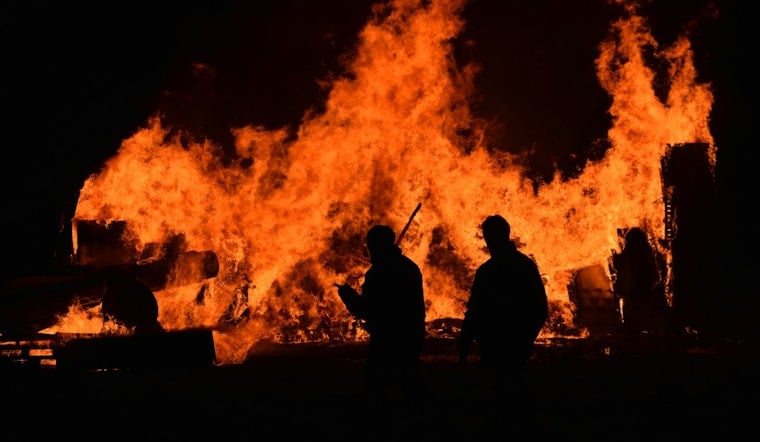
Nearly 120 current and former wildland firefighters, including crews who work Oregon’s most hard-to-reach backcountry, are calling out the federal government’s push to roll back the 2001 Roadless Area Conservation Rule. In a blunt warning, they say opening remote forests to road building and logging would invite more human-caused ignitions and put firefighters in needless danger. The signers argue the repeal would shift the firefighting burden away from work that directly protects communities toward high-exposure, low-value assignments in steep, rugged terrain where escape routes and medical access are limited. Their objections drop a frontline safety perspective into a debate that has mostly lived in policy memos and regulatory filings.
Firefighters deliver an open letter
On Tuesday, the group sent an open letter to members of Congress urging them to oppose the repeal. The appeal was organized by Firefighters United for Safety, Ethics and Ecology and was reported by KOIN. The letter, signed by active and retired crew members, argues that rescinding the rule would "increase firefighter exposure to hazardous suppression efforts" and push crews into remote, logistically dangerous responses. FUSEE says the rollback would prioritize industrial access and extraction over firefighter safety and over the ecological resilience that roadless areas provide. The group has posted related materials on its website to lay out those safety concerns in more detail.
What the rule protects
The Roadless Area Conservation Rule, implemented in 2001, generally bars new road construction, road reconstruction and large-scale commercial timber harvest in inventoried roadless areas. According to the Federal Register notice that launched the current rulemaking, the rule now covers about 44.7 million acres of National Forest System lands. That notice began an environmental impact statement process in August 2025 and presented rescission as a way to hand some decisions about roads and harvest back to local managers. Firefighters say that in practical terms, restoring broader road-building authority would open large swaths of backcountry to more human access and more fire starts.
The science the crews cite
The signers point to research that shows humans now cause the bulk of wildfire ignitions. A 2017 study in the Proceedings of the National Academy of Sciences found that human-started fires accounted for roughly 84% of recorded wildfires between 1992 and 2012 and were responsible for nearly half of the total area burned. A more recent nationwide analysis of Forest Service ignition records, published in Fire Ecology, showed that ignition density is highest within a 50 meter buffer of roads. Critics of the repeal say that pattern would only intensify if new roads are cut into terrain that is currently roadless.
Administration says repeal will aid local management
The USDA and its supporters argue that rescinding the rule would give local managers more flexibility to carry out fuels treatments and timber work that can, in specific places, reduce wildfire risk. Those positions appear in agency statements and in the department’s earlier press materials. The Federal Register notice that opened the rulemaking in August 2025 said the proposed rule would come with a draft environmental impact statement and a request for additional public comment, listing an expected draft EIS milestone of March 2026. Firefighters and conservation groups counter that the tradeoffs, including increased road access against potential upticks in human ignitions and habitat damage, need clear, site-specific analysis before any permanent change is made.
Legal and political fallout
Conservation groups, tribes and some local governments have signaled they will challenge a rollback in court, arguing the rulemaking risks shortchanging environmental review and public input. Earthjustice and allied organizations have been vocal in opposing rescission and preparing legal strategies. A comment analysis by the Center for Western Priorities found that the agency’s initial public comment period drew hundreds of thousands of submissions that were overwhelmingly opposed to rescission. Those administrative and legal pressures suggest the fight is likely to continue beyond the agency’s rulemaking process and into both courts and Congress.
A firefighter’s perspective
"Putting roads into these areas will not lend itself to firefighter safety," said Oregon wildland firefighter Carson States, who volunteered with FUSEE and spoke with reporters about the letter, according to KOIN. States and other signers told reporters that because most ignitions now stem from human activity, expanding motorized access is likely to increase starts in remote areas and force crews into riskier suppression work. For those who fight fires on the ground, the debate is not abstract. It is about where they will be ordered to go when the next blaze kicks off.
What to watch next
The next major milestone described in the Federal Register notice is a draft environmental impact statement that will accompany a proposed rule. The agency expected that document to be released by March 2026 and said there would be an additional public comment window once it appears. Until the EIS is published and the details on specific lands and mitigation measures are spelled out, firefighters, tribes and conservation groups say they will keep pressing Congress and the courts to weigh frontline safety and ecological evidence alongside claims about improved management.





