

























































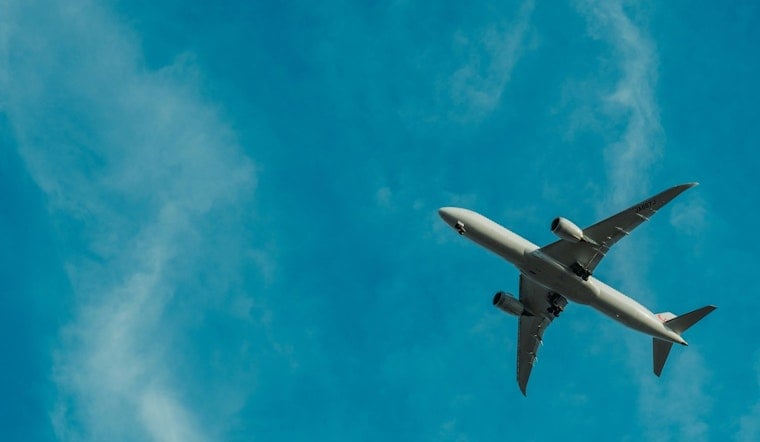
In parts of Queens, the sound of jet engines is no longer the occasional backdrop to city life. For families under the approaches to LaGuardia and JFK, residents say the roar has escalated into a near-constant soundtrack that rattles windows and frays nerves.
Neighbors in Flushing and nearby communities report that over the last decade, shifting flight paths have brought planes lower and more frequently overhead. Maria and William Becce, who have lived in Flushing for about forty years, told reporters that what used to feel like sporadic flyovers now feels like jets passing "one after the other" across the sky above their home.
In an interview with CBS New York, the Becces said the noise surge followed a change in flight patterns and that the volume can make simple things like talking or watching television "almost impossible." They also told the outlet they worry that years of constant noise may be taking a toll on residents' health. According to CBS, the FAA and the U.S. Department of Transportation declined to comment on the neighborhood complaints or the lawmaker outreach.
Lawmakers Press the FAA for Change
Rep. Tom Suozzi is once again pressing federal regulators to turn down the volume. He has renewed calls for a sound-abatement plan that would spread arriving flights across more tracks and require steeper climbs and descents to ease pressure on long-established "noise corridors." According to Suozzi's office, the proposals are designed to be practical, achievable and not to interfere with aviation safety.
The congressman has also urged the FAA to bring back altitude agreements and to rotate the use of precise RNAV paths so that the same neighborhoods are not hammered hour after hour. The goal, he argues, is not to shift chaos into the sky but to spread out the burden that has been concentrated on a few communities.
Research Links Aircraft Noise to Heart Risks
Residents worried about their long-term health now have fresh data backing up their concerns. A January 2025 study led by University College London found that people exposed to higher levels of nighttime aircraft noise showed measurable changes in heart structure and function that are associated with increased risks of heart attack and stroke.
According to UCL, the research relied on cardiac MRI data and points directly to the potential harms of chronic, late-night overflights. Noise advocates say findings like these are exactly why airport sound issues should be treated as a public health problem, not just a quality-of-life complaint.
How Flight-Procedure Changes Concentrated the Noise
The current tension has deep roots in how the skies were redesigned in the 2010s. Performance-based navigation and RNAV procedures tightened routes into narrow, precise corridors. That shift shrank the overall geographic footprint of arriving aircraft, but it also meant far more flights traveling over the same rows of homes, again and again, instead of spreading them more broadly.
Government reviews and hearings have repeatedly flagged this tradeoff between efficient airspace and fair noise distribution. With modern navigation, regulators can effectively draw "highways in the sky" that channel planes over specific communities. Congressional discussions have stressed the need for rotated or dispersed paths so that one slice of Queens is not stuck as the permanent on-ramp.
What Agencies and Communities Are Doing
The Port Authority and other agencies say they are not ignoring the uproar. Officials report they have expanded airport noise offices, deployed more sound monitors and given the public greater access to online flight-tracking tools. Records from the agency show increased monitoring around LaGuardia in particular.
Port Authority records cite more instruments in the field and stepped-up outreach, but advocates counter that monitors mostly confirm what residents already know: planes are loud and often low. Equipment can log the decibels, they argue, but it does not stop the jets from roaring past bedroom windows at all hours.
Some local governments have tried a different tactic and turned to the courts. Municipalities frustrated by low approaches have pursued legal remedies, a strategy previously reported by CBS New York.
For Queens residents and their elected officials, the immediate question is whether the FAA will agree to real adjustments: dispersing routes, enforcing higher minimum altitudes and rotating precise RNAV paths so that the noise burden is shared more evenly. Until those changes arrive, communities under the LaGuardia and JFK approaches say they will keep pressing regulators and lawmakers, hoping that someday soon the skies above them are not just busier, but also quieter and safer.



