

























































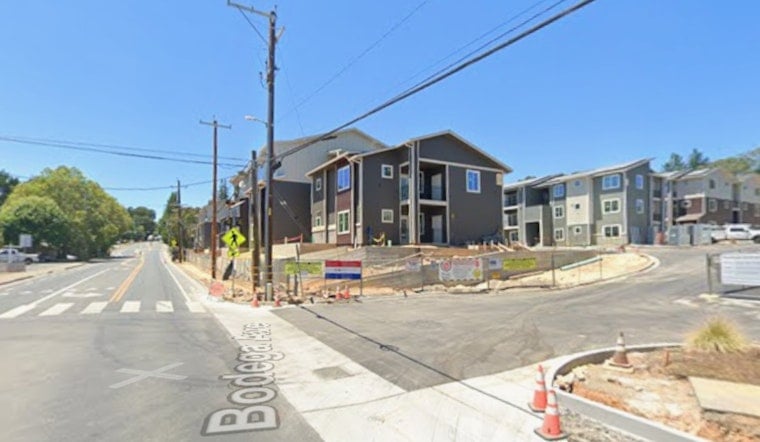
What started as relief at finally landing an affordable apartment in Sebastopol has turned into a federal court fight, as residents of the Woodmark Apartments sue to stop evictions tied to the complex’s farmworker-only financing rules.
Tenants at the Bodega Avenue property say management leased deed-restricted units to low-income households who were not farmworkers in late 2024, then moved to push many of them out after federal officials rejected an owners' request to loosen those restrictions. The new lawsuit asks a judge to put the brakes on eviction efforts while the mess gets sorted out.
On Wednesday, dozens of demonstrators rallied outside as tenants announced the case and chanted, “Neighbors united will never be defeated,” according to CBS San Francisco. Attorney Anthony Prince, who represents the residents, alleges in the complaint that the developers "had engaged in attempted fraud against the United States government" by renting out units that were supposed to be reserved for farmworkers. The filing asks the court to pause eviction proceedings while the lawsuit plays out.
How the Project Was Financed
State project files show Woodmark, listed at 7716 and 7760 Bodega Avenue, received USDA Rural Housing Service Section 514 and 521 rental assistance along with a reservation of federal low-income housing tax credits as part of its financing, according to a California Tax Credit Allocation Committee report.
Local reporting found the developer later applied to the USDA for a waiver so the complex would not be limited to farmworker households, but that request was denied after the property had already been leased to non-farmworkers. That denial left the owners with few good options, as detailed by the Sebastopol Times.
Tenants say that during the December 2024 leasing, they were told they qualified even though they did not work in agriculture. By September 2025, many received notices requiring them either to attest that someone in their household was a farmworker or to move out. Some residents accepted buyouts and left, while roughly 14 families stayed and formed a tenants' union to fight displacement. Those remaining say they are continuing to pay rent as they wait to see whether the court will halt the evictions.
Legal Stakes and What the Suit Seeks
The complaint alleges that the leases were obtained through omission or fraud and seeks injunctive relief to prevent unlawful detainer actions while the case is decided. Attorneys for the plaintiffs argue that the developers are not only pursuing evictions, they could also face financial fallout if regulators move to claw back tax credits or subsidy payments tied to the farmworker housing requirements, a risk noted in coverage of the dispute.
The suit requests a declaratory judgment on whether the leases are void due to fraud and seeks other relief that would allow current households to remain in place while compliance problems are addressed, according to CBS San Francisco.
City, Advocates and the Developer
The Sebastopol City Council has pressed the owners for documents and urged that any displacements be paused while officials review whether the project meets USDA and tax credit conditions, according to the city's November council packet. Records show that city leaders copied USDA and the state tax credit agency on formal requests for information and adopted temporary tenant protections to soften the blow for residents.
Local housing advocates told reporters that outreach to farmworker communities by the developer appeared limited, which they argue undercuts the owners' case for a waiver, per the Sebastopol Times.
For now, tenants remain in their units while lawyers press the case and regulators are asked to clarify how the rules should apply. Reporting indicates the developers and property managers have not responded to media inquiries. The court’s decision on whether to temporarily stop the evictions will be the next major test in a conflict that could shape how federally funded farmworker housing is handled in Sonoma County and beyond.





